Overview
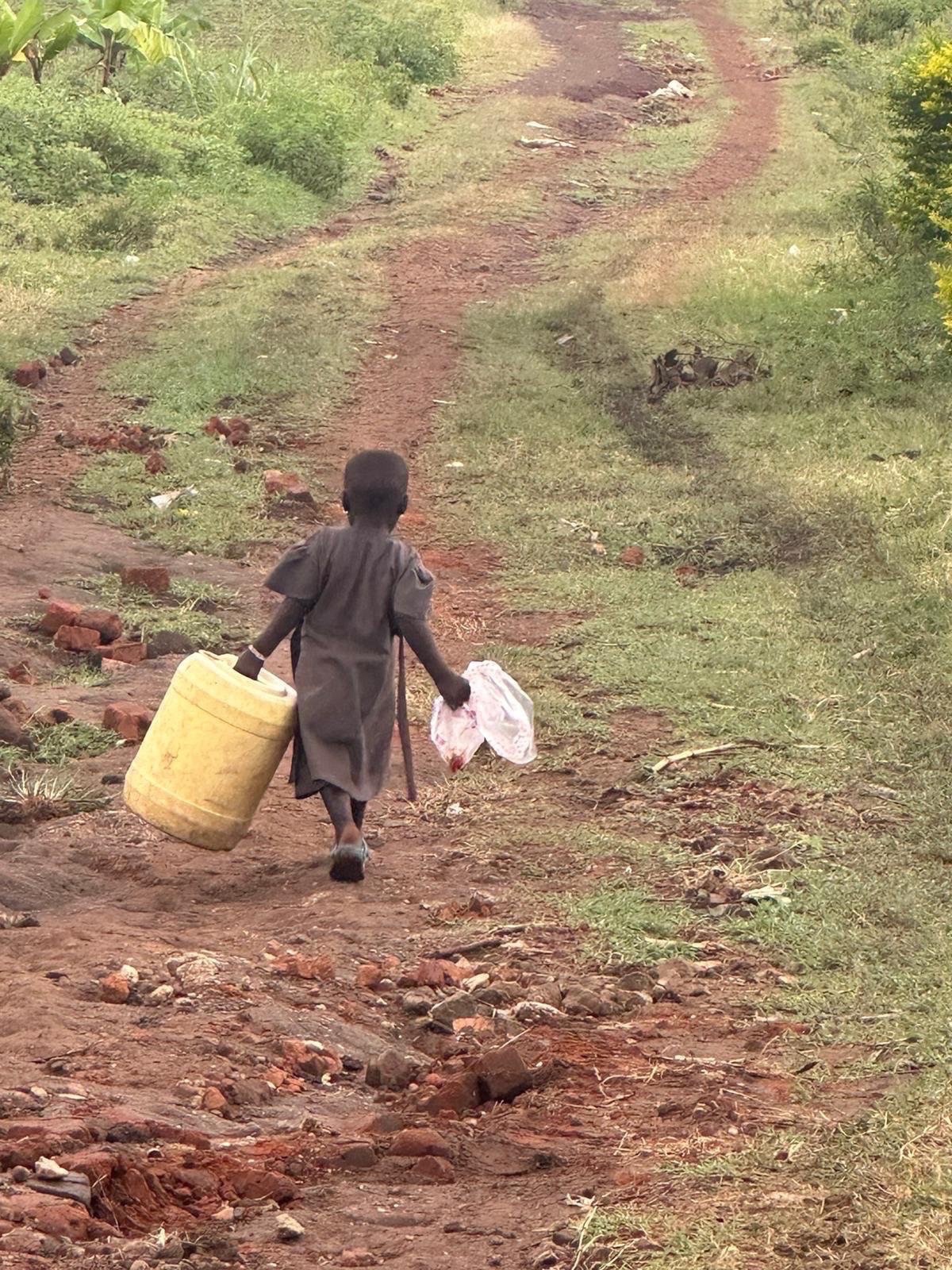
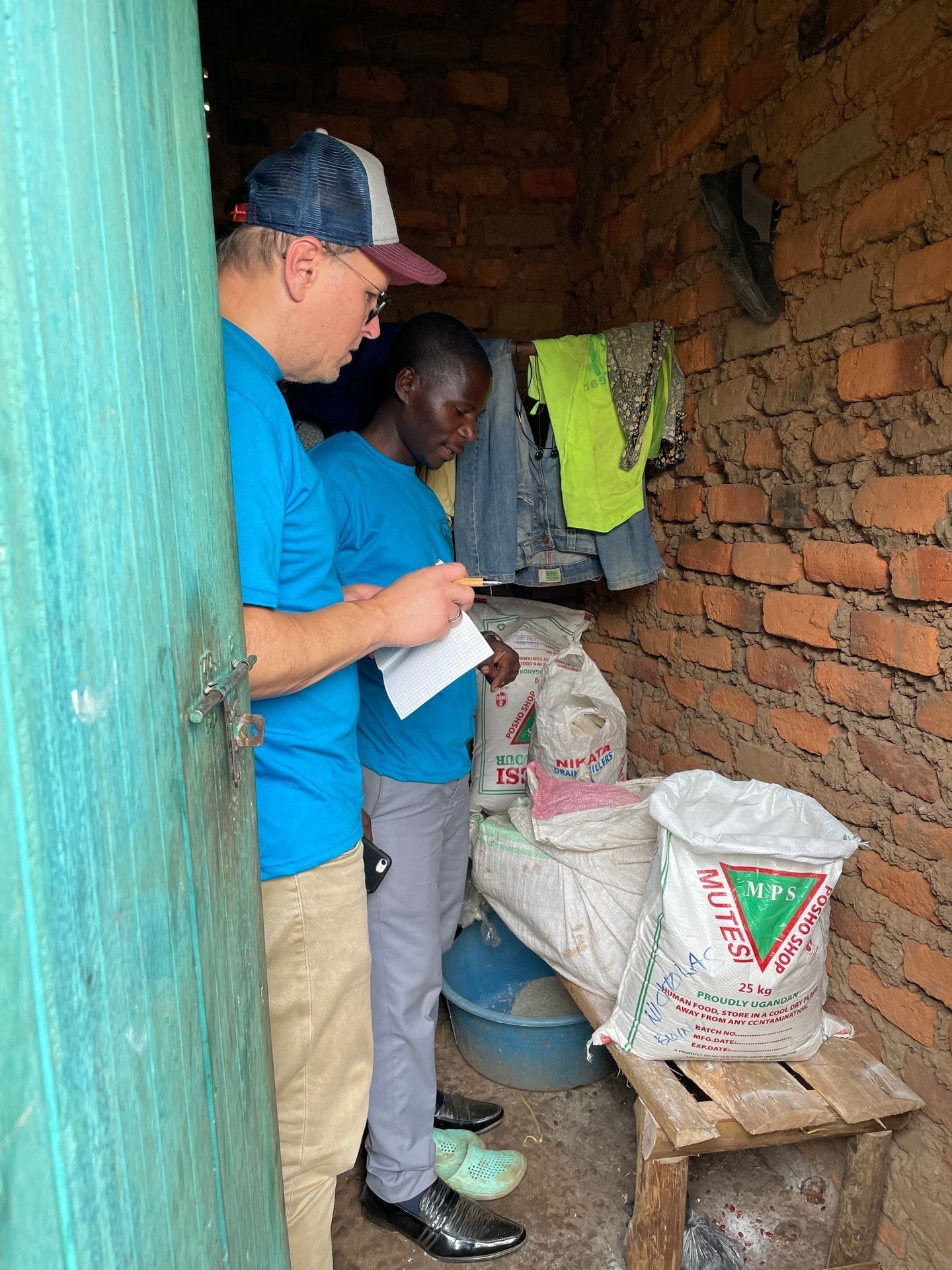
During a visit to an orphanage in Buhoma, Kanungu District, in January 2026, I was shown the facility's food storage room. It was a small space — a few burlap sacks of grain and dried goods, enough to cover roughly one week's supply for the children in residence. The staff described the constant financial pressure of operating week to week, with no reliable reserve. That single room, documented in a photograph taken on 12 January 2026, conveyed something that development statistics rarely do: the gap between a country's regulatory ambitions and the daily material reality of the communities those regulations are meant to protect.
Uganda has been building an ambitious environmental governance structure in parallel with these lived material realities. The National Environment (Waste Management) Regulations, S.I. No. 49 of 2020 — enacted on 11 October 2019 under Section 179 of the National Environment Act, 2019 (Act No. 5 of 2019) — constitute one of the most comprehensive waste management frameworks in East Africa. The regulations cover 109 articles across 16 schedules, addressing everything from household waste separation to the transport of hazardous industrial chemicals. Understanding what they classify as hazardous, what they prohibit, and how they are enforced matters for businesses operating in Uganda, researchers, and development practitioners working in the country.
This article explains the key provisions of the hazardous waste regulations in plain language, based on the text of S.I. No. 49 of 2020 and the companion National Environment (Audit) Regulations, S.I. No. 47 of 2020. All regulatory citations should be verified against the current official gazette text before acting upon them.
What Is Classified as Hazardous Waste in Uganda?
The National Environment (Waste Management) Regulations define hazardous waste primarily by its properties — ignitability, corrosivity, reactivity, and toxicity — rather than solely by source category. This approach aligns Uganda's framework with international conventions, particularly the Basel Convention on the Control of Transboundary Movements of Hazardous Wastes, to which Uganda is a party.
Hazardous Chemical Waste Categories
Under S.I. No. 49 of 2020, hazardous chemical wastes include the following categories (verify against current gazette text):
- Pesticides and pesticide containers — including unused stock, expired formulations, and containers that have held any pesticide product
- Solvents — halogenated and non-halogenated organic solvents used in industrial cleaning, degreasing, and manufacturing processes
- Biocides — substances used to kill or control harmful organisms, including rodenticides and fungicides not classified as pesticides
- Wood preservatives — including creosote-based treatments and formulations containing heavy metals such as chromium, arsenic, or copper
- Pharmaceutical wastes — out-of-date medications, unused controlled substances, and residues from pharmaceutical manufacturing
Generators of hazardous household or municipal waste — including businesses that produce these substances as a byproduct of operations — are required under the regulations to separate hazardous materials from non-hazardous waste streams and to deliver them exclusively to licensed waste management operators. Self-disposal through municipal collection or informal dumping is explicitly not permitted for these categories.
Heavy Metal and Mineral Waste
The regulations address copper-, zinc-, mercury-, and lead-containing waste materials as hazardous categories subject to special handling and, in some formulations, export restrictions under Uganda's commitments to international conventions. Mercury-containing products — including certain types of electrical switches, fluorescent lamps, and thermometers — are subject to separate disposal requirements under waste streams that intersect with Uganda's obligations under the Minamata Convention. These categories are detailed in the schedules of S.I. No. 49 of 2020 and should be verified against the current text of the instrument before compliance decisions are made.
How Uganda Regulates Electronic and Electrical Waste (E-Waste)
Electronic and electrical waste — known as e-waste — is one of the fastest-growing waste streams globally, and Uganda is not exempt from its pressures. The country imports significant volumes of second-hand electronics through markets including Owino Market in Kampala, one of East Africa's largest second-hand goods markets. End-of-life electronics from these import streams constitute a distinct and growing hazardous waste category.
The Separation Requirement
The Waste Management Regulations make a structural distinction between two components of e-waste. Hazardous components — including batteries, mercury-containing parts (such as backlights in older LCD screens), and any component containing polychlorinated biphenyls (PCBs) — must be separated from other waste and treated under Part VI of the regulations governing hazardous substances. Recyclable assemblies — the non-hazardous metal frames, plastic casings, and circuit boards without toxic components — may be processed through licensed recycling channels.
The regulations explicitly prohibit disposing of e-waste in landfills or at unauthorised sites. This prohibition applies regardless of whether the e-waste in question is a complete device or disassembled components. An organisation that disposes of obsolete computers by delivering them to a municipal tip — a common practice in lower-income operational contexts — is in breach of this provision.
The Practical Challenge
E-waste regulation faces an implementation gap in Uganda, as in most countries at a similar stage of regulatory development. The formal licensed e-waste processing sector is small relative to the volume of waste generated; the informal sector — which recovers metals through open burning and acid leaching — handles the majority of actual end-of-life electronics. Enforcement of the disposal prohibition requires both a viable formal alternative and consistent inspection capacity. Uganda's e-waste recycling sector has been growing, but the gap between regulatory requirement and practical capacity remains significant as of 2026.
Prohibited Practices and Container Requirements
The Waste Management Regulations set out a series of absolute prohibitions that apply to any person or organisation generating, storing, transporting, or treating hazardous waste in Uganda.
Mixing Prohibition
The regulations prohibit the mixing of hazardous waste with different categories of hazardous waste, with non-hazardous waste, or with any other substance not forming part of the waste stream. This prohibition exists because mixing can create new hazardous properties — reactive gases, increased flammability, or chemical compounds more toxic than the original constituents. It also prevents dilution as a disposal strategy, where hazardous waste is mixed with inert material to bring concentrations below threshold levels.
Generators who produce multiple types of hazardous waste must therefore maintain separate storage streams for each category, a requirement with direct infrastructure and cost implications for facilities such as hospitals (medical waste versus pharmaceutical waste versus chemical waste), manufacturing plants, and vehicle service workshops (waste oils, batteries, and solvents each require separate containment).
Container Specifications
Storage containers for hazardous waste must meet two structural requirements under the regulations. First, containers must not be reactive to the waste stored within them — meaning that a corrosive acid waste cannot be stored in a carbon steel drum that the acid will degrade, and a solvent waste cannot be stored in a container whose polymer lining is soluble in that solvent. Second, the regulations specify labelling requirements: containers must carry the words "HAZARDOUS WASTE" in permanent, fluorescent, and legible characters on both sides of the container, along with information on the waste's identity, classification, and hazardous properties (Regulation 57(3)(a) and 57(6)(b), S.I. No. 49 of 2020 — verify).
Source: National Environment (Waste Management) Regulations, S.I. No. 49 of 2020 — verify against current gazette text.
Transport Requirements
Licensed waste operators who transport hazardous waste must ensure, under Regulation 58(1)(a), that collection and transport do not cause leaks, spills, or scattering of the waste. The regulations further require that personnel involved in hazardous waste transport be adequately trained, including training in how to respond to emergency situations such as vehicle accidents, spills, and fires involving hazardous materials (Regulation 58(1)(e)(iv) — verify). This training requirement is a compliance obligation on the operator, not merely a best-practice recommendation.
Classification Testing: How Hazardous Properties Are Determined
A waste stream is classified as hazardous based on measurable physical and chemical properties, not on intuition or industrial category alone. Uganda's framework aligns with international standard testing methodologies for determining these properties.
Standard Test Categories
- Thermal stability tests — determine whether a substance is liable to spontaneous heating or decomposition under normal storage conditions
- Flash point determination — establishes the lowest temperature at which a substance produces sufficient vapour to ignite; materials with a flash point below 60°C are typically classified as flammable
- Toxicity assessments — measure lethal concentration and dose values, leachate toxicity (for landfill risk assessment), and bioaccumulation potential
- Corrosivity tests — determine whether a substance corrodes metal or living tissue at a defined rate, typically pH below 2 or above 12.5 as a threshold indicator
Environmental audit reports produced under the companion National Environment (Audit) Regulations, S.I. No. 47 of 2020 must be submitted every three years, accompanied by an updated environmental management system and monitoring plan. Certain infrastructure categories trigger mandatory audit requirements regardless of the operator's own assessment: dams and reservoirs with a capacity of 1,000,000 cubic metres or more, and hydropower plants of up to 1 megawatt with construction periods under two years, are among the categories listed in the schedules (S.I. No. 47 of 2020, Schedule 3 and Schedule 5 — verify).
Uganda's Climate, Rainfall, and the Best Time to Visit
Uganda's environmental context is not only regulatory — it is physically shaped by some of the most varied rainfall geography in East Africa. The Ruwenzori Mountains in western Uganda receive up to 3,000 mm of annual rainfall, making them one of the wettest highland areas on the continent. At the lower-altitude Katonga Wildlife Reserve, the Reiseführer Uganda 2020 notes that major hikes become practically impossible during the rainy season due to flooding of the wetland corridors the reserve encompasses.
For travel planning purposes, Uganda's two dry seasons — June to September and December to February — offer the most reliable conditions for most activities: gorilla trekking in Bwindi, game drives in Murchison Falls and Queen Elizabeth National Parks, and hiking in the Ruwenzori. October and January are both productive transition months. We visited Buhoma in both October 2024 (12 days) and January 2026 (11 days in the region), and found both periods manageable for the Bwindi area — though January's morning mist and occasional afternoon rain are part of the cloud forest experience rather than a disruption to it.
The rainy seasons — March to May and October to November — are when Uganda's agricultural cycles peak, when roads in rural areas become significantly harder to traverse, and when environmental risks such as soil erosion, flooding, and landslides are at their highest. The Kampala Multi-Hazard Risk and Vulnerability Profile (August 2018) documents these seasonal risk patterns across the capital's divisions; similar dynamics apply at reduced scale to secondary towns and rural road networks throughout the country.
From the field
Frequently asked questions
What chemical wastes are classified as hazardous in Uganda?
Under Uganda's National Environment (Waste Management) Regulations, S.I. No. 49 of 2020, hazardous chemical wastes include pesticides, solvents, biocides, wood preservatives, and pharmaceutical wastes. Generators of these materials must separate them from non-hazardous waste and deliver them only to licensed waste management operators. Self-disposal through municipal collection is not permitted for hazardous chemical categories.
How is e-waste regulated in Uganda?
The Waste Management Regulations 2020 require that hazardous components in e-waste — batteries, mercury-containing parts, PCBs — be separated from recyclable assemblies and treated as hazardous substances under Part VI of the regulations. Disposing of e-waste in landfills or unauthorised sites is explicitly prohibited. Licensed operators handling e-waste must be trained in safe management and emergency response procedures.
What waste practices are prohibited under Uganda's Waste Management Regulations 2020?
S.I. No. 49 of 2020 prohibits: disposing of e-waste in landfills or unauthorised sites; mixing hazardous waste with other hazardous categories, non-hazardous waste, or other substances; storing hazardous waste in containers that are reactive to the material; and failing to label containers with "HAZARDOUS WASTE" in permanent fluorescent characters on both sides. Transporters must ensure that collection and transport do not cause leaks, spills, or scattering of hazardous material.
How are hazardous substances tested and classified in Uganda?
Uganda uses standardised testing methods to determine hazardous properties: thermal stability tests, flash point determination, toxicity assessments, and corrosivity tests. Labels on hazardous waste containers must include the waste identity, classification, and properties per Regulation 57(3)(a) of S.I. No. 49 of 2020. Environmental audit reports under S.I. No. 47 of 2020 must be submitted every three years with an updated environmental management system and monitoring plan.
When is the best time to visit Uganda?
The two dry seasons — June to September and December to February — are the most practical for travel across Uganda, including gorilla trekking in Bwindi Impenetrable National Park, game drives, and highland hiking. The Ruwenzori Mountains receive up to 3,000 mm of annual rainfall, making high-altitude routes particularly demanding outside the drier months. At Katonga Wildlife Reserve, major hikes become impractical during the rainy season due to wetland flooding. October and January are workable transition months, particularly for the Bwindi and Murchison Falls areas.