Overview
Most visitors to Uganda encounter it as a line on a permit or a box on a lodge's compliance certificate. NEMA — the National Environment Management Authority — is one of those institutions that shapes how the country works without drawing much public attention. It decides which construction projects get built near national parks. It certifies which companies can legally collect, transport, and process waste. It sets the standards that every lodge in Bwindi, every recycling yard in Kampala, and every new road project in the southwest has to meet before the first shovel goes in.
Understanding what NEMA actually does — and how it fits into Uganda's broader regulatory architecture — matters whether you are planning a tourism facility, researching Uganda's environmental governance, or trying to make sense of the permits that operators talk about. This article covers the institution's mandate, its main regulatory instruments, and how its work connects to daily life in the communities and landscapes where most Uganda travellers spend their time.
Full name: National Environment Management Authority
Established: 1995, under the National Environment Act Cap. 153
Parent ministry: Ministry of Water and Environment
Key mandate: Coordinate, supervise, and advise on all aspects of the environment in Uganda
Main instruments: Environmental Impact Assessments, environmental licences, waste management permits, pollution control standards
Annual publication: National State of the Environment Report (NSOER)
The Legal Foundations
NEMA was created in 1995 under the National Environment Act, which has since been revised and consolidated as Cap. 153. The Act gives NEMA both a coordinating role — working with other ministries, local governments, and sector agencies — and a direct regulatory role, including the power to issue licences, conduct inspections, and take enforcement action against violations.
The day-to-day regulatory machinery largely runs through Statutory Instruments rather than the Act itself. Two instruments from 2020 are particularly important for anyone working in tourism, waste management, or infrastructure development. S.I. 47/2020 governs Environmental and Social Impact Assessments: it defines which project categories require an ESIA, what the assessment process involves, and what happens when NEMA reviews the results. S.I. 49/2020 covers waste management: it establishes the licensing requirements for waste collectors, transporters, treatment operators, and disposal facilities, along with the technical standards each category must meet.
Uganda's legal framework for the environment is more comprehensive than many observers assume. The challenge has historically been not the absence of law but the consistency of enforcement — an issue NEMA has been working to address through expanded inspection programmes and stricter conditions attached to new licences.
The Technical Committee on Pollution Control
One of NEMA's core functional bodies is the Technical Committee on Pollution Control. This Committee sits at the centre of the waste management licensing process, reviewing applications and recommending whether operators meet the technical standards required for a licence.
When a company applies for a waste management licence under S.I. 49/2020, the Technical Committee evaluates the design of the proposed facility, its treatment capacity, the qualifications of the key staff, and the financial security arrangements the operator has in place. The Committee applies detailed technical criteria — for incinerators, for instance, these cover combustion temperatures, flue gas treatment, and ash disposal procedures. For liquid waste treatment plants, the standards cover treatment efficiency, discharge quality, and monitoring protocols.
Why the Committee matters for tourism: Any lodge or camp that operates its own sewage treatment plant, biodigester, or hazardous waste storage facility falls within the Technical Committee's remit if it meets the thresholds set in the regulations. The Committee's standards are not optional guidance — they are the basis on which a licence is issued or refused.
The Committee also reviews environmental audit reports submitted by existing licence holders. NEMA requires periodic audits of facilities operating under its framework, and the Committee's assessment of these reports determines whether a licence remains in good standing or whether conditions need to be updated.
Environmental and Social Impact Assessments
For most large-scale development projects in Uganda — including tourism facilities, road construction, mining, and urban expansion — the ESIA process is the primary point of contact with NEMA. An ESIA is required before construction begins on any project that falls within the categories listed in S.I. 47/2020's schedules. Projects within or adjacent to national parks, game reserves, and wetlands automatically trigger full ESIA requirements.
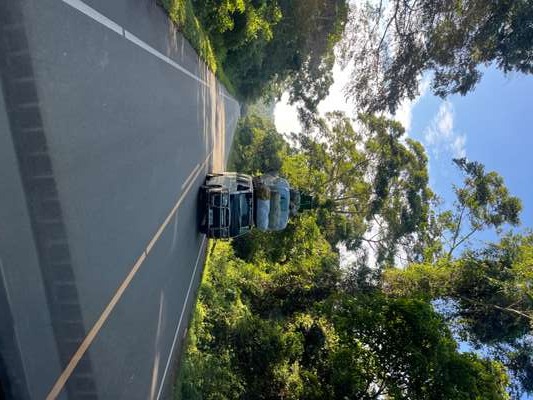
Road construction in southwestern Uganda. Highway projects of this scale require an Environmental and Social Impact Assessment reviewed and approved by NEMA under S.I. 47/2020 before works begin.
The ESIA process involves several stages. First, the project developer submits a project brief to NEMA — a summary of the proposed activity and its likely environmental and social effects. NEMA uses this to determine whether a full ESIA is required or whether a simpler Environmental Project Brief will suffice. For significant projects, a full ESIA is mandatory. The developer commissions a licensed ESIA practitioner to carry out the study, which includes field surveys, stakeholder consultations, and an assessment of impacts on biodiversity, hydrology, soils, air quality, and local communities.
NEMA reviews the ESIA report and may request revisions or additional studies. When satisfied, it issues an Environmental Impact Certificate — the document that authorises the project to proceed, subject to conditions. These conditions often include requirements for monitoring, mitigation measures, and periodic reporting to NEMA during construction and operation.
Financial Guarantees: Ensuring Operators Can Clean Up
One feature of NEMA's waste management regulations that tends to surprise operators encountering the system for the first time is the financial guarantee requirement. Under S.I. 49/2020, operators of certain categories of waste treatment and disposal facilities must provide a financial guarantee — essentially a form of security that ensures the operator has the means to cover remediation costs if the facility causes environmental damage or is abandoned without proper closure.
The guarantee can take several forms, including bank guarantees, insurance bonds, or contributions to an approved environmental fund. The amount is calculated based on the type and scale of the facility, taking into account the potential costs of site remediation and waste removal in a worst-case scenario. For facilities handling hazardous waste, the guarantee amounts are substantially higher than for general waste operations.
This mechanism was introduced partly in response to historical cases where waste facilities closed, leaving contaminated sites with no responsible party to fund clean-up. It places a concrete financial obligation on operators from the outset rather than relying on post-incident enforcement.
Uganda Cleaner Production Centre: The Advisory Side
Not all of NEMA's work is enforcement-oriented. The Uganda Cleaner Production Centre (UCPC), which operates in close coordination with NEMA, focuses on the advisory and capacity-building side of environmental management. The UCPC works with businesses, manufacturers, and institutions to help them reduce waste generation at source, adopt cleaner production methods, and improve resource efficiency before regulatory intervention becomes necessary.
The UCPC's work is particularly relevant for small and medium enterprises that lack in-house environmental expertise. A factory that generates hazardous chemical waste, for instance, might work with the UCPC to identify process changes that reduce waste volumes — which in turn reduces the complexity and cost of its NEMA licensing obligations. This kind of proactive engagement tends to produce better environmental outcomes than enforcement alone.

A boda boda carrying water canisters near Buhoma. Rural communities rely on informal transport networks that operate largely outside formal regulatory frameworks — including NEMA's waste management system.

A member of the Batwa community in southwest Uganda. Indigenous and forest-adjacent communities have a direct stake in how environmental regulations protect the landscapes they depend on.
NEMA and Tourism: What Operators Need to Know
For anyone operating or planning to operate a tourism facility in Uganda, NEMA's requirements are not optional paperwork — they are a precondition for legal operation. A lodge in Bwindi that builds a new waste treatment plant, expands its accommodation capacity, or adds infrastructure in a wetland buffer zone needs NEMA approval before the work begins. Operating without the required environmental impact certificate or waste management licence exposes the operator to enforcement action, including orders to cease operations and financial penalties.
In practice, most established lodges near Uganda's major national parks have been through the ESIA process and hold the relevant licences. The system becomes most relevant at two moments: when a new facility is being developed, and when an existing facility undergoes significant expansion or modification. At both points, engaging with NEMA early — and ideally before finalising construction plans — is strongly advisable. Last-minute ESIAs are more expensive, take longer, and often require design modifications that would have been simpler to incorporate at the planning stage.
NEMA also conducts periodic compliance inspections of licensed facilities. These inspections check whether the actual operation matches what was described in the ESIA and what the licence conditions require. Facilities that have drifted from their approved operations — perhaps by expanding capacity without notifying NEMA, or by changing waste disposal methods — are at risk during these inspections. Maintaining accurate records and notifying NEMA of significant operational changes is both a regulatory obligation and a practical risk management measure.
The Albertine Graben: Where Environment and Extractive Industry Intersect
Southwest Uganda sits within the Albertine Graben, a geological zone that contains some of East Africa's most significant biodiversity alongside Uganda's oil reserves. This combination creates one of the most complex environmental governance challenges NEMA faces. On one side are conservation obligations tied to the Albertine Rift's status as a globally recognised biodiversity hotspot, with species found nowhere else on earth. On the other are the economic pressures associated with oil exploration and extraction in a region still building its infrastructure and institutions.
NEMA's role in this context extends well beyond routine licensing. The Environmental Protection Force — an enforcement arm that works with NEMA — operates in areas where illegal resource extraction, encroachment on protected areas, and industrial activity create ongoing compliance challenges. The Albertine Graben's overlapping jurisdictions, involving NEMA, the Uganda Wildlife Authority, local governments, and the Petroleum Authority of Uganda, require NEMA to play a significant coordination role alongside its direct regulatory functions.
For travellers, the main practical significance is that the region's environmental governance is active and sometimes visible: roadblocks checking timber transport, rangers monitoring park boundaries, and inspection activities at industrial facilities along the western corridor are all part of the regulatory ecosystem that NEMA coordinates.
The National State of the Environment Report
Each year, NEMA publishes a National State of the Environment Report — the NSOER — which provides a data-based assessment of environmental conditions across Uganda. The report covers air and water quality, land degradation, forest cover changes, wetland status, biodiversity trends, and the state of Uganda's protected area network. It draws on monitoring data from NEMA's own inspection activities, sector agencies, research institutions, and environmental audit submissions from regulated facilities.
The NSOER is a public document and serves as a baseline for assessing whether Uganda's environmental management system is producing measurable improvements. Recent editions have highlighted wetland encroachment, soil erosion in highland farming areas, and water quality issues in Lake Victoria and the Nile basin as priority concerns. The report also tracks NEMA's own regulatory activity — numbers of licences issued, ESIAs reviewed, inspections conducted, and enforcement actions taken — providing a measure of institutional output alongside environmental outcome data.
From Regulation to Reality: What It Looks Like on the Ground
Travelling through southwestern Uganda, the gap between regulatory frameworks and on-the-ground conditions is impossible to miss. Road construction progresses in stretches where ESIA processes have been completed and in other stretches where they have not. Waste disposal practices in rural communities bear little resemblance to the S.I. 49/2020 framework, which was designed with licensed commercial operators in mind, not households in remote areas without waste collection infrastructure.
Communities like Buhoma, at the edge of Bwindi Impenetrable National Park, illustrate this complexity. Tourism has created economic opportunity here — guesthouses, guides, craft sellers, lodges. But it has also brought pressure: more people, more waste, more demand for land and resources. NEMA's formal licensing system reaches the larger tourism operators. The informal economy — the boda bodas, the small traders, the families extracting stone and timber for subsistence — sits largely outside that framework.
This is not a uniquely Ugandan problem. Environmental regulatory systems everywhere tend to reach formal enterprises first and informal activity last. The question is whether the formal system is strong enough to set the direction of travel — to raise standards progressively and create incentives for informal actors to gradually engage. In Uganda, the regulatory architecture exists. Whether implementation keeps pace is what the annual NSOER is supposed to answer.
Frequently Asked Questions
What is NEMA in Uganda?
NEMA — the National Environment Management Authority — is Uganda's principal environmental regulatory body, established under the National Environment Act Cap. 153. It coordinates environmental management, issues licences and permits, oversees Environmental and Social Impact Assessments, and enforces environmental standards across all sectors. NEMA operates under the Ministry of Water and Environment.
What does NEMA regulate in Uganda?
NEMA regulates waste management (under S.I. 49/2020), Environmental and Social Impact Assessments for development projects (S.I. 47/2020), air quality and pollution control, water and wetland management, hazardous materials handling, and environmental audits of existing facilities. Any project with significant environmental impact — including tourism facilities, mining operations, and infrastructure developments — requires NEMA approval.
Do tourism lodges in Uganda need NEMA approval?
Yes. Lodges, tented camps, hotels, and other tourism facilities within or adjacent to national parks, game reserves, or wetlands must complete an Environmental and Social Impact Assessment under S.I. 47/2020 before construction or significant modification. Facilities with waste management operations also require a separate waste management licence under S.I. 49/2020. Operating without the required permits exposes operators to enforcement action.
How does NEMA's Technical Committee on Pollution Control work?
The Technical Committee on Pollution Control reviews applications for waste management licences and sets technical standards for waste treatment, storage, and disposal facilities. It evaluates facility design, treatment capacity, operator competence, and financial guarantees before recommending a licence under S.I. 49/2020. The Committee also reviews environmental audit reports from existing licence holders.
What is the Uganda Cleaner Production Centre?
The Uganda Cleaner Production Centre (UCPC) promotes sustainable production methods, waste minimisation, and resource efficiency. It provides technical advisory services to businesses in coordination with NEMA on pollution prevention. The UCPC helps companies adopt cleaner technologies, reduce hazardous waste generation, and meet NEMA's environmental licensing requirements — often as part of a compliance improvement programme aimed at avoiding enforcement action.
Frequently asked questions
What is NEMA in Uganda?
NEMA — the National Environment Management Authority — is Uganda's principal environmental regulatory body, established under the National Environment Act Cap. 153. It coordinates the management of Uganda's environment, issues environmental licences and permits, oversees Environmental and Social Impact Assessments (ESIAs), and enforces compliance with environmental standards across all economic sectors. NEMA operates under the Ministry of Water and Environment and publishes an annual National State of the Environment Report (NSOER).
What does NEMA regulate in Uganda?
NEMA regulates a wide range of environmental activities in Uganda, including: waste management (under S.I. 49/2020), Environmental and Social Impact Assessments for development projects (S.I. 47/2020), air quality and pollution control, water and wetland management, hazardous materials handling, and environmental audits of existing facilities. Any tourism facility, factory, mining operation, or infrastructure project with significant environmental impact requires NEMA approval before construction or operation.
How does NEMA's Technical Committee on Pollution Control work?
NEMA's Technical Committee on Pollution Control is a statutory body that reviews applications for waste management licences and sets technical standards for waste treatment, storage, and disposal facilities. The Committee evaluates facility design, treatment capacity, operator competence, and financial guarantees before recommending a licence. It also reviews environmental audit reports from existing facilities. Operators must meet the Committee's standards to obtain or renew a waste management licence under S.I. 49/2020.
What is the Uganda Cleaner Production Centre?
The Uganda Cleaner Production Centre (UCPC) is a national centre that promotes sustainable production methods, waste minimisation, and resource efficiency in Ugandan industries. It provides technical advisory services to businesses and works in coordination with NEMA on pollution prevention. The UCPC assists companies in adopting cleaner technologies, reducing hazardous waste generation, and meeting NEMA's environmental licensing requirements — often as part of a broader compliance improvement programme.
Do tourism lodges in Uganda need NEMA approval?
Yes. Under S.I. 47/2020, any tourism facility — including lodges, tented camps, hotels, and beach resorts — that falls within or adjacent to a national park, game reserve, or wetland must complete an Environmental and Social Impact Assessment (ESIA) before construction or significant modification. NEMA reviews the ESIA and issues an Environmental Impact Certificate. Facilities with ongoing waste management operations also require a separate waste management licence under S.I. 49/2020.