Overview
A waste management licence issued under Uganda's National Environment (Waste Management) Regulations is valid for the period specified on the licence document itself — the regulations do not prescribe a single fixed term. What the regulations do specify precisely is the renewal obligation: applications must be submitted at least 60 days before expiry, and the National Environment Management Authority (NEMA) reviews each renewal through a compliance inspection before re-issuing the licence.
That detail — 60 days, not 30 or 90 — is specific enough to matter to anyone operating a waste management facility in Uganda, and general enough to be missed in a quick reading of the statutory instrument. The same precision characterises most of Uganda's environmental compliance framework: the rules are clearly written; the challenge is knowing which instrument applies to which activity.
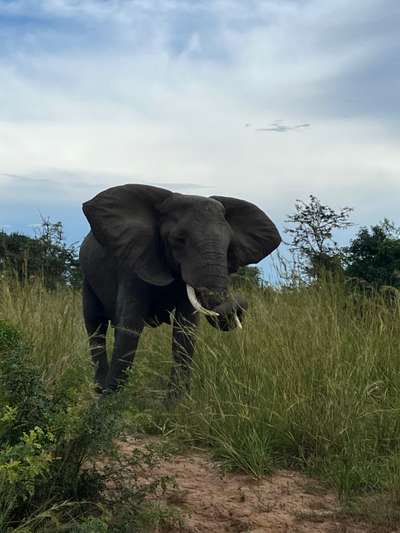
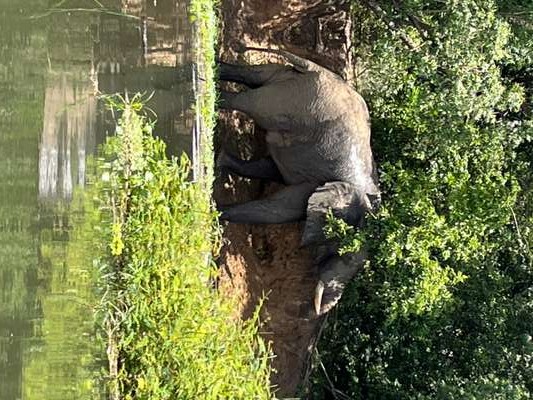
During a 3-day visit to Murchison Falls National Park in October 2024 — GPS-verified photography taken at coordinates ranging from 2.2701°N, 31.6649°E along the Victoria Nile to 2.4331°N, 31.5109°E on the northern savanna — the practical consequences of Uganda's environmental regulations were visible at every level: in the operational condition of the park, in the management of the lodges along the river, and in the infrastructure of the roads that connect the park to the country's urban centres. This article maps the regulatory framework behind what visitors observe on the ground.
Uganda's Environmental Regulatory Framework: The Architecture
NEMA — the National Environment Management Authority — was established under Uganda's National Environment Act and functions as the country's principal environmental regulator. It coordinates environmental standards across all economic sectors, reviews and issues environmental licences, conducts compliance inspections, and publishes the annual National State of the Environment Report (NSOER). The 2024 edition of this report, drawing on data from the 2018–2020 census period, provides the authoritative baseline for environmental conditions across Uganda's national parks and protected areas.
Below NEMA, a set of statutory instruments operationalise the general provisions of the National Environment Act for specific sectors and activities. Two instruments are particularly relevant to the tourism and waste sectors:
- S.I. No. 47 of 2020 — the National Environment (Environmental and Social Assessment) Regulations: governs when and how Environmental and Social Impact Assessments (ESIAs) are required, and sets out the categories of project that must obtain an environmental impact certificate before commencing operations.
- S.I. No. 49 of 2020 — the National Environment (Waste Management) Regulations: establishes the licensing framework for waste management operations, including the validity and renewal rules for waste management licences.
These instruments replaced earlier regulations and significantly updated the procedural requirements, particularly around timelines, inspection procedures, and the categories of facility subject to mandatory assessment. Operators working under the older framework needed to review their compliance status carefully when the 2020 instruments came into force.
Waste Management Licences Under S.I. 49/2020
Validity and the 60-Day Renewal Rule
The duration of a waste management licence is stated on the document itself, reflecting NEMA's practice of setting terms according to the nature and risk profile of the specific operation. A large-scale waste treatment facility and a small lodge waste disposal operation do not carry the same risk profile, and their licence terms may differ accordingly.
What applies uniformly under S.I. 49/2020 is the renewal procedure. Applicants must submit their renewal request a minimum of 60 days before the expiry date printed on their licence. This window exists to allow NEMA sufficient time to conduct a compliance inspection, review the facility's operational record, and process the renewal decision before the existing licence lapses. Operating without a valid licence — whether because the initial licence has expired or a renewal was submitted too late — constitutes a regulatory violation subject to enforcement action.
Upon receiving a renewal application, NEMA assesses whether the facility has met the conditions of the existing licence, whether any complaints or incidents have been recorded, and whether the facility's physical operations remain consistent with the approved scope. A successful inspection results in a renewed licence; deficiencies identified during the inspection generate a corrective action requirement that must be addressed before the licence is issued.
Who Needs a Waste Management Licence
The licence requirement under S.I. 49/2020 applies to entities that collect, transport, store, treat, or dispose of waste as a business activity — not to organisations that simply generate waste in the course of their primary operations (which are subject to separate waste handling obligations under the same regulations). The practical boundary: a lodge that disposes of its own kitchen waste through a managed composting and incineration system is managing waste but may not require a waste management licence if it is not operating as a commercial waste service. A company contracted to collect and process waste from multiple lodges across a park buffer zone would require a licence.
The distinction matters in the context of Uganda's national parks, where the growth in lodge and camp infrastructure has increased both waste volumes and the complexity of waste logistics. Lodges near the Victoria Nile in Murchison Falls National Park, for example, are subject to strict conditions on waste disposal, effluent management, and surface water impact as part of their UWA concession agreements — conditions that align with but sit alongside the NEMA licensing framework.
Environmental Compliance for Tourism Facilities: S.I. 47/2020 and the ESIA Process
Uganda's environmental impact assessment regime has existed in various forms since the 1990s, but the 2020 regulations materially updated both the threshold triggers and the procedural requirements for the ESIA process. Under S.I. 47/2020, any development project that falls within a defined category — or within or adjacent to a protected area — must complete a formal Environmental and Social Impact Assessment before construction can commence.
Facilities Subject to Mandatory Assessment
For tourism operators, the relevant categories under S.I. 47/2020 are explicit. Luxury camps, lodges, hotels, resorts, and beach facilities are all listed as project types requiring ESIA. The assessment covers physical impacts (site clearance, water abstraction, effluent disposal), ecological impacts (proximity to wildlife corridors, vegetation disturbance), and social impacts (effects on adjacent communities, cultural heritage sites, traditional land use).
In the context of Murchison Falls National Park — where lodge development along the Victoria Nile and within the park boundary has intensified over the past decade — this framework means that any new facility or significant expansion of an existing one must obtain an environmental impact certificate from NEMA before breaking ground. Uganda Wildlife Authority, as the park manager, is a mandatory consultee in the ESIA process for any development within or adjacent to the park boundary.
How the ESIA Process Works in Practice
A project requiring ESIA submits a project brief to NEMA, which determines whether a full ESIA is required or whether a more limited environmental review is sufficient. For significant tourism infrastructure near protected areas, a full ESIA is typically required. The developer appoints a registered environmental practitioner to prepare the ESIA report, which includes a baseline environmental survey, impact prediction and mitigation measures, a management plan, and a public consultation record. NEMA reviews the report, may request additional information or independent assessment, and either issues an environmental impact certificate or refuses the application with reasons.
The certificate includes binding conditions — specific mitigation measures, monitoring obligations, and reporting requirements that the operator must fulfil throughout the life of the project. Failure to comply with ESIA conditions can result in suspension of the certificate and, in serious cases, closure of the facility.
This framework has direct practical consequences for visitors. The operational quality of Uganda's major safari lodges — their waste management, water sourcing, habitat integration, and community engagement — reflects in part the compliance standards embedded in their ESIA conditions. A lodge operating under a well-managed ESIA regime will typically demonstrate lower visible environmental impact and more structured community benefit mechanisms than one operating outside the formal framework.
The Uganda Carbon Bureau and Carbon Offsetting at Lodge Level
At the Nkuringo sector of Bwindi Impenetrable National Park — approximately 450 kilometres south of Murchison Falls — the Nkuringo Bwindi Gorilla Lodge operates at 2,090 metres elevation and has established a partnership with the Uganda Carbon Bureau for CO2 offset management. This arrangement represents an emerging layer of voluntary environmental commitment operating above the mandatory ESIA and waste management licence requirements. The lodge's 18 rooms generate a quantifiable carbon footprint from heating, transport, and food supply chains; the Uganda Carbon Bureau certification provides a verified framework for offsetting that footprint through reforestation and community energy projects.
This type of voluntary carbon accounting is not yet required under Uganda's mandatory regulatory framework, but it is increasingly expected by international tour operators who source accommodation for international visitors — particularly in the gorilla tourism sector, where environmental credibility is a significant purchasing factor. NEMA has signalled interest in formalising carbon accounting standards for the tourism sector as part of Uganda's broader climate commitments, though mandatory requirements have not yet been implemented under the current regulatory cycle.
The Road Network and Environmental Management: What the Route Tells You
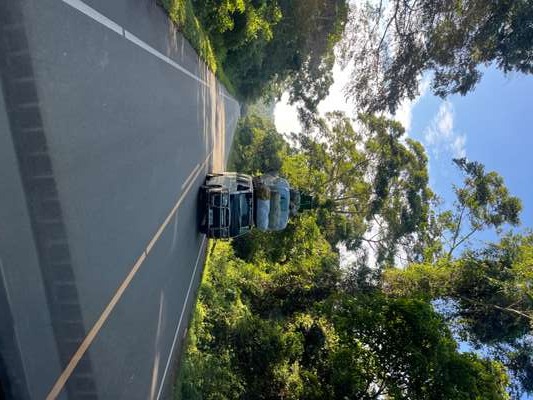
On the road from Butiru toward Murchison Falls National Park in October 2024, one scene recurred in various forms: vehicles carrying loads that would attract immediate enforcement attention in most European contexts, operating without apparent difficulty on well-maintained tarmac. A small bus carrying mattresses, bedding, and household goods stacked to twice the height of the vehicle above its roof rack is not unusual on Ugandan highways — it is a working solution to the economics of goods distribution across a country where formal logistics networks are still developing and load restrictions are inconsistently enforced.
This informal logistics infrastructure operates in parallel with a formal regulatory framework that is more comprehensive than many observers expect. Uganda maintains approximately 500 kilometres of bitumen roads and 380 kilometres of gravel roads under the National Road Fund in Kampala alone, with the Uganda National Roads Authority (UNRA) responsible for the national network. The Kampala City Roads and Bridges Upgrading Project (KCR&BUP), a 250-million-euro project co-financed by UK Export Finance and the Government of Uganda, is one of the largest urban infrastructure investments currently under implementation. The visible gap between formal regulatory capacity and actual road transport behaviour reflects a transition rather than an absence of framework.
The same observation applies to environmental compliance. NEMA's regulatory capacity has expanded significantly since the 2020 instruments came into force, and the Uganda Wildlife Authority's inspection regime for tourism concessionaires has become more systematic — UWA inspected 500 hospitality establishments under the environmental audit framework during the 2024–25 reporting period. The gap between formal requirements and consistent enforcement is real but narrowing, and operators who invest in compliance — ESIA certification, waste management licences, voluntary carbon accounting — typically demonstrate it in the quality and longevity of their operations.
Seasonal Considerations: Timing a Visit to Murchison Falls and Southwest Uganda
Uganda's two main national park regions — the northwest around Murchison Falls and the southwest around Bwindi and Kabale — follow broadly similar seasonal patterns, but with different practical implications for access and cost.
For Murchison Falls, the main dry seasons of June to September and December to February offer the firmest roads and most reliable vehicle access to the northern bank game circuits. October and November represent a transitional period — vegetation remains green, wildlife gathers near water sources, and visitor numbers drop sharply from peak-season levels. During the October 2024 visit described in this article, the park was operating comfortably: roads were passable with a standard 4WD, the boat safari ran on a normal schedule, and wildlife sightings on both the river and the northern savanna were excellent throughout the three days.
For southwestern Uganda — Bwindi Impenetrable National Park, the Mgahinga Gorilla National Park, and the hub town of Kabale — the practical difference between seasons is primarily one of price and road condition. Gorilla trekking permits cost $800 per person during peak periods (June to September and December to February). During the low seasons of April, May, and November, the same permits are available from $450 per person — a reduction of nearly 44 percent. The park is accessible year-round, but the access roads to certain lodges and some forest trails within Bwindi become difficult after sustained rainfall; a 4WD with reasonable ground clearance is advised during the wet season months. The mountain gorillas themselves are present year-round and encounters are equally productive in any month.
Leonard Sharp, the Scottish physician who founded a hospital for leprosy patients on Bwama Island in Lake Bunyonyi in 1921, was working in the southwest Uganda region more than a century before the gorilla tourism industry existed. The lake — 29 islands, 44 metres deep, at an altitude of roughly 1,960 metres — remains one of the most accessible additions to a Bwindi-based itinerary and requires no permit or specialist preparation. Its proximity to Kabale makes it a natural half-day excursion for visitors who arrive in the region a day before their scheduled gorilla trek.
Monitoring, Reporting, and the National State of the Environment Report
NEMA's annual NSOER provides the closest approximation to a consolidated environmental audit of Uganda. The report tracks conditions across protected areas, urban centres, water bodies, and key ecosystems, drawing on data contributed by government agencies, research institutions, and academic partners including Kabale University. The 2024 edition is the most recent published summary of environmental status across Uganda's national park network and draws on census and monitoring data from the 2018–2020 period for wildlife populations.
For the mountain gorilla population specifically, the NSOER references the 459 individuals recorded in Uganda during the 2018–2020 census — a figure that represents a recovery from the critically endangered status of the 1980s when the entire global population was estimated at fewer than 250 animals. That recovery is attributed directly to the combined effect of sustained anti-poaching enforcement, transboundary management coordination between Uganda, Rwanda, and the Democratic Republic of Congo, and the conservation revenue generated by gorilla trekking permits and habituation experience fees.
The connection between environmental compliance frameworks and wildlife recovery is not abstract. The ESIA regime that requires lodges to maintain minimum distances from gorilla ranging areas, manage effluent away from water sources, and report incidents involving wildlife contact is one of the mechanisms through which the permit and fee revenues are converted into habitat protection. NEMA's role in enforcing these conditions — and in tracking compliance through the NSOER monitoring process — is part of the governance infrastructure that the gorilla population's continued growth depends on.
From the field
Frequently asked questions
How long is a waste management licence valid in Uganda?
The validity period is stated on the licence document itself — the National Environment (Waste Management) Regulations S.I. No. 49 of 2020 do not set a single fixed term for all licences. NEMA sets the duration according to the nature and risk profile of the specific operation. The one universal rule is the renewal deadline: applications must be submitted at least 60 days before the expiry date. NEMA reviews the renewal through a compliance inspection and, on successful completion, issues a renewed licence.
What facilities near Uganda's national parks require environmental permits?
Under S.I. 47/2020, any project falling within or adjacent to a protected area must complete a formal Environmental and Social Impact Assessment (ESIA) before commencing operations or construction. Facility types explicitly listed include luxury camps, lodges, hotels, resorts, and beach facilities. The requirement applies to new construction and to significant modifications of existing facilities. NEMA manages the ESIA review and issues environmental impact certificates with binding compliance conditions.
What is NEMA in Uganda and what does it regulate?
NEMA — the National Environment Management Authority — is Uganda's principal environmental regulator, established under the National Environment Act. It issues and enforces environmental licences, reviews and approves ESIAs, conducts compliance inspections, and publishes the annual National State of the Environment Report (NSOER). For tourism operators, NEMA is the primary licensing authority for any facility within or near a protected area. Uganda Wildlife Authority (UWA) is a mandatory consultee for all developments affecting national park boundaries or buffer zones.
When is the best time to visit southwestern Uganda for gorilla trekking?
Gorilla trekking operates year-round in Bwindi Impenetrable National Park and Mgahinga Gorilla National Park. The dry seasons (June to September, December to February) offer the firmest road and trail conditions. The low seasons of April, May, and November offer permits from $450 per person — compared to $800 during peak months — a significant cost difference. The gorillas themselves are present and trackable in any season; road conditions are the main practical variable, and a 4WD is advisable during wet months.
Does Murchison Falls National Park have environmental compliance requirements for lodges?
Yes. All tourism facilities in or adjacent to Murchison Falls National Park operate under UWA concession agreements that incorporate NEMA's environmental standards, including waste management, effluent disposal, and wildlife disturbance limits. New developments require ESIA clearance under S.I. 47/2020. Waste management operations that meet the S.I. 49/2020 threshold require a NEMA waste management licence. UWA and NEMA conduct periodic joint inspections; UWA reported inspections of 500 hospitality establishments across Uganda's park network during the 2024/25 reporting period.