Overview
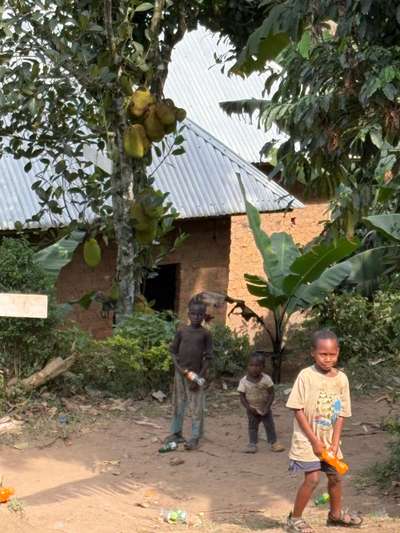
On June 21, 2026, children from the neighborhood near the Buhoma orphanage came over shyly. Something about their clothing and bearing was conspicuous — not right. We invited them to eat with us without hesitation. The instinct behind that gesture — noticing that someone is not okay, and doing something — is the same instinct that effective suicide prevention depends on. In Uganda's refugee settlements, the question is whether the systems exist to notice and respond at scale, before individual despair becomes irreversible crisis.
Uganda's National Suicide Tracking Dashboard for 2026 has produced the most detailed picture yet of what drives people to suicidal crisis in the settlement context. The trigger data — compiled from reported incidents across 13 settlements in the first quarter of 2026 — reveals a clear pattern: the overwhelming majority of suicidal crises are precipitated by social and economic stressors, not clinical mental illness alone. Family conflict leads at 33%. Domestic violence accounts for 23%. Lack of basic needs accounts for 16%. Financial problems specifically account for 12%. Prior mental illness — the category most people associate with suicide risk — accounts for just 13%.
The significance of this trigger distribution cannot be overstated for anyone designing intervention strategies. If clinical mental illness drove the majority of suicidal crises, the primary response would be clinical: psychiatrists, medication, inpatient stabilization. But when family conflict, domestic violence, and poverty drive the majority of crises, the response must be much broader. It must include mediation, GBV services, cash transfers, food assistance, and community cohesion programming — alongside, not instead of, mental health support.
Family Conflict as the Primary Driver
That family conflict accounts for a third of all suicidal crises in Uganda's refugee settlements is not surprising when you understand the structural conditions of settlement life. Displacement disrupts family systems. Extended families that previously distributed childcare, economic support, and conflict mediation across multiple households are separated — some members in Uganda, some still in the country of origin, some in third countries. Nuclear families, isolated in small settlement plots, carry burdens that were previously shared.
Financial pressure amplifies every family conflict. When a household cannot meet basic needs — food, school fees, medical costs — that pressure lands on the relationship between partners, between parents and children, between siblings. Disputes about money, about who has failed in their responsibilities, about competing needs within a fixed and inadequate resource base, generate conflict that can escalate to violence and to crisis.
In settlement contexts, the mechanisms that would normally help resolve family conflict — traditional elders, community networks, extended family arbitration — are weakened by displacement. People who have been in Uganda for only a year or two may not yet have the social networks that would mediate before conflict escalates. People who have been in settlements for a decade may have developed new community structures, but these are not always equally accessible to all household members — particularly women and younger people who may lack social standing in settlement governance structures.
Domestic Violence: A Crisis Within a Crisis
Domestic violence as the second most common trigger — 23% of cases — points to a specific population at elevated risk: women experiencing intimate partner violence. The relationship between domestic violence and suicide risk is well-documented globally. Women in violent relationships face compound stressors: physical harm, threat to life and safety, economic dependency that makes leaving difficult, social isolation enforced by controlling partners, and the psychological effects of chronic trauma.
In refugee settlements, these dynamics are intensified by specific features of the environment. Settlement housing is dense and offers limited privacy — which paradoxically can both expose violence to neighbor observation and trap women who fear public shame. Male partners who have experienced the emasculating loss of status that often accompanies displacement — from provider and decision-maker in their country of origin to dependent aid recipient in a foreign country — may enact that frustration in domestic violence. Gender-based violence rates in displacement settings globally are significantly higher than in stable communities.
The response to domestic violence as a suicide trigger cannot be primarily psychological. Women need safe spaces, access to information about their legal rights, economic support that enables exit from violent relationships, and legal protection enforcement. Case management services that integrate GBV support with mental health, economic empowerment, and legal assistance address the full complexity of the situation rather than treating it as a mental health problem with a therapy solution.
Lack of Basic Needs: The Poverty-Suicide Connection
Sixteen percent of suicidal crises in Uganda's settlement tracking data are attributed primarily to lack of basic needs — food insecurity, inadequate shelter, inability to pay for medicine, school fees, or other essential costs. This is not merely a correlation between poverty and poor mental health. It is a direct causal pathway: people who cannot feed their children, who watch their families suffer from preventable illness because they cannot afford treatment, who face eviction or collapse of the minimal shelter they have, reach a point of hopelessness that becomes suicidal.
The 712,000 refugees in IPC Phase 3 food crisis in 2026 — 37% of the assessed refugee population — exist within the same social environment as the 34 documented suicide incidents. The WFP ration shortfall that drives food crisis does not only cause hunger; it creates the conditions of hopelessness and despair that are proximate triggers for suicidal crises. Humanitarian funding for food is, in this sense, also mental health funding.
Financial problems specifically — the 12% trigger category — capture a related but distinct dynamic: debt, loan default, inability to repay borrowed money, financial obligations from family in the country of origin, and the shame and pressure that accompany financial failure in communities where reputation is a key social resource. For men especially, the inability to fulfill the provider role expected by cultural norms is a particularly acute source of shame that can escalate toward crisis.
Building Prevention Into the Humanitarian System
The implication of the trigger data is clear: suicide prevention in Uganda's refugee settlements cannot be siloed in a mental health sub-sector. It needs to be integrated into every sector that addresses the underlying triggers. Food sector investments that maintain rations at adequate levels prevent some fraction of the crises driven by lack of basic needs. GBV programming that identifies and supports women experiencing domestic violence prevents some fraction of the 23% of cases with that trigger. Livelihoods programming that gives households viable income sources reduces financial pressure that drives conflict.
At the same time, specific mental health infrastructure is necessary. Community-based psychosocial support — groups where people can talk about what they are experiencing without stigma, facilitated by trained community members — builds protective factors before crisis occurs. It creates social connection, normalizes help-seeking, and provides a low-threshold entry point into support services. In settlement contexts where clinical mental health services are scarce and stigma around formal help-seeking is high, CBPS groups are the most scalable prevention mechanism available.
Community health workers trained in mental health first aid — recognizing warning signs, approaching someone in distress, providing immediate support and referral — multiply the reach of the formal system beyond what any number of professional counselors could achieve. The investment required is modest: training, supervision, and referral pathways. The impact, in settlements where the nearest mental health professional may be many kilometers away, is substantial.
The Role of Community and NGOs
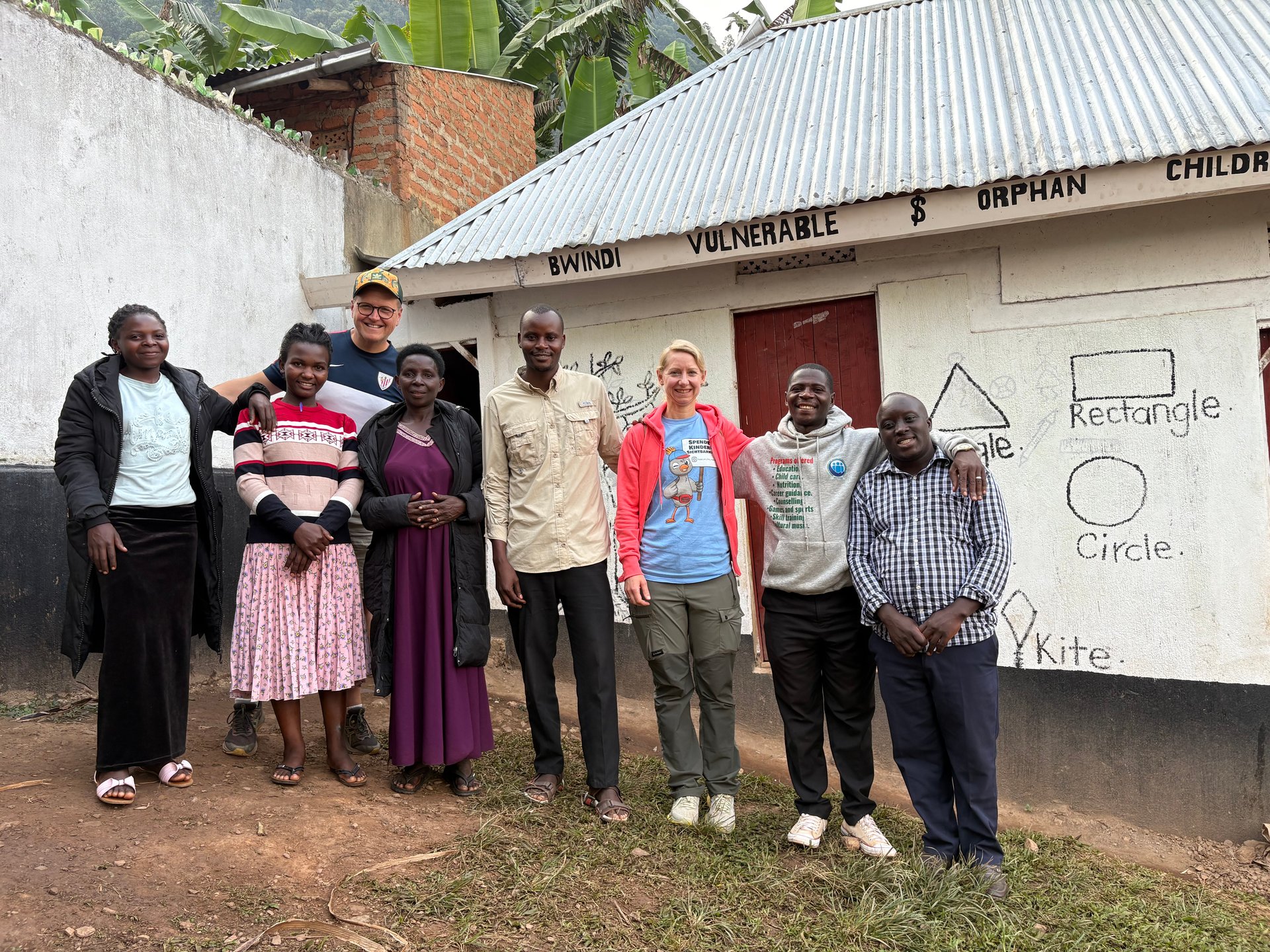
In Uganda's settlement context, NGOs operating under the UCRRP protection and health sectors provide the majority of community mental health services. International and national NGOs run psychosocial support programmes, individual counseling, GBV case management, protection monitoring, and community awareness activities. The mapping of 93 entrepreneurship support actors serving refugee and host communities in 2024 reflects the breadth of civil society engagement — much of which also indirectly supports mental health by addressing the economic triggers of crisis.
The community itself — through religious institutions, women's groups, community leaders, and informal mutual aid networks — provides a level of support and early warning that no formal system can replicate. Settlement communities that maintain strong social cohesion, where neighbors notice when someone withdraws, where community leaders create space for people to talk about difficulties, have lower crisis rates. Strong economic foundations in communities surrounding parks, built through conservation revenue sharing, strengthen this broader social fabric even if that is not their explicit purpose.
From the field
Frequently asked questions
What are the main triggers for suicidal ideation in Uganda?
The five main triggers documented in Uganda's refugee settlements are: family conflict (33%), domestic violence (23%), lack of basic needs (16%), prior mental illness (13%), and financial problems (12%). Social and economic stressors account for the large majority of cases.
How common is suicidal ideation in Uganda's refugee settlements?
Uganda's National Suicide Tracking Dashboard recorded 34 incidents across 13 refugee settlements in Q1 2026, with 6 deaths. Actual prevalence of suicidal ideation is substantially higher than recorded incident data, as many crises are not reported through formal channels.
What interventions are effective for suicide prevention in refugee settings?
Effective interventions include community-based psychosocial support groups, community health workers trained in mental health first aid, GBV response and prevention services, cash transfers and food assistance addressing the economic triggers, and family mediation services. Prevention must address the underlying social and economic stressors, not only clinical mental health symptoms.
How does domestic violence relate to suicide risk?
Domestic violence is the second most common trigger (23%). Women experiencing intimate partner violence face compound stressors — physical harm, loss of safety, economic dependency, social isolation — that significantly elevate suicide risk. GBV services including safe spaces, legal support, and economic empowerment are critical prevention components.
What role do NGOs play in suicide prevention in Uganda?
NGOs provide the majority of community mental health services: psychosocial support groups, counseling, GBV case management, community health worker training, and protection monitoring. With 93 entrepreneurship support actors mapped in 2024 and extensive NGO programming across UCRRP sectors, civil society is the operational backbone of mental health prevention in Uganda's settlements.