Overview
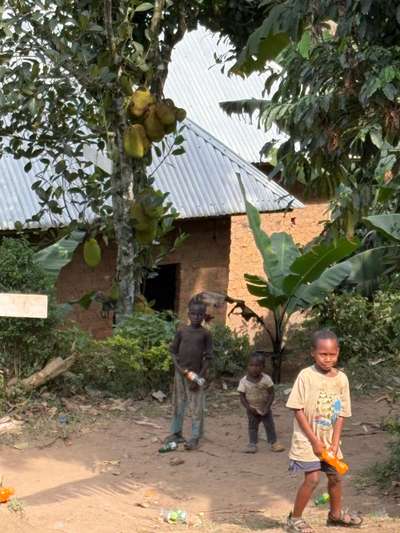
In June 2026, traveling through southwest Uganda, I was struck by the landscape. The rains had been good — above average across Uganda's bimodal regions, which cover most of the south, west, and center of the country. The hills around Buhoma were intensely green, matoke plantations full, the roadside markets well-stocked with tomatoes, avocados, and sweet potatoes. Uganda's agricultural base, when the rains cooperate, is genuinely productive. The country escaped the famines that struck parts of Ethiopia and the Sahel because its soil and rainfall are, in most years, adequate.
That productive capacity makes the food crisis data more striking, not less. In 2026, with above-average rainfall across most of the country and food inflation running at a moderate 2.5%, a national emergency was not evident. But 712,000 refugees — 37% of the assessed refugee population — were classified in IPC Phase 3 food crisis. The explanation is not Uganda's agricultural failure. It is a funding failure: WFP rations cut because international donors did not provide sufficient contributions to feed two million displaced people adequately.
Uganda's food security landscape in 2026 is defined by this divergence. For the host population, a relatively good year: adequate rainfall, moderate food inflation, real GDP growth of approximately 5%. For the refugee settlement population, a crisis created not by drought or market failure but by the gap between what the international humanitarian system committed to provide and what it actually delivered.
Uganda's Agricultural System: Bimodal and Unimodal
Uganda's agricultural geography divides broadly into two rainfall systems. The bimodal regions — covering the south, west, central, and eastern highlands — experience two rainy seasons: the long rains roughly from March to May and the short rains from September to November. Two seasons mean two planting and harvesting cycles annually, providing more consistent food supply and greater resilience to individual season failures.
The unimodal regions — the north and northeast, including districts like Karamoja, Acholi, and the West Nile area — depend on a single rainy season, typically from April to October. These areas are more vulnerable to drought years: a single poor season means a full year of food shortfall. They are also where many of Uganda's northern refugee settlements are located, adding displacement pressure to already climate-vulnerable agricultural systems.
The 2026 above-average rainfall announcement refers primarily to the bimodal regions. Rainfall variability in Uganda has increased with climate change — the Uganda Meteorological Authority documented unreliable seasonal onset and cessation patterns even in years of above-average total rainfall. The headline figures of adequate rainfall do not eliminate local agricultural failure in specific sub-counties or for specific crops. Kiryandongo settlement, in 2025, experienced a failed harvest that threatened local farmers even in a broadly adequate national year.
Food Inflation: Who It Helps and Who It Hurts
A food inflation rate of 2.5% is low by regional and historical standards. For households that purchase food — urban residents, landless rural laborers, traders — low food inflation means food remains relatively accessible in monetary terms. It is a positive indicator for food security among the majority of Uganda's non-subsistence population.
For refugee households in settlements, food inflation is a secondary concern. The primary determinant of their food access is not market price but WFP ration level. A refugee household receiving adequate WFP rations at any food price is food-secure (on the commodity dimension, at least). A refugee household receiving 50% rations — as has happened in some settlements during recent funding shortfalls — is food-insecure regardless of market prices, because the gap must be met from farm production or market purchases using cash income that most settlement households do not have in adequate quantity.
The interaction between ration cuts and market prices does matter at the margin: when rations are cut and food prices are high, the gap is harder to close from market purchases. The 2026 combination of ration shortfalls and moderate food inflation is less damaging than ration shortfalls would be during a food price spike. But the fundamental problem — rations cut because of funding gaps — is not resolved by favorable market conditions.
The IPC Classification: What Phase 3 Means
The Integrated Food Security Phase Classification provides a standardized, evidence-based system for describing food insecurity severity. Phase 3 — crisis — means that households have significant food consumption gaps, or are able to meet minimum food needs only by depleting assets or adopting irreversible coping strategies that compromise their future livelihoods. It is one step above Phase 2 (stressed) and two steps below Phase 5 (famine).
712,000 refugees at Phase 3 — 37% of the assessed refugee population — is a substantial food crisis. It is not a famine, and it is not primarily caused by food production failure in Uganda. It is caused by a decision by international donors not to fund WFP's Uganda operations adequately. The food exists in Uganda. The trucks can move it. The distribution infrastructure is in place. What is missing is the financial commitment to purchase and distribute enough food for the population that needs it.
This distinction matters for how the crisis should be understood and responded to. Agricultural interventions, improved farming techniques, and market systems development are all important for long-term food security in refugee settlements. But they will not resolve the 2026 food crisis on their own, because the crisis is not primarily a production or market problem. It requires humanitarian funding at the scale the UCRRP appeal requests — and is consistently not receiving.
The Self-Reliance Pathway and Its Limits
Uganda's long-term food security strategy for the refugee population involves reducing dependence on WFP food aid through increased agricultural production and market participation. Refugees with adequate land, good soil, and two rainfall seasons can theoretically produce enough food to reduce or eliminate their need for ration support. In practice, this pathway works for some households and in some settlements — but not for all, and not quickly enough to address the current crisis.
Land allocation has declined as the refugee population has grown and settlements have become more crowded. Newer arrivals in established settlements receive smaller plots than original residents. In settlements near the DRC border with less fertile highland soil, agricultural productivity is lower. Households headed by women or elderly individuals, or households with high dependency ratios (many children, few working-age adults), produce less even with equivalent land access.
The 66% Acceptable Food Consumption Score among refugee households in December 2024 — from the Uganda Self-Reliance Index — represents the combined effect of farming, market purchases, and WFP rations. Disaggregating how much each source contributes is difficult. What is clear is that for 37% of the assessed population, the combination is insufficient. The gap is real, documented, and primarily attributable to funding constraints rather than to failures of the Ugandan system or of refugee households themselves.
From the field
Frequently asked questions
What is the food security situation in Uganda in 2026?
Uganda's bimodal agricultural regions received above-average rainfall in 2026, supporting generally adequate harvests. Food inflation stands at 2.5%. However, 712,000 refugees — 37% of the assessed population — are in IPC Phase 3 food crisis, driven primarily by WFP ration funding shortfalls rather than any broader food production failure in Uganda.
How many refugees in Uganda face food crisis?
712,000 refugees were classified in IPC Phase 3 (food crisis) in 2026. This is 37% of the assessed refugee population. The primary driver is insufficient WFP food ration funding — not food unavailability in Uganda broadly.
What is the IPC food security classification?
The Integrated Food Security Phase Classification uses a 5-phase scale. Phase 3 (crisis) means households have significant food consumption gaps or can meet minimum needs only by depleting assets and adopting coping strategies that compromise their future livelihoods. Phases 4 and 5 represent emergency and famine conditions.
How does rainfall affect food security in Uganda?
Uganda's bimodal agricultural regions experience two rainy seasons and are relatively resilient to individual season failures. The northern and northeastern unimodal regions are more climate-vulnerable. Above-average rainfall in 2026 benefited bimodal regions, but refugee settlements in the north face persistent agricultural challenges alongside ration shortfalls.
What is the food inflation rate in Uganda in 2026?
Food inflation in Uganda stands at approximately 2.5% in 2026 — relatively low. The national inflation rate is 3.6%. Moderate food inflation reduces additional pressure on market-purchasing households but does not address the fundamental ration-funding problem for refugee households.