Overview
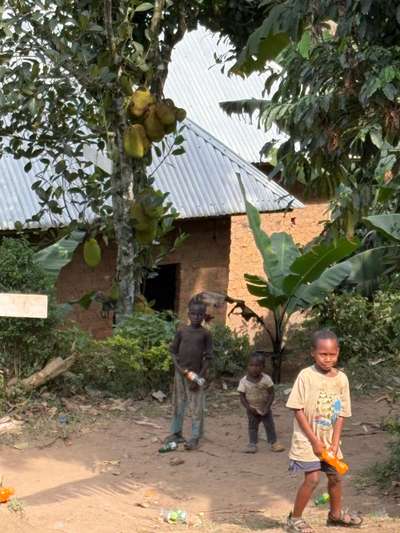
The children I photographed in Buhoma on June 21, 2026 were close to the edge of what I would call well-nourished. Something in their appearance — body weight, posture, the quality of attention they were giving the world — stood out. We invited them to eat with us. The instinct to respond to visible under-nutrition in a child is immediate and human. What makes it harder in a humanitarian system is that the numbers at scale are enormous, and the response requires not individual generosity but sustained institutional funding.
At Ocea reception centre in Uganda, a screening of 46 children found 19 malnourished. That is a Global Acute Malnutrition rate of 41%. The acceptable threshold — the level below which a population is considered not to be in a nutrition emergency — is under 10%. Ocea's rate is four times the acceptable maximum. Two children had Severe Acute Malnutrition, a 4% SAM rate against a below-2% target. These are not statistics from a historical archive. They are from the critical indicators tracking matrix for June 2026.
Ocea is a reception centre — a facility that processes newly arrived refugees before they move to permanent settlements. The children screened there are children who have recently crossed an international border, often after days or weeks of travel, limited food access, and exposure to conditions that concentrate malnutrition. The 41% rate reflects the conditions during flight, not primarily the conditions in Uganda's settlement system. But it also signals that the reception system needs to identify and treat these children immediately, before they move into settlement life where nutrition support may be less intensive.
What GAM and SAM Mean
Global Acute Malnutrition and Severe Acute Malnutrition are the two key classification categories in acute childhood nutrition monitoring. Both are measured primarily by mid-upper arm circumference (MUAC) in field settings — a color-coded tape measure wrapped around the left upper arm of a child aged 6–59 months that gives an immediate indication of nutritional status. Children with MUAC below 125mm are classified as moderately acutely malnourished; below 115mm, severely acutely malnourished.
GAM encompasses both moderate and severe categories — it is the total proportion of children with any level of acute malnutrition. A population-level GAM rate above 15% is classified as a nutrition emergency requiring immediate mass response. Above 10% requires targeted intervention. Ocea's 41% rate is deep in emergency territory — not marginal excess.
SAM is the most severe category. Children with SAM are at immediate risk of death from malnutrition and its complications, including immune suppression, organ dysfunction, and inability to fight infections that would be mild in a well-nourished child. SAM requires clinical treatment: ready-to-use therapeutic food (RUTF), medical screening for infections, and in severe cases inpatient care. The two SAM children identified at Ocea needed immediate treatment, not simply additional food at their next meal.
Reception Centres as a Critical Intervention Point
The comparison between Ocea and established reception centres is informative. Monitoring data from a different centre during the same period showed a GAM rate of 8% — below the 10% intervention threshold. This reflects a population of children who have been in the Uganda system for some weeks, received initial nutrition support at arrival, and are in better condition than newly arrived children at Ocea.
The gap between 41% and 8% in two facilities serving similar overall populations demonstrates that the reception centre phase — the first days and weeks after arrival — is where nutritional intervention has the highest impact. Children who arrive malnourished and receive immediate treatment can recover relatively quickly. Children who arrive malnourished and are not identified and treated deteriorate further, arrive at permanent settlements already compromised, and are harder to treat.
This makes screening at reception not just a monitoring exercise but a clinical service. The MUAC tape is not data collection for its own sake. It is the trigger for a referral to therapeutic feeding that, if it arrives in time, can prevent severe outcomes. The question is whether the nutrition teams at reception centres have the supplies — RUTF, supplementary food, treatment protocols — to respond to the cases they identify.
The Journey to Ocea
Understanding the Ocea numbers requires understanding what the children arriving there have experienced. Ocea is a reception centre for arrivals entering Uganda from DRC or through a specific border corridor. The families arriving there have typically traveled for multiple days, often through areas of conflict or insecurity. Food access during flight varies enormously — some families carry provisions; many run out quickly. Children are more vulnerable than adults to the effects of restricted food intake.
Infectious disease compounds nutritional depletion: diarrhea, respiratory infections, and malaria — all common during displacement — increase metabolic demands while reducing appetite and nutrient absorption. A child who arrives at Ocea after two weeks of travel with limited food and one episode of diarrheal illness may have MUAC readings that do not reflect chronic poverty in their country of origin. They reflect acute depletion from the journey itself.
This distinction matters for understanding what the 41% rate tells us about the Ocea population specifically, versus Uganda's settlement nutrition situation more broadly. It does not minimize the crisis — 19 malnourished children from 46 screened is an emergency regardless of cause — but it frames the appropriate response. The intervention required is acute therapeutic feeding for the children identified, plus systematic screening of all under-5 children at arrival to catch cases before they worsen.
The Broader Nutrition System
Beyond Ocea, Uganda's refugee nutrition system tracks malnutrition across all reception centres and settlement health facilities through the critical indicators matrix. The June 2026 data shows that most established centres are below the 10% GAM threshold — meaning the reception-to-settlement transition, combined with feeding programmes in settlements, brings children's nutritional status to manageable levels for most of the population.
The 712,000 refugees in IPC Phase 3 food crisis across the settlement system — 37% of the assessed population — do not all have children with acute malnutrition. But food crisis conditions create the conditions for malnutrition to develop, particularly among children, pregnant women, and breastfeeding mothers. The nutrition monitoring system is designed to catch emerging problems before they become crises; the Ocea data signals that new arrivals need particularly close attention.
Investment in nutrition services — therapeutic food supplies, trained nutrition workers, functioning referral pathways — is one of the areas most affected by the UCRRP funding gap. Drug stockouts at 73% of health facilities mean that even when malnutrition is identified, treatment resources are not always available. The monitoring identifies the problem. The funding gap constrains the response.
From the field
Frequently asked questions
What is the malnutrition rate at Ocea reception centre?
Of 46 children screened at Ocea reception centre in June 2026, 19 were malnourished — a Global Acute Malnutrition rate of 41%, against an acceptable threshold of below 10%. Two children had Severe Acute Malnutrition — a 4% SAM rate against a below-2% target.
What is Global Acute Malnutrition (GAM)?
GAM measures both moderate and severe acute malnutrition in children under 5, assessed by mid-upper arm circumference. A rate above 10% requires targeted intervention; above 15% is a nutrition emergency. Ocea's 41% rate far exceeds both thresholds and indicates a severe nutrition crisis among newly arrived children.
Why is malnutrition high among newly arrived refugees?
Newly arrived refugees have often experienced food deprivation during flight, combined with diarrheal disease and other infections that deplete nutritional reserves. Reception centre populations reflect conditions during the journey, not only the situation in their country of origin. Early identification and treatment is critical.
What treatment is available for malnourished children in Uganda's refugee system?
Uganda's refugee health system includes Outpatient Therapeutic Programmes using ready-to-use therapeutic food (RUTF) for SAM, and supplementary feeding for moderate malnutrition. Reception centres screen all under-5 children on arrival and refer identified cases immediately. Availability is constrained by funding-driven drug and supply shortfalls.
How does malnutrition at reception centres compare to established settlements?
GAM rates are consistently higher at reception centres than in established settlements. Monitoring data from an established centre in mid-2026 showed 8% GAM — below the intervention threshold — compared to Ocea's 41%. The reception-to-settlement transition, supported by feeding programmes, improves nutritional status for most children.