Overview
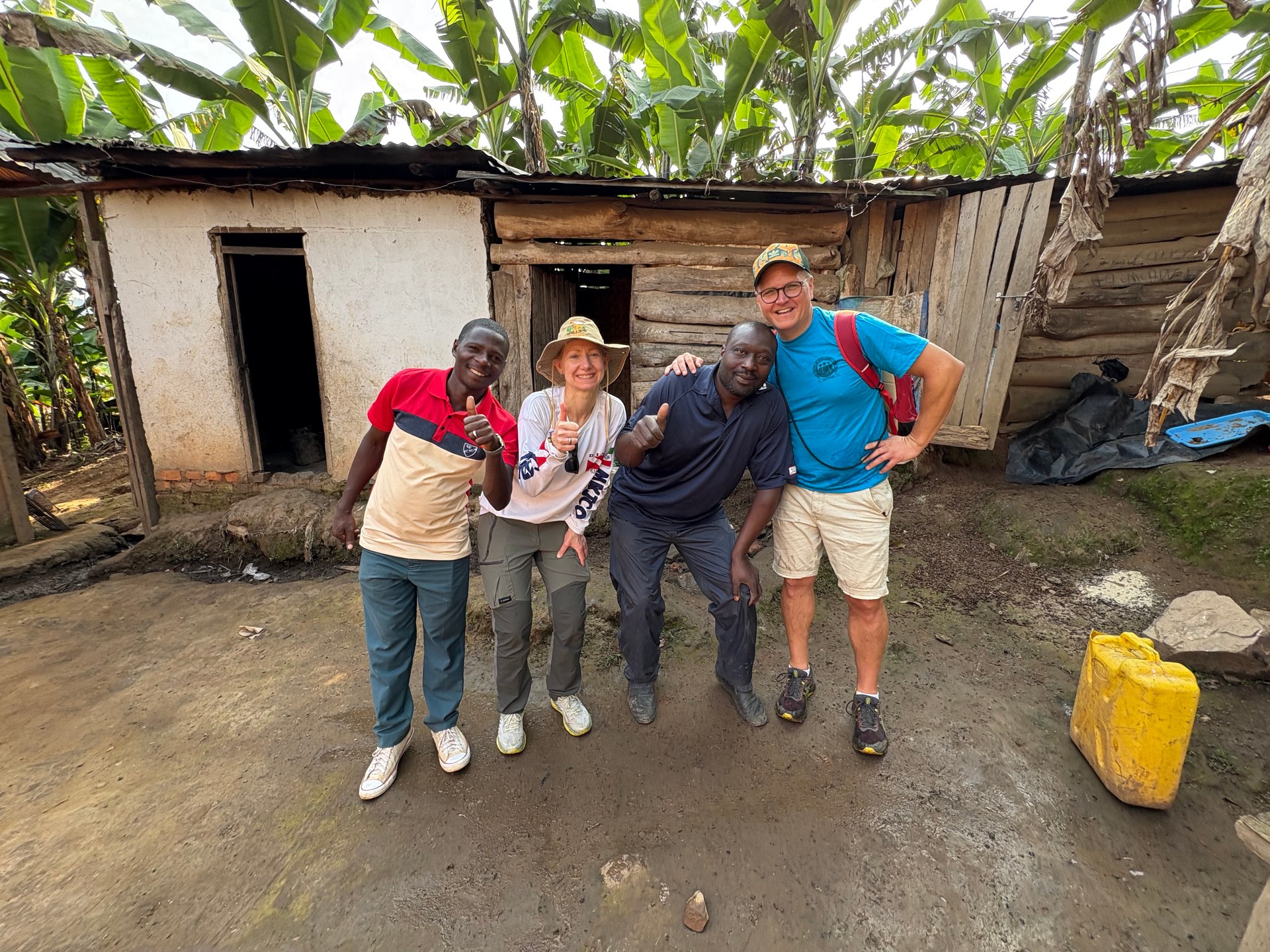
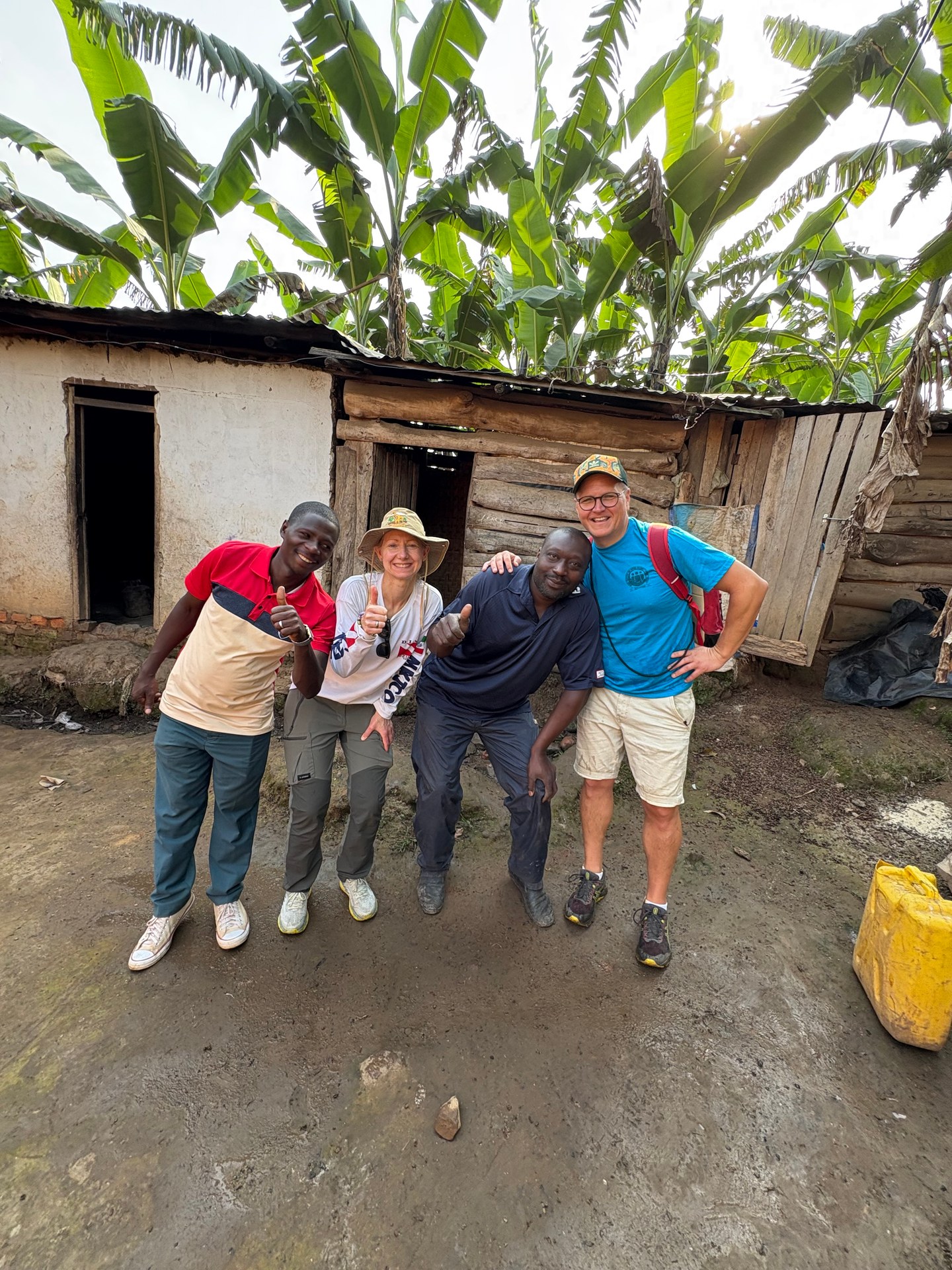
In June 2026, I visited a small poultry farmer in Buhoma — a community at the western edge of Bwindi Impenetrable National Park. He raises chicks carefully: clean housing, monitored feeding, individual attention. He knows each batch, tracks growth, keeps records. We bought chicks from him several times for the local orphanage — some for eggs, some eventually for meat. The care he brings to feeding a small flock is something I thought about later when reading the monitoring data from Uganda's refugee reception centres, where the standard is providing adequate daily nutrition to hundreds of people who have often walked for days to reach the border.
Refugee reception centres in Uganda are the first point of contact between the humanitarian system and newly arrived displaced people. They are temporary facilities — designed for stays of days to a few weeks — where arrivals are registered, health-screened, vaccinated, provided initial shelter, and prepared for onward movement to permanent settlements. The food standard at these centres is 2,100 kilocalories per person per day, provided as three hot meals. Meeting that standard consistently is both a technical and a logistical challenge.
The critical indicators data for Uganda's reception centres, tracked through June 2026, shows a mixed picture. The good news: the 2,100-calorie standard is broadly being met at the three main reception centres (Nyumanzi, Nyakabande, and Matanda). Hot meal provision operates as designed. The gaps are in secondary indicators — water quantity, health facility capacity, sanitation infrastructure — where chronic underfunding has left systems operating below standard.
The Three Main Reception Centres
Uganda's main reception centres serve different migration corridors and origin populations. Nyumanzi in Adjumani district, northern Uganda, processes arrivals from South Sudan — the largest single group, representing approximately 52% of Uganda's total refugee population. In high-inflow periods, Nyumanzi has recorded over 600 arrivals in a single day. The facility is positioned to serve populations crossing the Nile corridor from South Sudan's Central and Western Equatoria states.
Nyakabande in Kisoro district, southwestern Uganda, processes refugees arriving from Rwanda — predominantly Congolese who have transited Rwanda before entering Uganda. This corridor activates particularly when violence in the eastern DRC intensifies. Kisoro is also close to Bwindi Impenetrable National Park, the area I know best from multiple visits. The landscape here is mountainous and densely populated; the integration of large refugee flows into a highland agricultural economy creates pressures that differ substantially from the more expansive northern settlement landscape.
Matanda in Kisoro handles direct DRC border crossings — people who enter Uganda across Lake Edward or through the forest border rather than transiting Rwanda. The population mix at Matanda reflects the diversity of eastern DRC: Congolese of multiple ethnic backgrounds, including communities with long histories of movement across the Uganda-DRC border for trade and family reasons.
The 2,100-Calorie Standard in Practice
The international humanitarian minimum caloric standard — 2,100 kilocalories per person per day — is based on the average energy requirements of a population that includes adults, children, and elderly people engaged in minimal physical activity. Newly arrived refugees often have higher needs: people who have walked long distances, experienced stress, illness, or injury, and are depleted from the journey. The 2,100-calorie standard is a floor, not an optimum.
Meeting it consistently requires stable supply chains from the World Food Programme and implementing partners, functional cooking facilities, fuel or gas provision, and staffing that matches inflow volumes. When any of these components fails — a WFP delivery delayed, a cooking facility out of service, a sudden spike in arrivals — the caloric standard slips. Monitoring data captures these slippages against the baseline, allowing implementing agencies to identify and respond to gaps.
Three hot meals per day at reception centres is a different provision model from the dry ration system used in permanent settlements. In settlements, households receive food commodities — maize flour, beans, cooking oil, salt — and prepare meals themselves. In reception centres, centralized cooking provides immediate, ready food to people who may have just arrived with nothing. The transition between these two systems — from centralized provision to household self-cooking — is one of the adjustments that newly settled refugees must navigate in their first weeks.
Where the System Falls Short
The June 2026 monitoring data identifies specific gaps. Water provision at one reception centre stood at 14 litres per person per day — one litre below the 15-litre minimum. One litre is the margin between washing hands before preparing food and not doing so. It is the difference between adequate hydration and mild chronic dehydration. In a population that includes infants and elderly people, that margin matters for health outcomes.
Sanitation infrastructure showed a similar gap: the target is one latrine stance per 20 persons; actual provision at the measured centre was one per 24 persons — 26 stances short of target. These are not catastrophic failures; the centres are functional. But they are indicators of a system operating without adequate margin, where any sudden increase in arrivals would tip conditions below minimum acceptable standards.
The health system indicators are more concerning. Drug stockouts affect 73% of health facilities serving refugee populations — including reception centres and settlement clinics. This is not primarily a supply chain failure; it is a funding failure. The UCRRP health sector is consistently underfunded relative to its requirements. Without medicines, health workers can diagnose and advise but cannot treat. Long wait times — reported by 45% of patients, up from 30% the previous year — reflect both the volume of need and the inadequate number of health workers.
Arrivals in 2026: Who Is Coming and Why
In the first half of 2026, Uganda registered 48,456 new asylum seekers. The pattern of arrivals reflects active conflicts across the region. South Sudan contributed 16,197 new arrivals — continuing the pattern of periodic intensification that has driven displacement since 2011. DR Congo contributed 11,566, as conflict in the east between government forces and armed groups continued to displace civilian populations.
Eritrea contributed 14,482 new arrivals — the second-largest group, and a striking figure given Eritrea's geography. Eritreans are not border crossers; they flee their country by traveling through Sudan, Ethiopia, or across the Red Sea, then overland through multiple countries to reach East Africa. Those who arrive in Uganda have typically traveled thousands of kilometers. They are fleeing one of the world's most repressive political systems — indefinite mandatory military service, no freedom of movement, no independent civil society, no free press.
Sudan added 3,595 new arrivals, a fraction of what the ongoing Sudan civil war has generated in the regional displacement system overall — most Sudanese refugees are absorbed by Chad and Egypt — but still a significant number of individuals who crossed Africa's complexity to reach Uganda's reception system.
After Reception: The Permanent Settlement
Of the cumulative 110,849 asylum applicants processed, approximately 92 percent are located across Uganda's 13 main settlements — among them Adjumani, Bidibidi, Imvepi, Lobule, Palabek, and Palorinya — while 8 percent live in urban areas, primarily Kampala. The urban refugee population faces a structurally different situation: no land allocation, no centralized services, and integration into a city economy where informal employment is the primary livelihood pathway. Reception centres feeding into the settlement system are designed for the 92 percent; the urban pipeline operates differently and with less formal support.
Reception centres are designed to be temporary. The system works when the pipeline from arrival to registration to settlement movement functions smoothly. When settlements have capacity and transport is available, stays at reception centres can be as short as a week. When settlements are full, transport is unavailable, or documentation processes slow, people wait longer.
The physical conditions at reception centres are adequate for short stays but not designed for extended residence. Accommodation standards of 3.5 square meters per person, shared cooking facilities, communal latrines, and minimal privacy are tolerable for days. For weeks or months, they generate strain — between households sharing limited space, between new arrivals and those who have been waiting, and for vulnerable individuals including unaccompanied minors, survivors of sexual violence, and people with serious medical conditions who need more than a temporary shelter can provide.
The quality of the reception stage matters for long-term outcomes. People who arrive healthy, properly registered, vaccinated, and with accurate information about their settlement destination enter the system with better prospects than those who arrive sick, confused about their status, or registered incorrectly. Investment in reception quality is investment in the self-reliance outcomes that Uganda's refugee policy ultimately aims to achieve.
From the field
Frequently asked questions
What is the food standard at Uganda's refugee reception centres?
Uganda's refugee reception centres aim to provide 2,100 kilocalories per person per day through three hot meals. This is the international humanitarian minimum for acute food provision to newly arrived populations.
How many reception centres does Uganda operate?
Uganda operates three main reception centres: Nyumanzi in Adjumani (South Sudanese arrivals), Nyakabande in Kisoro (DRC arrivals transiting Rwanda), and Matanda in Kisoro (direct DRC border crossings). Each serves a different migration corridor.
What are the main gaps in Uganda reception centre operations?
Key gaps include drug shortages at 73% of health facilities, long wait times at 45% of health visits, and water provision falling 1 litre below the 15-litre daily minimum at one centre. Sanitation infrastructure at measured centres falls 26 stances short of the 1-per-20-persons target.
How long do refugees stay in reception centres?
Reception centres are designed for temporary stays of days to a few weeks while arrivals are registered, health-screened, and prepared for transfer to permanent settlements. Delays in settlement capacity or documentation can extend stays beyond the intended period.
How many new refugees has Uganda received in 2026?
Uganda registered 48,456 new asylum seekers in the first half of 2026. The largest groups were from South Sudan (16,197), Eritrea (14,482), DR Congo (11,566), and Sudan (3,595).