Overview
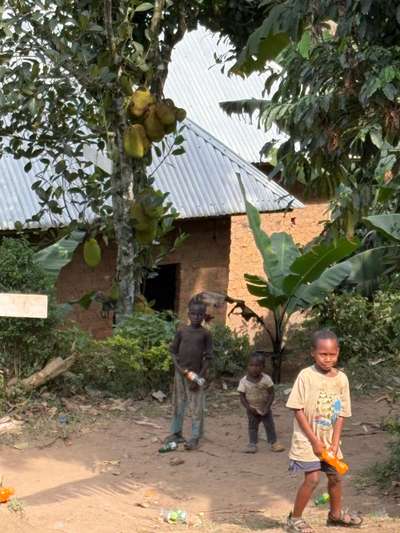
On June 21, 2026, I photographed a group of children near the orphanage in Buhoma — the village at the edge of Bwindi Impenetrable National Park in southwest Uganda. The children were hesitant, and something in their clothing and behavior stood out. We invited them to eat with us immediately. They were neighbors of the orphanage, not orphans themselves, but the line between the two is thin in communities where economic fragility is the permanent backdrop to daily life.
Those children are a small human detail within an enormous systemic reality. Uganda is home to more than two million displaced people from across the African Great Lakes region. That figure — as of June 30, 2026, exactly 2,031,697 refugees and asylum seekers — makes Uganda the largest refugee-hosting country on the African continent. It is a distinction that carries weight far beyond statistics.
Uganda's refugee hosting is not a recent development or an emergency response. It stretches back decades — Nakivale settlement in Isingiro district was established in 1959, making it one of the oldest refugee settlements in Africa. The country has absorbed waves of displacement from Rwanda (1959 and 1994), DRC (ongoing since the 1990s), Burundi (multiple crises), Somalia, and most massively from South Sudan since 2011. What Uganda offers has remained remarkably consistent: land, services, freedom of movement, and the right to work.
The Scale in Context
Two million refugees represents approximately 4% of Uganda's total population. If Germany were to host displaced people at the same proportional rate, it would currently shelter over three million. Uganda does this with a GDP per capita of USD 1,375 — less than a fortieth of Germany's. The commitment is real, legally embedded, and has been sustained across multiple governments and political cycles.
What makes Uganda's approach structurally distinctive is the self-reliance model. Refugees are not confined to fenced camps where they receive rations and wait for repatriation. They are allocated agricultural land — typically small plots — within designated settlement areas, and they are legally permitted to leave, work, trade, and engage with the host economy. Settlement boundaries exist on maps and in policy; in practice they are porous, and this is by design.
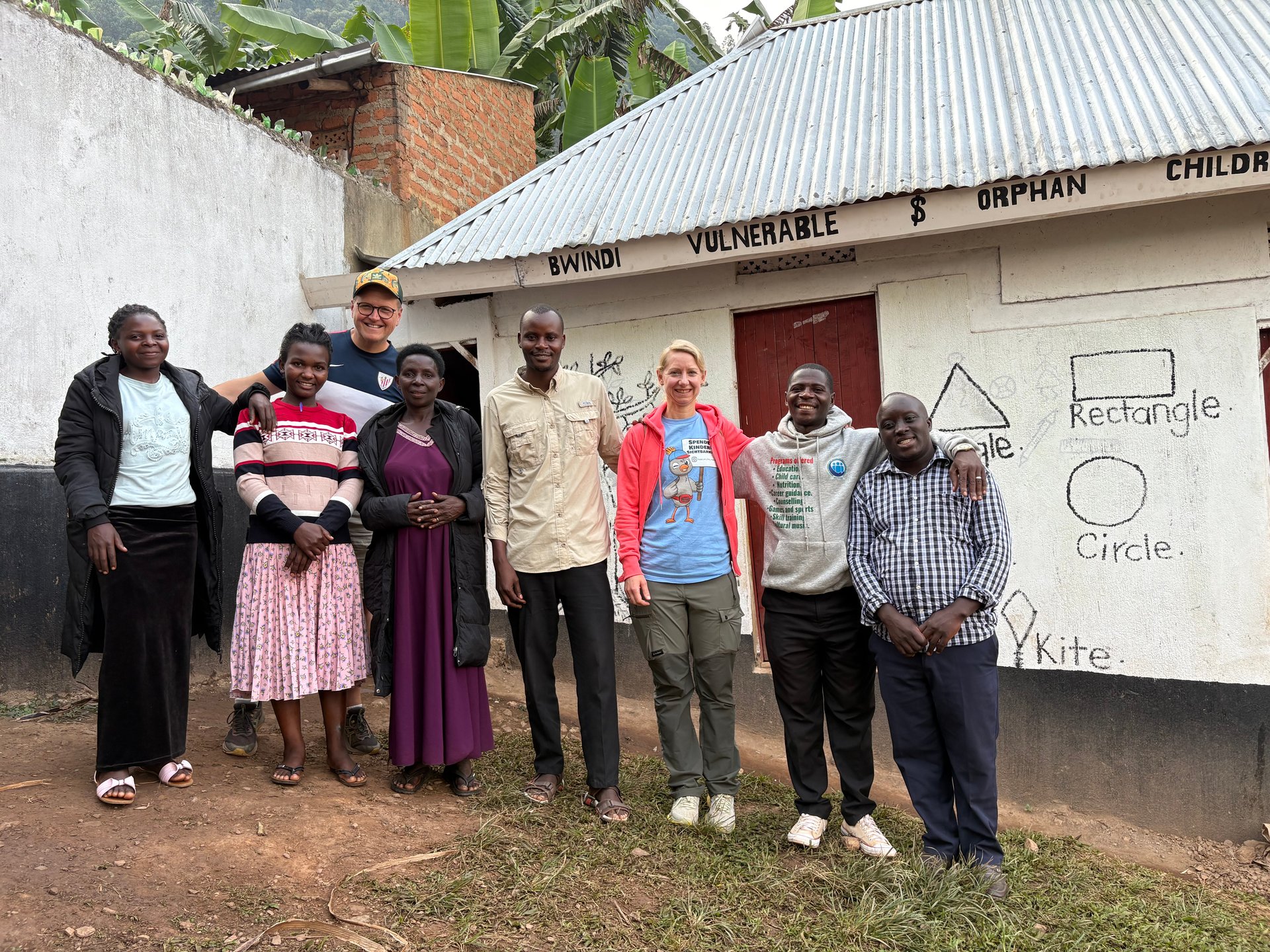
The model generates outcomes that camp-based systems cannot. Refugees in Ugandan settlements farm, build businesses, educate their children in schools alongside Ugandan pupils, and contribute to local markets. A chicken farmer in Buhoma whom I visited in June 2026 sells eggs and chicks to both community members and the nearby orphanage. His customers include refugees from the DRC who settled in the broader southwest Uganda area. These transactions are small. Across millions of people and tens of thousands of settlements, they add up.
Where Uganda's Refugees Come From
The pace of new arrivals has accelerated significantly. Since January 2025, Uganda has received over 120,000 asylum seekers, with the DRC accounting for 57 percent of that influx, South Sudan 27 percent, and Sudan 14 percent. This reflects continued deterioration of security in eastern DRC, the unresolved political situation in South Sudan, and the civil war in Sudan that began in April 2023.
South Sudan contributes the largest share of Uganda's refugee population. Conflict in South Sudan has been recurring since independence in 2011, with the most intense displacement crises in 2016–2017 and again in 2024–2025. The northern Uganda districts of Adjumani, Arua, Yumbe, and Madi-Okollo host the majority of South Sudanese refugees. Bidibidi settlement in Yumbe — which grew to over 270,000 people within its first year of operation in 2016 — remains one of the world's largest refugee settlements. In 2026, South Sudan accounted for 16,197 of the 48,456 new arrivals registered in the first half of the year.
DR Congo is the second major origin country, contributing approximately one third of Uganda's total refugee population. The eastern DRC has experienced continuous armed conflict for three decades. Uganda's Nakivale settlement — the oldest in Africa — was established specifically for Rwandan refugees but has received successive waves of Congolese since the 1990s. Kyangwali settlement in Kikuube district is another major DRC population concentration, with 158,546 people. In 2026, DRC contributed 11,566 new arrivals.
Smaller but significant populations come from Eritrea (14,482 new arrivals in 2026 — the second-largest group, driven by flight from indefinite military service and political repression), Sudan (3,595 new arrivals, amid the civil war that began in April 2023), Burundi, Somalia, and Rwanda. Uganda's Oruchinga settlement hosts primarily Rwandans; Pagirinya and Imvepi host South Sudanese; Palabek, opened in 2017, has received large numbers from South Sudan's Acholi population.
The Funding Gap: Chronic and Structural
The Uganda Country Refugee Response Plan coordinates the work of 96 partner organisations — UN agencies, international NGOs, Ugandan civil society organisations, and government bodies — across every sector of the response: food security, nutrition, health, education, water and sanitation, shelter, livelihoods, protection, and social cohesion. In 2024, the UCRRP appeal requested USD 857 million. It received USD 391 million — 46 cents for every dollar requested.
This is not a new situation. The funding gap has been persistent and widening: in 2021, the UCRRP received roughly 60% of its request; by 2025, that figure had fallen to around 22%. The consequences are visible in operational indicators. Long wait times at settlement health facilities increased from 30% to 45% of visits. Drug stockouts affect 73% of health facilities. Food rations have been cut to below 50% of the standard 2,100-kilocalorie daily requirement in some settlements. School enrolment falls when families cannot afford minimal school fees or when food insecurity forces children into labor.
The funding gap also undermines the self-reliance model's long-term logic. Market Systems Development programmes — which connect refugees with agricultural markets, vocational training, and financial services — require multi-year funding commitments to show results. Of the 8 programmes operating in Uganda in late 2024, all were working against the constraint of short-term, inadequate funding cycles that make it difficult to build durable economic pathways for refugees or host communities.
Reception Centres: The First Point of Contact
New arrivals enter Uganda's refugee system through reception centres positioned at key border entry points. Nyumanzi in Adjumani district processes South Sudanese arrivals from the northwest. Nyakabande in Kisoro processes those crossing from Rwanda (predominantly Congolese who have transited Rwanda). Matanda in Kisoro handles direct DRC crossings.
At reception centres, arrivals are registered, biometrically enrolled, health-screened, and provided initial food and temporary shelter before movement to permanent settlements. The centres operate under continuous pressure: during high-inflow periods, Nyumanzi has registered over 600 arrivals in a single day against a facility designed to process far fewer.
Reception centre conditions reflect the funding constraints of the broader system. In 2026, at least one centre was operating at 112% of its physical capacity, with water provision falling 1 litre per person per day short of the 15-litre daily minimum. These are not abstractions — they describe the experience of people who have often traveled hundreds of kilometers on foot to reach the border, carrying everything they own.
What Uganda's Role Demands
Uganda's extraordinary commitment to refugee hosting does not come without cost. Host communities in settlement districts bear disproportionate pressure on land, water, forests, and public services. Infrastructure designed for smaller populations is stretched. Teachers in schools near large settlements work with overcrowded classrooms. Health workers at district hospitals treat both the local population and refugees, often with supplies intended for fewer patients.
The children I photographed in Buhoma in June 2026 live far from the major northern settlements. But they exist within the same system — the same Ugandan economy, the same social fabric, the same inadequate infrastructure that simultaneously hosts two million displaced people while managing its own development challenges. Understanding Uganda as a country means holding both realities at once: an extraordinary humanitarian commitment and a population still working its way out of deep poverty. Those two things are not separate. They are the same story.
From the field
Frequently asked questions
How many refugees does Uganda host?
As of June 2026, Uganda hosts 2,031,697 refugees and asylum seekers — 1,957,559 registered refugees and 74,138 asylum seekers. This makes Uganda the largest refugee-hosting country in Africa.
Where do Uganda's refugees come from?
The two largest groups are from South Sudan (approximately 52% of the total) and DR Congo (approximately 33%). In 2026, new arrivals also came from Eritrea, Sudan, Somalia, Burundi, and Rwanda. South Sudanese and Eritrean arrivals were the largest new groups in the first half of 2026.
What is the Uganda Country Refugee Response Plan?
The UCRRP is the coordinating framework for Uganda's refugee response, uniting 96 partner organisations across government, UN agencies, and NGOs. In 2024, the plan requested USD 857 million and received USD 391 million — a 54% funding gap with direct consequences for food, health, and livelihoods services.
What is Uganda's policy toward refugees?
Uganda gives refugees land in settlements, freedom of movement, the right to work, and access to public services. The self-reliance model aims for economic integration rather than permanent camp-based aid dependence — though implementation is constrained by chronic underfunding and declining land availability.
Which are Uganda's largest refugee settlements?
The largest settlement is Nakivale (286,062 people), followed by Adjumani (236,453), Bidibidi (210,353), and Rhino Camp (approximately 10% of the total). Kampala's urban refugee population is around 9% of all refugees and faces distinct challenges compared to settlement populations.