Overview
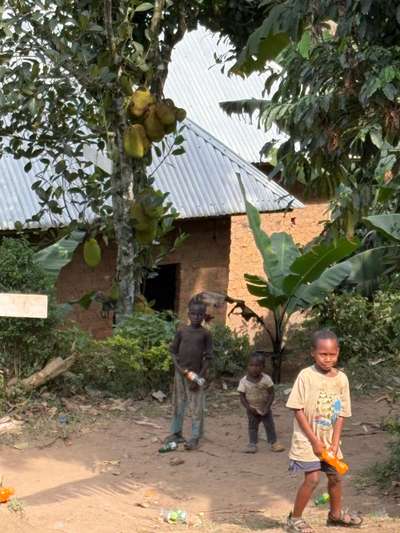
On June 21, 2026, the family who hosted us in Buhoma fed us from their garden: matoke, beans, groundnuts, sweet potato. It was a good meal — rich in variety, clearly produced with skill and care. They grew most of it themselves. Some of it they would sell at the market on Saturday. They were at the edge of the transition from subsistence to semi-commercial farming that Uganda's development policy explicitly seeks to accelerate. Their garden generated food security and some cash income; they were not the 33% of Uganda's households that the 2024 National Population and Housing Census classifies as subsistence economy participants. But they were close enough to that category that the distinction mattered in practical terms: a bad harvest, a medical bill, school fees for an extra child — any of these could push them back into pure subsistence, where the cash economy's opportunities simply do not reach.
The 2024 NPHC finding that 33% of Ugandan households are in the subsistence economy is one of the most important structural indicators in Uganda's current development data. It quantifies the share of the population that produces primarily for consumption rather than for sale — households whose economic activity is self-directed toward meeting their own food and basic needs, with little or no cash income from production. These households are not necessarily destitute: subsistence farmers can be well-fed and have adequate shelter. But they have no financial resilience, no capacity to invest in productivity improvements, and no connection to the market economy in which wages, savings, credit, and economic mobility operate.
The Labour Force Survey 2024 adds a complementary dimension: 75% of Uganda's employed population works in subsistence agriculture. This individual-level figure corresponds to the household-level NPHC finding. A country where three-quarters of employed people work in subsistence agriculture and a third of households have no meaningful market participation is a country where aggregate GDP growth statistics tell only part of the development story. The question is not whether Uganda is growing — it generally is — but whether that growth is reaching the 33% of households that are structurally outside the market economy.
What Subsistence Economy Classification Means
The NPHC classification of subsistence economy households captures a specific economic condition. These are not households in crisis — they are households in a stable but limited equilibrium. They grow food, raise small livestock, collect water, and manage a household without significant cash income. Their agricultural production is calibrated to meet their own consumption needs. In a good year, there may be a small surplus to sell; in a bad year, there may not be enough to eat.
The defining feature of the subsistence economy household is the absence of surplus production that generates cash income. Without cash income, the household cannot pay school fees consistently, cannot purchase agricultural inputs to improve productivity, cannot save against future shocks, and cannot invest in assets that would generate income. They are trapped not by poverty of effort — subsistence farming is physically demanding, skilled work — but by structural conditions that prevent their effort from generating returns beyond immediate consumption.
This is distinct from the national poverty line measurement. A household can be classified as subsistence economy and not fall below the poverty line if the imputed value of their own consumption is above USD 1.77/day per person. Conversely, a household with some cash income can still be below the poverty line. The two indicators are related but not identical. For development programming purposes, the subsistence economy classification is particularly useful because it identifies households that are outside the market economy entirely — households that need different interventions than households that are market-integrated but earning inadequate incomes.
The 75% Subsistence Agriculture Figure
The Labour Force Survey 2024 figure of 75% employed in subsistence agriculture — cited consistently alongside the NPHC household data — warrants careful interpretation. The LFS measures individual employment activity; a household with one member doing casual labor in town and one farming the family plot may produce a subsistence-economy household at the NPHC level while contributing two different employment categories at the LFS level.
Together, the two figures paint a coherent picture: the majority of Ugandan workers are engaged in subsistence agriculture, and a third of households have this as their sole or primary economic mode. The implication for economic growth is significant. Uganda's GDP per capita of USD 1,375 is an average across a population where the top income earners in Kampala's formal economy are substantially above this figure and where the 75% in subsistence agriculture are substantially below it. The Gini coefficient of 42.7 reflects this dispersion.
Agricultural employment also conceals underemployment. A subsistence farmer who cultivates one acre and spends four months farming and eight months in lower-productivity activities — or simply idle — is classified as employed but contributes far below their potential productivity. Uganda's agricultural productivity per worker is low by regional standards, partly a function of the subsistence orientation that does not incentivize productivity investment.
Why Subsistence Dependency Persists
Subsistence dependency in Uganda persists because of structural barriers that prevent the transition to market-integrated farming. Road infrastructure is the most fundamental. Without reliable road access, the cost of transporting a small surplus to market can exceed the revenue it would generate. A farmer who produces 200kg of beans above household needs cannot profitably transport them to a buyer if the nearest market is 30km down a track impassable in the rainy season. Improving rural roads is therefore one of the highest-leverage investments for poverty reduction — it is a prerequisite for market integration, not just an enabler of it.
Storage and aggregation infrastructure compound the road problem. Even with road access, perishable products lose value rapidly if they cannot be stored or if they are sold individually in small quantities at local markets where buyers pay low prices. Cold storage, aggregation centers where small farmers pool production, and organized buyer relationships all enable the price premium that makes market integration profitable. These are capital-intensive investments that require policy support and sometimes public investment to develop.
Access to credit and inputs — fertilizer, improved seeds, pesticides — is constrained for subsistence households that lack collateral and formal income history. Without credit, the investment that would shift a subsistence farm to a semi-commercial one is beyond reach. Financial inclusion programming — mobile money, village savings and loan associations, agricultural microfinance — addresses this constraint and has seen significant expansion in Uganda over the past decade, but coverage in the most remote areas remains incomplete.
Tourism as a Subsistence Economy Exit
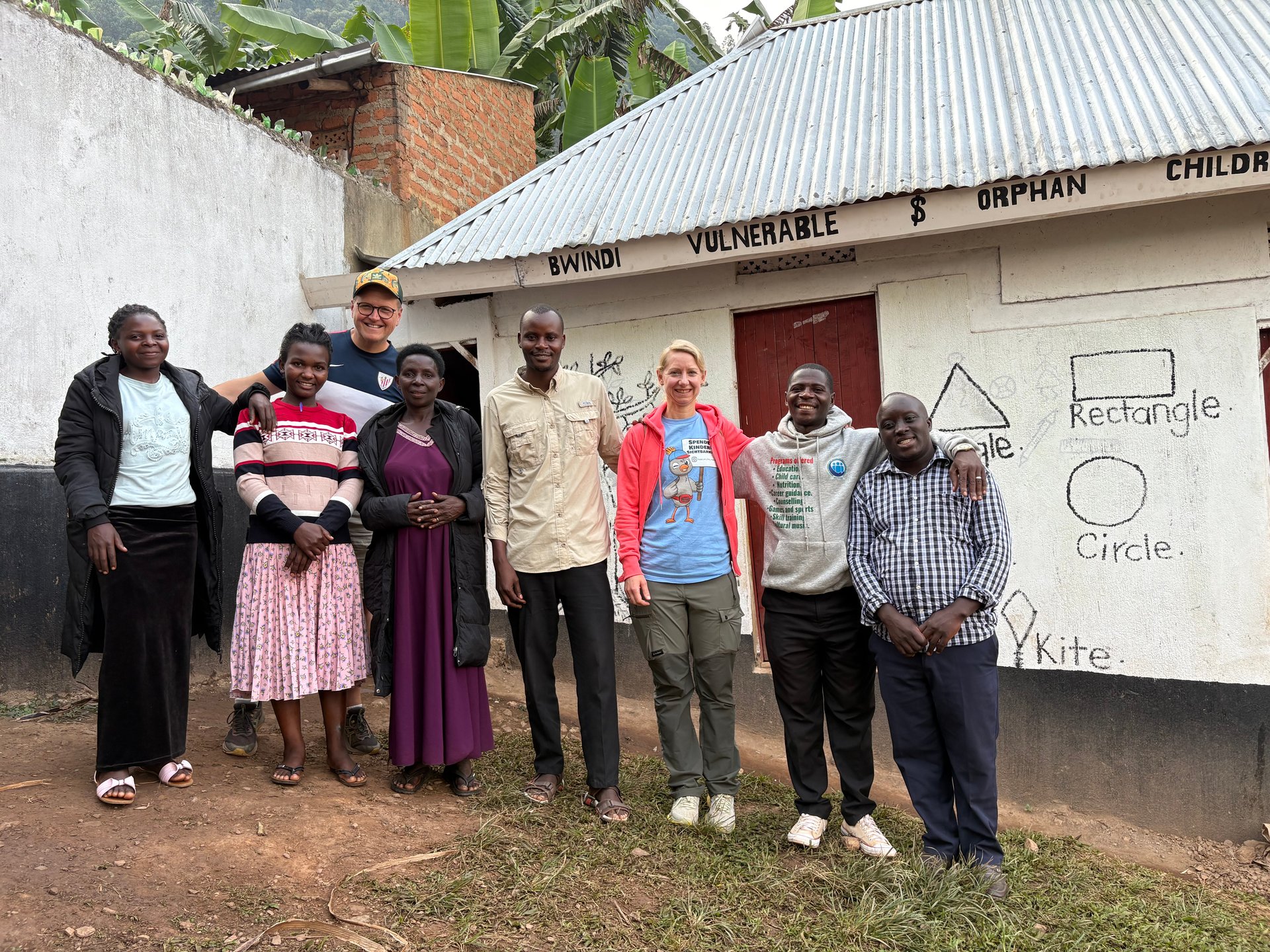
In communities adjacent to Uganda's national parks, tourism provides a specific exit pathway from subsistence dependency that does not require agricultural transformation. Lodge employment, guiding, craft sales, transport services, and food supply to tourism enterprises generate cash income for households that might otherwise be purely subsistence farmers. The community around Buhoma exemplifies this: proximity to Bwindi's gorilla trekking market has created a local service economy that provides cash income to households alongside their agricultural production.
The 20% community revenue sharing from national park gate fees provides another cash income channel — direct transfers to community institutions that fund local projects and, indirectly, household incomes through employment and services. In a community where tourism is a major economic driver, the subsistence economy share is lower than in areas without this income source. Expanding Uganda's tourism economy — extending the geographic reach of revenue sharing, developing new tourism products, and improving the quality of existing ones — is therefore also a poverty reduction strategy, even if it is not typically framed that way.
Frequently asked questions
What percentage of Uganda's households are in the subsistence economy?
According to Uganda's 2024 National Population and Housing Census, 33% of households are classified as subsistence economy participants — producing primarily for direct consumption rather than for sale in markets, with minimal cash income from agricultural production.
What is the difference between subsistence economy and poverty in Uganda?
Subsistence economy classification and poverty headcount measurement are related but distinct. A subsistence household may have enough food without generating cash income. They may or may not fall below the national poverty line of USD 1.77/day depending on how own-produced consumption is valued. But they have no cash buffer and cannot benefit from market-based economic growth.
What share of Uganda's employed population works in subsistence agriculture?
The Labour Force Survey 2024 places 75% of Uganda's employed population in subsistence agriculture. Combined with the 33% household subsistence economy figure from the NPHC, this indicates that subsistence agriculture is the dominant mode of economic activity in Uganda despite aggregate urbanization and sector diversification.
What drives continued subsistence dependency in Uganda?
Key drivers include: limited rural road infrastructure reducing market access; lack of cold storage and aggregation facilities; fragmented landholdings constraining surplus production; limited access to credit and inputs; and weak extension services. These structural barriers are addressed in Uganda's development plans but require sustained investment to change.
How does agricultural commercialization help reduce subsistence dependency?
Commercialization connects subsistence farmers to markets through roads, storage, price information, and organized buyer networks. Cash income from surplus sales enables investment in inputs, school fees, healthcare, and savings. The transition from pure subsistence to semi-commercial farming is the primary poverty reduction pathway for most rural Ugandan households.