Overview
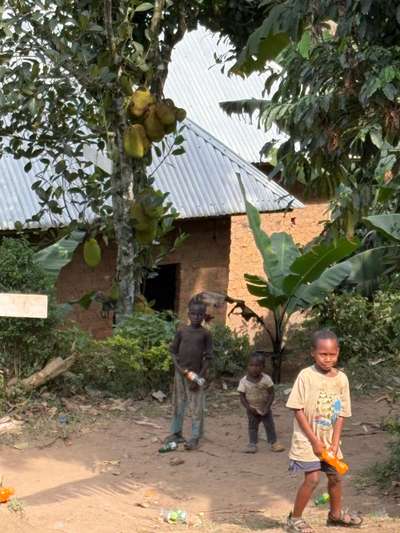
During my June 2026 visit to southwest Uganda, I saw the local economy from the ground level: the poultry farmer selling chicks to the orphanage and to neighboring households; the market traders in Buhoma selling matoke and avocados from the hillside plots; the occasional tour guide in Gorilla tourism gear heading toward Bwindi. These are not formal sector jobs in any statistical sense — no payroll, no social insurance, no written contract. But they are work, and they reflect the structure of Uganda's labor market more accurately than any unemployment statistic.
Uganda's National Household Survey 2023/24 provides the most comprehensive data on the country's labor force since the previous survey. Its labor force module analyzed employment by sector, gender, age, region, and formality — a picture of who works, what they do, how much they earn, and how many are looking for work without finding it. The headline figures are both encouraging (low unemployment rate) and structurally complex (the unemployment rate conceals the much larger challenge of underemployment and informal work).
Uganda's employment rate for adults aged 15 and above is 75.5% overall — 82.7% for men and 68.1% for women. The unemployment rate is 2.7%. These are positive figures by international comparison. They reflect a labor market where almost everyone who wants to work is doing something. The problem is not unemployment in the classical sense. It is the character of the work available: predominantly informal, agricultural, low-productivity, and poorly remunerated.
The Agriculture Paradox
Agriculture employs 46.5% of Uganda's workforce — nearly half of all workers. But it generates only 27.3% of Gross Value Added. This gap between labor share and economic output share — a gap of nearly 20 percentage points — is one of the most important structural features of Uganda's economy. It means that agricultural workers, on average, produce substantially less economic value per hour worked than workers in other sectors.
This is not primarily a farming competence problem. It reflects structural conditions: small plot sizes that limit output, limited access to inputs and markets, subsistence-oriented production for home consumption rather than sale, and rainfall dependence that limits productivity in drought years. Transforming this gap — moving agricultural workers to higher-productivity activities or increasing agricultural productivity itself — is the central challenge of Uganda's structural economic development.
Services, by contrast, employs 26.3% of Uganda's workers but generates 65.4% of Gross Value Added. The service sector is far more productive per worker than agriculture. As Uganda's economy develops, the long-term trajectory is a shift of workers from agriculture to services — which is what Uganda Vision 2040 targets. But the shift is slow, constrained by education and skills gaps, infrastructure deficits, and the pace of service sector growth.
Unemployment: Low Rate, Structural Problem
Uganda's 2.7% unemployment rate appears enviably low. But it must be understood in context. In Uganda's low-income economy, people cannot afford to be unemployed in the economic sense — most have no access to unemployment insurance, savings sufficient to sustain job-seeking, or family support that would allow them to wait for formal employment. When people need income, they engage in whatever work is available: casual agricultural labor, petty trade, domestic work. They are counted as employed even if working only a few hours per week for minimal pay.
The long-term unemployment figure is revealing: 49.5% of all unemployed people have been unemployed for an extended period. This suggests that the small fraction who do formally not work often face structural barriers to re-employment — mismatched skills, geographic isolation, disability, caregiving responsibilities — that are not resolved quickly. The problem is not finding any work; it is finding work that matches skills and pays a living wage.
Youth unemployment at 4.2% for ages 15–24 is modestly higher than the national rate but still low by international standards. The more significant issue for young Ugandans is the quality and formality of the work they find. Youth unemployment often understates youth underemployment — young people working few hours, in low-skill informal activities, while seeking better opportunities.
The Gender Gap in Employment
The 14.6 percentage point gap between male employment (82.7%) and female employment (68.1%) reflects structural factors that are common across sub-Saharan Africa. Women bear a disproportionate share of unpaid domestic and caregiving work — childcare, cooking, water collection, elder care — that limits their availability for paid labor market activity. This work is economically essential but not counted in employment statistics.
Women in Uganda's agricultural economy do substantial farming work — often more hours of farm labor than men, particularly in food crop production. But the returns from that work, and control over the income it generates, frequently accrue to male household heads rather than to women themselves. This affects women's economic autonomy, their ability to make independent investments in their own enterprises, and their resilience when relationships break down or male partners die or migrate.
For refugee women in Uganda's settlements, these structural disadvantages are compounded by displacement-specific factors: loss of social networks that would otherwise provide childcare support, legal uncertainty about property rights in settlements, and higher exposure to gender-based violence that further constrains mobility and economic participation.
Tourism as a Labour Market Case Study
Uganda's tourism sector — worth examining as a case study in service sector employment — directly employs 200,000 people, with an estimated 284,000 additional indirect and induced jobs. The sector is relatively formalized compared to agriculture: guides, lodge staff, drivers, and park rangers typically have regular employment relationships, though seasonal variation affects hours and earnings.
The structure of tourism employment is interesting: transport accounts for 64.7% of direct tourism employment, followed by food and beverage at 26.7%. Accommodation, cultural services, and retail make up the remainder. This distribution reflects the reality that most tourism employment in Uganda is in movement and food provision rather than in formal hotel or lodge accommodation — which represents a relatively small share of the total.
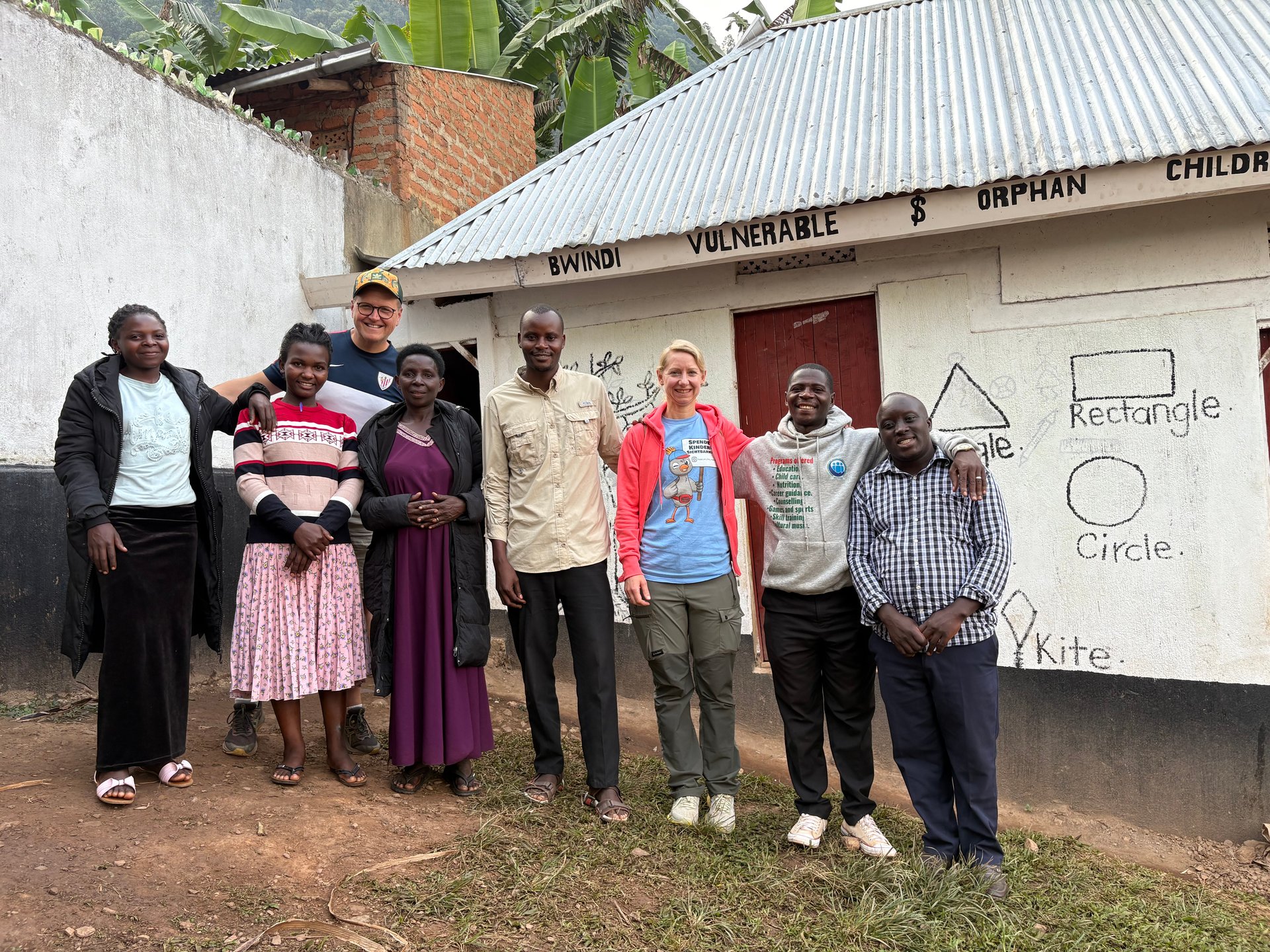
Tourism's indirect employment effects — the poultry farmer selling to safari lodges, the vegetable grower supplying camp kitchens, the artisan producing crafts for tourist markets — are harder to quantify but potentially larger than the direct employment figures suggest. For communities near national parks like the Buhoma community adjacent to Bwindi, tourism-linked economic activity is a significant part of the local economy in ways that do not appear in formal employment statistics.
Labour Market and the Refugee Population
Uganda's self-reliance policy gives refugees the legal right to work in Uganda's formal and informal economy. In practice, most refugee employment is in agriculture — farming settlement plots and working on neighboring Ugandan farms as casual labor. The 93 entrepreneurship support actors identified in a 2024 mapping exercise serve both refugee and host-community aspiring entrepreneurs with training, finance, and market linkages.
Refugee participation in Uganda's broader labor market is constrained by distance from urban employment centers, documentation issues for formal employment, language barriers for some communities, and the occupational structure of their skills relative to what the local economy demands. But it is not negligible: refugees who develop skills, build enterprises, and employ other community members — refugee and Ugandan alike — make a measurable contribution to local economic activity that the formal labor market statistics largely miss.
From the field
Frequently asked questions
What is Uganda's unemployment rate in 2024?
Uganda's unemployment rate is 2.7% (2025 data). Youth unemployment (15–24) is 4.2%. Long-term unemployment accounts for 49.5% of all unemployed people — indicating that those who become unemployed often face structural barriers to re-employment rather than simply waiting between jobs.
What is Uganda's employment rate by gender?
Uganda's employment rate for adults 15 and above is 75.5% overall — 82.7% for men and 68.1% for women. The 14.6 percentage point gender gap reflects women's disproportionate share of unpaid domestic and caregiving work that limits formal labor market participation.
What share of Uganda's workers are in agriculture?
Agriculture employs 46.5% of Uganda's workforce but generates only 27.3% of Gross Value Added. Services employs 26.3% of workers but generates 65.4% of GVA — a productivity gap that reflects the structural transformation challenge Uganda faces.
What is the size of Uganda's tourism employment sector?
Uganda's tourism sector directly employs 200,000 people, with an estimated 284,000 additional indirect and induced jobs. Transport dominates at 64.7% of direct tourism employment, followed by food and beverage at 26.7%.
What is Uganda's GDP per capita?
Uganda's GDP per capita is USD 1,375 (2025). Real GDP growth is approximately 5%. The economy is growing, but from a low base, and employment expansion has not been fast enough to fully absorb Uganda's rapidly growing working-age population into productive formal employment.