Overview
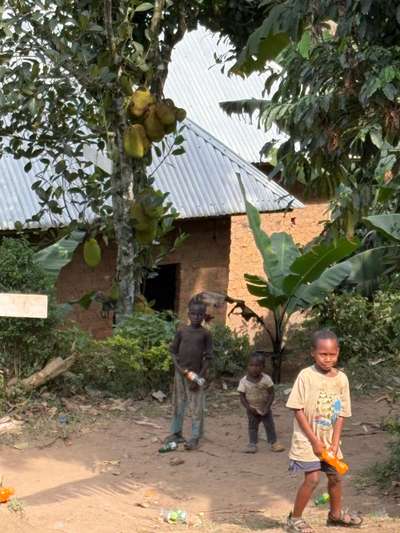
The children I photographed in Buhoma on June 21, 2026 looked uncertain — the kind of uncertainty that comes from an environment where the adults around you are under pressure they cannot fully absorb. In communities across Uganda, that pressure is real: economic hardship, family disruption, the accumulated weight of displacement and loss. In refugee settlements, it is concentrated. From January to March 2026, Uganda's national suicide tracking system recorded 34 incidents across 13 refugee settlements. Six people died.
These numbers are not a crisis in a statistical sense — 34 incidents across a population of two million people represents a fraction of a percent. But every incident represents a person at a point of complete desperation, and the patterns behind the numbers — which settlements, which triggers, which populations — reveal structural conditions that a humanitarian system oriented toward food and shelter does not automatically address. Mental health in Uganda's refugee settlements is not a secondary concern. It is embedded in the same social and economic conditions that drive every other indicator of wellbeing.
Uganda's National Suicide Tracking Dashboard, tracking data from the first quarter of 2026, provides settlement-level detail that allows for targeted intervention rather than generic response. The data identifies Rwamwanja settlement in Kamwenge district as the primary hotspot: 7 suicide attempts and 2 deaths in a single quarter from a single settlement. That concentration signals something specific to Rwamwanja — specific stressors, specific gaps in services, specific community dynamics — that requires a Rwamwanja-specific response rather than a system-wide policy adjustment.
Understanding the Trigger Data
The distribution of triggers in Uganda's Q1 2026 data reveals something important about the nature of suicidal crises in refugee settlements: the majority are precipitated by social and economic stressors rather than clinical mental illness. Family conflict (33%) and domestic violence (23%) together account for more than half of all identified triggers. Lack of basic needs — food insecurity, inability to pay school fees, inadequate shelter — accounts for 16%. Financial problems specifically account for 12%.
Clinical mental illness — where a prior diagnosis or history of mental illness was identified as the primary driver — accounts for 13% of cases. This does not mean that the other cases involve no mental health component. Suicidal ideation is a mental health response to intolerable stress, regardless of whether its immediate trigger is a domestic dispute or an inability to feed one's children. But the trigger data tells us where intervention can most usefully be applied: not only in clinical mental health services (important but reaching only a fraction of those at risk), but in the social and economic systems that generate the underlying stress.
Domestic violence as a trigger — 23% of cases — is particularly significant. It points to a specific population at elevated risk: women in violent relationships within settlement communities. Settlements bring together people from diverse backgrounds, often disrupted family structures, and significant power imbalances. The protection sector's work on gender-based violence prevention and response is not separate from the mental health crisis — it is one of its primary determinants.
Rwamwanja: Understanding a Hotspot
Rwamwanja settlement in Kamwenge district hosts primarily Congolese refugees from the DRC. The settlement has existed since 2012 and experienced significant population growth during the most intense phases of eastern DRC conflict. In Q1 2026, it recorded more than double the incidents of any other single settlement — 7 attempts against a system average that most settlements stayed well below.
What makes Rwamwanja distinct is not fully captured by the tracking data alone. It requires understanding the settlement's history — periods of rapid population increase, land pressure within the settlement boundary, specific community dynamics between different Congolese ethnic groups, and the particular stressors affecting households that have been in displacement for over a decade without a clear pathway to either repatriation or local integration.
Long-term displacement — where people have been refugees for ten or more years — creates psychological conditions that differ from acute displacement. The initial crisis response phase has passed. The hope of imminent return has faded. The mechanisms that sustained community cohesion in the early years may have weakened. Children who were born in the settlement are now adolescents navigating identity questions in an environment that offers limited economic opportunity. These factors compound in ways that aggregate statistics do not fully reveal but that settlement-level mental health workers experience daily.
The Service Gap
Mental health services in Uganda's refugee settlements are systematically underfunded relative to need. The UCRRP health sector — already underfunded overall, as drug stockouts at 73% of facilities and elevated wait times at 45% of visits demonstrate — allocates a small fraction of its budget to mental health specifically. Clinical psychiatric services are available in very few settlements. Community-based psychosocial support (CBPS) — lay counselors, peer support groups, community health workers trained to identify and refer people in crisis — is more widely available but also resource-constrained.
The gap between what is documented in the tracking dashboard and what is actually happening is likely substantial. Uganda's tracking system depends on incidents being reported — which requires either that the person in crisis reaches a service, that a community member reports to an agency, or that a death is investigated and attributed. Suicidal ideation that does not result in an attempt or a reported incident is invisible to the tracking system. The 34 recorded incidents in Q1 2026 are almost certainly an undercount of the actual level of crisis in the settlement system.
This is not a criticism of the tracking system — it is a recognition of its limits, and of the gap between what monitoring can show and what investment in mental health services would address. The tracking data is valuable precisely because it is the best available information for targeting limited resources where they are most needed. Rwamwanja is identified; the question is what additional resources are deployed there as a result.
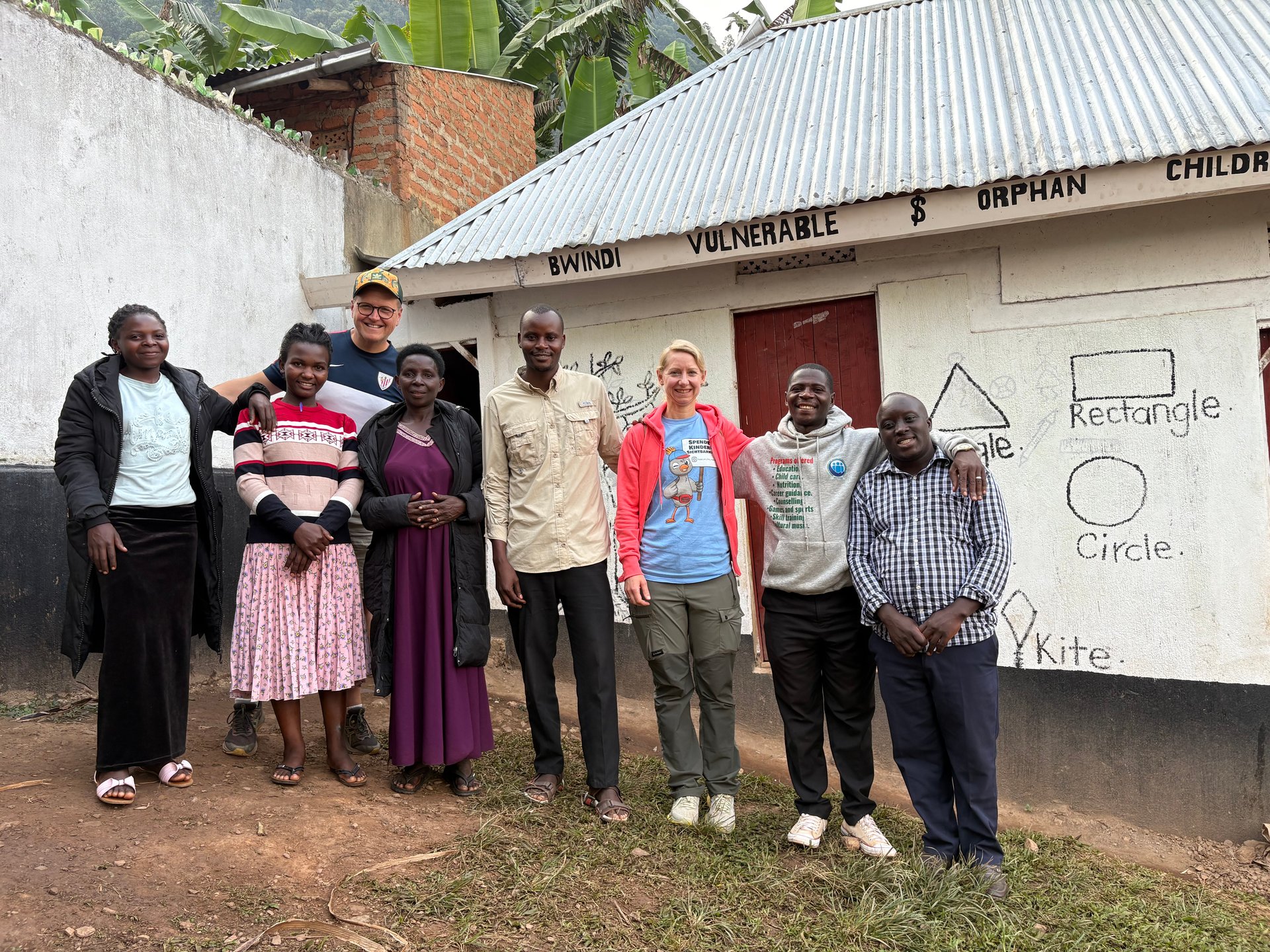
Community-Based Response
The most scalable response to mental health crises in resource-constrained settings is community-based. Clinical mental health services are expensive, require trained professionals, and can only be delivered one-to-one. Community-based approaches — peer support groups, trained community health workers, structured community conversations about mental health, and simple crisis referral pathways — can reach far more people with far less specialist input.
Effective community-based psychosocial support works in two directions: it builds protective factors (social connection, hope, meaning, practical problem-solving skills) before crisis occurs, and it creates pathways to help when crisis does occur. Community health workers trained to recognize warning signs — social withdrawal, expressed hopelessness, giving away possessions, direct statements about not wanting to live — can connect people to support before an attempt happens.
The trigger data supports this approach. If family conflict, domestic violence, and economic distress drive the majority of suicidal crises, then responses that address those triggers — mediation services, GBV response and prevention, cash transfers, food assistance — are part of the mental health response. This is the integration that effective humanitarian programming aims for: not mental health as a separate silo, but as a thread running through food, protection, livelihoods, and community support simultaneously.
What the Numbers Ask of Us
Thirty-four incidents. Six deaths. Thirteen settlements. These are not large numbers in an absolute sense. But they are the visible portion of a much larger landscape of suffering — people living in conditions of chronic stress, uncertainty, loss, and limited agency, managing the psychological weight of displacement alongside the daily logistics of survival. The tracking system makes some of that visible. The data asks a specific question: given that we can see where the crisis is concentrated, what are we going to do about it?
For anyone engaged with Uganda's refugee response — donors, implementing agencies, government, researchers — the suicide data is not a sidebar to the main indicators of food and health. It is evidence of what happens to human beings when the underlying conditions of displacement — poverty, family disruption, violence, uncertainty — are not adequately addressed. Investment in mental health services, community protection, and economic inclusion is not separate from the humanitarian mandate. It is part of what that mandate requires.
From the field
Frequently asked questions
How many suicide incidents were recorded in Uganda's refugee settlements in Q1 2026?
34 suicide incidents were recorded across 13 refugee settlements from January to March 2026. Refugees accounted for 5 of the 6 deaths recorded. The data comes from Uganda's National Suicide Tracking Dashboard.
Which settlement has the highest suicide rate in Uganda?
Rwamwanja settlement in Kamwenge district is the identified hotspot, with 7 suicide attempts and 2 deaths in Q1 2026 — the highest concentration of any single settlement. Rwamwanja primarily hosts Congolese refugees and has experienced long-term displacement pressures.
What are the main triggers for suicidal ideation in Uganda's refugee settlements?
The top triggers are family conflict (33%), domestic violence (23%), lack of basic needs (16%), prior mental illness (13%), and financial problems (12%). Most crises are driven by social and economic stressors — indicating that effective response requires addressing root conditions, not only clinical mental health services.
What mental health services are available to refugees in Uganda?
Services include community-based psychosocial support, community health worker networks, protection referral pathways, and where available, clinical mental health services at settlement facilities. Availability varies significantly by settlement, and overall mental health funding is a fraction of what the sector requires.
What is Uganda's national approach to suicide prevention?
Uganda operates a National Suicide Tracking Dashboard that monitors incidents across refugee settlements. Settlement-level data enables targeted responses in high-incidence locations like Rwamwanja. Community-based psychosocial support programs are the primary prevention mechanism given resource constraints.