Overview
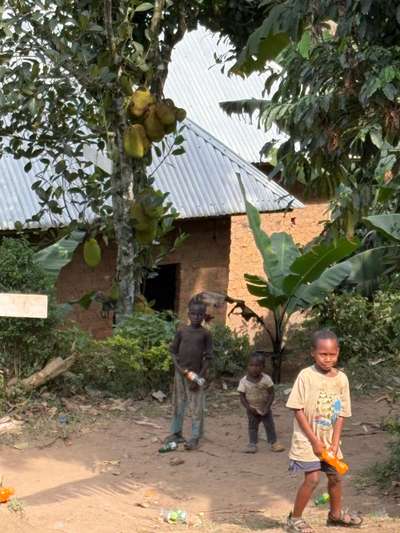
In June 2026, I was in southwest Uganda — in the Buhoma area, adjacent to Bwindi Impenetrable National Park. The forest border between Uganda and DRC runs just kilometers from where I was photographing children in the community. The Albertine Rift here is ancient, layered, and extraordinarily rich — in biodiversity, in cultural history, and in the complexity of cross-border human movement that has defined this region for centuries. What has changed in the past thirty years is the scale of forced displacement driving migration across that border.
Uganda hosts approximately 670,000 Congolese refugees — roughly 33% of its total refugee population of over two million. This is not a temporary emergency population. Many Congolese refugees have been in Uganda for more than a decade; some for over twenty years. The oldest established settlements like Nakivale in Isingiro district have hosted Congolese communities continuously since the early 1990s. New arrivals continue to come as conflict in eastern DRC persists, but they join communities that have developed deep roots in Ugandan settlement life.
The March 2026 migration situation report provides the most recent data on DRC-Uganda cross-border dynamics. Internal displacement within DRC itself — the population displaced within DRC rather than across borders — fell from approximately 7 million people in November 2024 to approximately 5 million in March 2026. This decline reflects some stabilisation in certain areas of eastern DRC. But 5 million internally displaced people remains an enormous figure, and 11,566 new Congolese asylum seekers arrived in Uganda in the first half of 2026 alone — confirming that the reduction in internal displacement has not ended cross-border outflows.
Three Decades of Displacement from Eastern DRC
The current Congolese refugee population in Uganda is the product of three decades of overlapping conflicts in eastern DRC, not a single crisis event. The First Congo War (1996–1997) and the Second Congo War (1998–2003) together produced massive displacement across eastern DRC and into neighboring states. The wars nominally ended but were followed by the proliferation of armed groups, intercommunal violence, and periodic military operations that have kept displacement levels high continuously since then.
The specific dynamics driving displacement from eastern DRC to Uganda involve multiple overlapping factors. Armed groups operating in the provinces of North Kivu, South Kivu, Ituri, and Maniema conduct raids on villages, recruit fighters by force, control territory and resource extraction points, and create conditions of insecurity that make continued residence impossible for civilian populations. Government military operations to counter armed groups sometimes produce their own displacement, with civilians caught between competing forces.
Land conflict is another significant driver. Eastern DRC has fertile land and extractive resources — gold, coltan, timber — that are contested by armed groups, customary authorities, and businesses. Communities that lose land access to armed actors have no legal recourse and no security guarantee. Many of the Congolese refugees in Uganda's settlements were displaced not from combat zones but from areas where land conflict had made their situation untenable.
Uganda's Western Settlement System
Uganda's settlements for Congolese refugees are concentrated in the western districts — Isingiro, Kikuube, Kyegegwa, and Kamwenge — that form Uganda's border zone with DRC and Rwanda. This geographic logic is straightforward: the settlements are located near the border crossings through which Congolese arrive, minimizing transport requirements and keeping communities closer to their countries of origin.
Nakivale settlement in Isingiro district is Uganda's oldest and largest. Established in 1959 for Rwandan refugees, it has received Congolese continuously since the 1990s, and today hosts a mixed population including significant communities from Rwanda, Burundi, and Somalia alongside the Congolese majority. With 286,062 residents it is not only Uganda's largest settlement but one of the largest in Africa.
Kyangwali in Kikuube district hosts 158,546 people, primarily Congolese. Kyaka II in Kyegegwa hosts a mixed population. Rwamwanja in Kamwenge, established in 2012 during an acute phase of eastern DRC conflict, grew rapidly to host a predominantly Congolese population and is the settlement identified in Uganda's 2026 suicide tracking data as the primary mental health hotspot — a signal of the specific pressures facing long-term, displaced-without-resolution communities.
The Urban Congolese Population
Not all Congolese refugees in Uganda live in settlements. A significant proportion — perhaps 15–20% of the total — live as urban refugees in Kampala and other cities. Urban refugees have greater access to economic opportunity, formal employment markets, and services. They also face greater vulnerability in other respects: no land allocation, higher living costs, reduced access to humanitarian food and non-food assistance, and less organizational capacity to advocate for their needs.
Urban Congolese in Kampala are often professionals — teachers, medical workers, business people — who fled with some skills and resources and who find formal settlement life impractical or inappropriate to their situation. Their experiences differ substantially from rural Congolese farmers in Nakivale or Kyangwali, and the humanitarian system's design is better calibrated to the latter than the former. Addressing urban refugee needs requires a different model — one centered on legal services, employment protection, and access to national social services rather than land and agricultural inputs.
The Stabilisation Question
The decline in DRC internal displacement from 7 million to 5 million between late 2024 and early 2026 raises the question of what stabilisation in eastern DRC would actually require to become durable — and what it would mean for Uganda's refugee caseload if it did occur. Repatriation of Congolese refugees is a long-term goal of the system. Most Congolese refugees in Uganda have no immediate prospect of returning home safely.
Genuine stabilisation in eastern DRC would require the disarmament or defeat of major armed groups, sustainable security arrangements that protect civilian populations in rural areas, functioning land rights systems, and economic conditions that give returning communities a viable livelihood. None of these conditions exist today across the relevant provinces of eastern DRC. Partial stabilisation — reductions in conflict intensity in specific areas — has produced limited return movements, but not the kind of durable conditions that warrant large-scale voluntary repatriation.
For Uganda, this means that the Congolese refugee population is likely to remain substantial for the foreseeable future. The question is whether the response evolves from a temporary emergency model to something that better matches the long-term reality: economic integration pathways, local integration options for those who cannot return, education systems that equip the second generation for productive lives in Uganda or elsewhere, and legal frameworks that give long-term residents genuine security of status.
From the field
Frequently asked questions
How many DRC refugees does Uganda host?
Uganda hosts approximately 670,000 Congolese refugees — about 33% of Uganda's total refugee population of 2,031,697. They are concentrated in settlements including Nakivale, Kyangwali, Kyaka II, and Rwamwanja, with a significant urban population in Kampala.
What is driving displacement from DRC to Uganda?
Displacement from eastern DRC is driven by armed conflict between government forces and numerous armed groups, intercommunal violence, and competition over land and mineral resources. Eastern DRC has experienced continuous conflict for over 30 years, producing successive waves of displacement.
Has displacement from DRC decreased in 2026?
Internal displacement within DRC fell from approximately 7 million (November 2024) to approximately 5 million (March 2026), indicating some stabilisation. However, 11,566 new Congolese asylum seekers arrived in Uganda in the first half of 2026 alone — confirming that cross-border outflows continue.
Which settlements do DRC refugees live in in Uganda?
The main settlements are Nakivale in Isingiro district (286,062 people), Kyangwali in Kikuube district (158,546 people), Kyaka II in Kyegegwa, and Rwamwanja in Kamwenge. Many Congolese also live as urban refugees in Kampala.
What is the history of DRC refugee arrivals in Uganda?
Congolese refugees have been arriving in Uganda since the early 1990s, with successive waves from the First Congo War (1996–97), Second Congo War (1998–2003), and subsequent armed conflicts. Uganda's oldest settlement, Nakivale, began receiving Congolese refugees in the early 1990s.