Overview
Uganda's twelve national parks recorded 213,950 visitors in 2013 — a 41 percent increase from 151,818 in 2009, according to the Uganda Statistical Abstract 2014. Behind that single headline figure lies a distribution that most visitors never see: Murchison Falls received seventy thousand people; Kidepo Valley, in the remote northeast, received fewer than three thousand. The gap between these numbers tells the real story of Uganda's protected area network.
During my visits to Buhoma in June 2026 — GPS-verified at 0.9617°S, 29.6109°E — the statistical picture took on a different texture. Three children from the neighbourhood of the local orphanage stood at the edge of the compound where lunch was being prepared. Their clothes were worn, their demeanour cautious. They had not been invited. We invited them then. They ate. That moment, a few hundred metres from one of Uganda's most visited gorilla trekking trailheads, is part of what the visitor statistics do not measure — the daily lives of communities inside the tourism economy's geography but outside most of its revenue.
This article breaks down Uganda's national park visitor numbers park by park, examines who visits, when, and in what proportions, and looks at the community and social programs operating in the same landscapes. The data is drawn primarily from the Uganda Statistical Abstract 2014, which compiled Uganda Wildlife Authority entry register records for 2013. The on-site observations come from multiple visits across 2024, 2026, and subsequent months.
The 2013 Numbers: Park by Park
The distribution of visitors across Uganda's parks in 2013 was concentrated at the top. The two largest parks by visitation — Murchison Falls and Queen Elizabeth — together accounted for 65 percent of all national park visits that year. Every other park divided the remaining 35 percent.
| National Park | Visitors (2013) | Share | Relative scale |
|---|---|---|---|
| Murchison Falls | 70,799 | 33% | |
| Queen Elizabeth | 69,193 | 32% | |
| Bwindi Impenetrable | 21,695 | 10% | |
| Lake Mburo | 14,068 | 7% | |
| Kidepo Valley | 2,890 | 1% | |
| All other parks | 35,305 | 17% | |
| Total | 213,950 | 100% |
All figures are from administrative records maintained by the Uganda Wildlife Authority at park entry gates, as compiled in the Uganda Statistical Abstract 2014. They represent 2013 data and predate significant subsequent growth in Uganda's tourism sector.
Murchison Falls: The Dominant Park
Murchison Falls National Park's 70,799 visitors in 2013 placed it first among all Ugandan parks — 33 percent of total national park visitation. The combination of its accessible location (approximately four to five hours from Kampala), a reliable boat safari on the Victoria Nile, and the falls themselves as a dramatic visual centrepiece explains the dominance. It is a park you can plan around a single defining activity while accumulating significant wildlife encounters alongside it.
On a visit in October 2024, the entrance infrastructure already showed the investment that had been made in capacity: freshly asphalted access roads, a new visitor centre at the gate, and road markings consistent with a major transit corridor rather than a park approach track. That infrastructure reduces the friction that historically made Murchison a multi-day commitment from Kampala. A visitor can now arrive, complete a half-day boat safari, game-drive the north bank, and return within a demanding but feasible day trip — which, for day visitors, inflates gate count without necessarily driving lodge occupancy.
Queen Elizabeth: The Most Ecologically Diverse Park
Queen Elizabeth National Park received 69,193 visitors in 2013 — 32 percent of national park visits and second only to Murchison Falls. The near-parity in visitor numbers reflects Queen Elizabeth's comparable accessibility (roughly five to six hours from Kampala via Fort Portal or via the Mbarara route) and a wildlife offering that is in some respects broader than Murchison's: the Kazinga Channel connects Lake George and Lake Edward, creating a waterway that concentrates hippo, crocodile, and water birds at densities that rival the Victoria Nile. The Ishasha sector in the south is the primary location for tree-climbing lions — a behaviour documented in this park and in Tanzania's Lake Manyara, and rare enough globally to represent a specific draw.
The park also sits within the Albertine Rift — one of Africa's most important biodiversity corridors — giving it a bird list that drives specialist ornithological tours independently of the game-drive circuit.
Bwindi: High Value, Constrained Volume
Bwindi Impenetrable National Park's 21,695 visitors in 2013 — 10 percent of the national total — represents an intentionally constrained figure rather than a reflection of demand. The gorilla trekking permit system limits each habituated family to one group of eight visitors per day, across four sectors. With the number of habituated families in 2013 smaller than today, the theoretical daily capacity of the trekking programme was a fraction of what Murchison or Queen Elizabeth could accommodate on game drives.
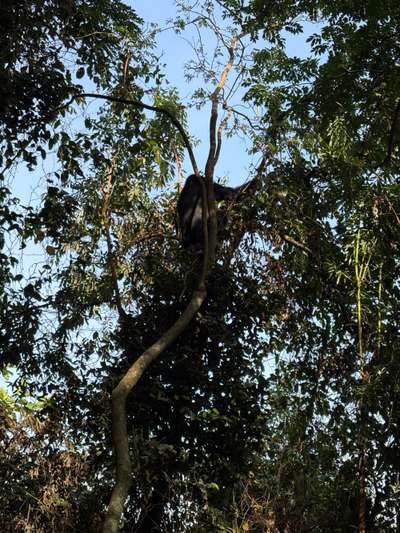
During gorilla trekking in January 2026, after about one hour of walking from the Buhoma trailhead, our group encountered the first gorilla family. The first individual was a male sitting in a tree, eating leaves — unhurried, entirely at ease. The constraint that holds Bwindi's visitor numbers below the big savanna parks is what makes that encounter possible: quiet, close, without the sense of a managed attraction. The current permit price of USD 800 per foreign non-resident reflects both the conservation cost of maintaining habituated families and the deliberate scarcity of the experience.
The Undervisited Parks: Kidepo and Lake Mburo
Two parks sit at opposite ends of the accessibility spectrum and both record visitor numbers far below the national leaders. Understanding why tells you something important about how Uganda's park network actually functions.
Kidepo Valley: Remote, Exceptional, Underknown
Kidepo Valley National Park recorded 2,890 visitors in 2013 — less than one-twenty-fourth the number who visited Murchison Falls. This figure is not a reflection of the park's wildlife quality. Kidepo is situated in Uganda's remote Karamoja region, in the far northeast, bordering South Sudan and approximately 700 kilometres from Kampala. Road access has historically been slow — the journey takes eight to ten hours under good conditions — and the accommodation options, though improving, remain limited compared to the western parks.
The park's wildlife composition differs from Uganda's other national parks in ways that matter to serious wildlife observers. Kidepo holds species absent or rare elsewhere in Uganda: cheetah, striped hyena, bat-eared fox, and aardwolf have all been recorded here. Lion density is among the highest in Uganda, and the open, semi-arid landscape — quite different from the forested south — produces visibility conditions that allow extended, unobstructed sightings rarely available at Murchison or Queen Elizabeth.
The park's low visitor numbers also mean it remains genuinely uncrowded. A game drive in Kidepo is unlikely to encounter another vehicle for extended periods — an experience that has effectively disappeared from the more accessible Ugandan parks during peak season. That solitude is itself a form of value that the visitor statistics cannot convey.
The Karamoja region surrounding Kidepo is home to the Karimojong, a semi-pastoralist community whose traditional cattle-keeping culture has coexisted with the park's wildlife in various forms of tension and accommodation. Access to Kidepo is increasingly served by charter flights from Kampala (Entebbe to Apoka airstrip inside the park takes approximately one hour), which has made the park viable for the high-end market without requiring the overland journey. For more on reaching Kidepo, see the Kidepo Valley transport guide.
Lake Mburo: Accessible but Overlooked
Lake Mburo National Park recorded 14,068 visitors in 2013 — a figure the Statistical Abstract 2014 notes represented a decline from earlier years. Lake Mburo is Uganda's smallest and most accessible national park: roughly three hours from Kampala by the Mbarara highway, making it the only major wildlife destination reachable comfortably as a day trip from the capital, though an overnight stay dramatically improves the experience.
Lake Mburo is the only park in Uganda where zebra, impala, and eland are reliably present. The park's grasslands and acacia woodland support a distinct ecosystem from the forest and savanna parks that dominate Uganda's tourism marketing. Activities include game drives, boat trips on Lake Mburo itself, and horse-riding safaris — the only horse-riding wildlife experience available in Uganda's national parks.
The park's modest visitor numbers relative to its accessibility and genuine wildlife interest suggest a marketing and positioning gap rather than a quality shortfall. For visitors travelling from Kampala to Bwindi or Queen Elizabeth, Lake Mburo sits directly on the route — a logical overnight stop that the majority of itineraries skip in favour of pushing directly to the larger parks.
Who Visits: Origin, Season, and the Growth Curve
Visitor Origin
In 2013, 47 percent of all national park visitors were foreign non-residents, according to the Statistical Abstract 2014. East African Community nationals — principally from Kenya, Tanzania, and Rwanda — accounted for 24 percent. Ugandan citizens made up the remaining 29 percent.
This composition has significant revenue implications. Foreign non-residents pay the highest permit and entry fees across all parks. At Bwindi, the gorilla trekking permit for a foreign non-resident is currently USD 800 — against a much lower rate for EAC residents. At Murchison Falls, entry fees follow a similar graduated structure. The 47 percent foreign share therefore generates a disproportionately large share of UWA's fee revenue, which funds both park management and the revenue-sharing programmes that channel a portion of gate fees to surrounding communities.
Seasonality
The third quarter — July through September — accounted for 39.45 percent of all annual park visits in 2013, according to UWA data. This peak reflects Uganda's main dry season, when vegetation thins, game tracks are accessible, and wildlife concentrates around permanent water. The first quarter (January–February short dry season) produces the second peak. The long rains of March through May represent the lowest-demand period across most parks, though Bwindi's gorilla encounters are reliable year-round regardless of rainfall.
June sits at the transition between the long rains and the onset of the dry season. During the June 2026 visit to Buhoma — the visit that produced the photographs used in this article — the forest trails were green and wet but accessible, and gorilla encounters were reported reliably from the trekking groups we observed at the Buhoma staging area. For travellers with flexibility, June and October offer lower crowds than the July–September peak, with wildlife visibility that is only marginally below the dry-season maximum.
The 41 Percent Growth Story
The trajectory from 151,818 visitors in 2009 to 213,950 in 2013 — a 41 percent increase over four years — reflects several concurrent factors: infrastructure investment (particularly road upgrades to Murchison and improved access to Bwindi), growth in international awareness of Uganda's gorilla trekking product, and a sustained increase in East African regional travel. The year-on-year increase from 2012 to 2013 alone was 31,801 additional visitors, a 17.5 percent single-year jump that outpaced the four-year average rate of growth.
The growth continued beyond 2013 and was interrupted, then partially reversed, by the COVID-19 pandemic in 2020–2021. Recovery has been documented across subsequent years, with the international tourism sector returning toward and in some cases exceeding 2019 levels by 2024. The 2013 baseline figures presented here are the most detailed park-by-park data available from public UBOS sources; current UWA figures should be obtained directly for planning purposes.
The Communities Alongside the Numbers
Park visitor statistics measure entries, not impact. The communities living adjacent to Uganda's national parks — in villages like Buhoma along the edge of Bwindi, or in the Karamoja districts around Kidepo — participate in the tourism economy through formal revenue-sharing mechanisms and through a much larger informal economy that the statistics do not capture.
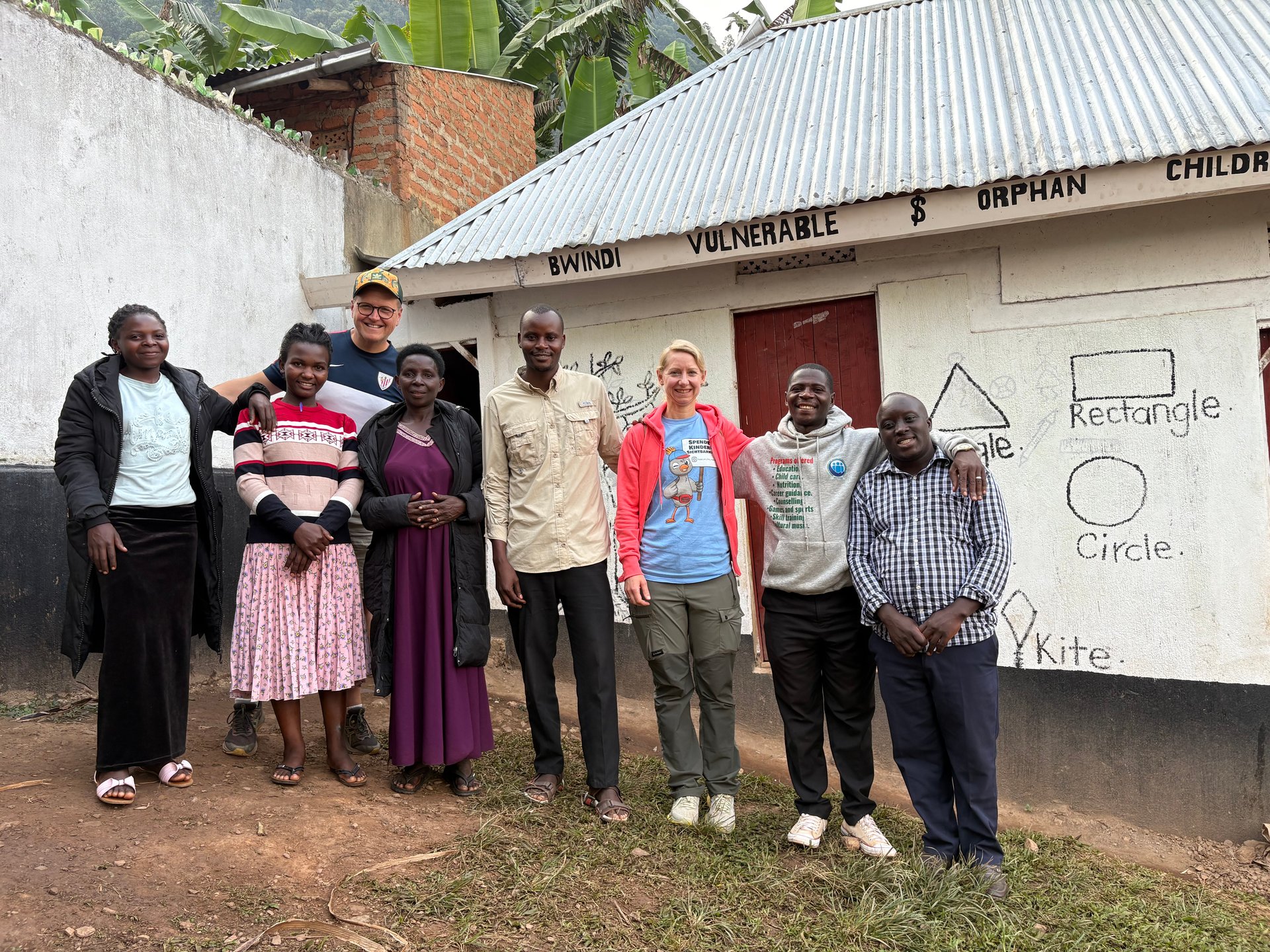
UWA's revenue-sharing programme allocates a portion of gate fees directly to communities surrounding national parks. In Bwindi's case, this has funded schools, health posts, and local infrastructure. It is a genuine mechanism with documented outcomes — the community hospital at Buhoma, the Buhoma Community Rest Camp, and the structured community walk programme all trace part of their foundation to the combination of NGO support and UWA revenue sharing that followed the park's establishment.
Social Programs in Park-Adjacent Communities
Several organisations operate in the communities around Uganda's parks with programmes that address the economic vulnerability that tourism revenue alone does not resolve. Stichting SYPO, a Dutch NGO with an operational arm in Uganda (SYPO Uganda Ltd.), provides microfinance to households in remote areas including communities adjacent to protected zones. Its model focuses on micro-credit access for people outside the reach of formal banking — a population that includes many households in Bwindi's buffer zone.
Graduation Programmes operating in Uganda use a four-component framework: social protection, economic strengthening, financial inclusion, and social empowerment. The model, which originated in Bangladesh and has been adapted across sub-Saharan Africa, is designed to bring chronically poor households across a minimum threshold of livelihood security. In park-adjacent areas, graduation programmes often work alongside conservation-linked employment, recognising that households with stable income have lower incentives for encroachment or poaching.
The SUPREME project provides youth empowerment support — skills development, entrepreneurship training, and access to finance — in Ugandan communities. Youth employment gaps in park-adjacent areas are structurally significant: the tourism economy creates relatively few formal jobs at the local level relative to the volume of visitor spending that passes through, and without alternatives, young people in communities like Buhoma face limited economic pathways. The Rural Finance Initiative extends micro-financial services to refugees and local communities in Uganda and South Sudan, covering areas that include parts of the Kidepo region in the northeast.
These programmes operate in parallel with, not in opposition to, the wildlife conservation economy. The link between community economic stability and park conservation outcomes is well-documented: communities with viable livelihoods and a tangible stake in park survival have lower rates of encroachment and poaching. The visitor statistics that begin this article are the top line of a much longer story.
[QUOTE: community member or programme staff in Buhoma on what has changed over the past five years — collect on next visit]From the field
Frequently asked questions
How many visitors do Uganda's national parks receive each year?
Uganda's twelve national parks recorded 213,950 visitors in 2013 — a 17.5 percent increase over 2012 and a 41 percent rise from 2009, according to the Uganda Statistical Abstract 2014. Visitor data is collected at entry gates by the Uganda Wildlife Authority. The figure has grown substantially since 2013; for current visitor counts, official UWA data should be consulted directly.
Which Uganda national park has the fewest visitors?
Kidepo Valley National Park in Uganda's northeastern Karamoja region recorded only 2,890 visitors in 2013 — the lowest figure among all parks that year. Its remoteness from Kampala (roughly 700 kilometres) and limited road access account for the low numbers. Despite this, Kidepo is regarded by wildlife specialists as one of Uganda's most rewarding parks for open-country species including cheetah and very high lion density.
What time of year is best for visiting Uganda's national parks?
July through September — Uganda's main dry season — accounts for 39.45 percent of all annual park visits according to 2013 UWA data, and produces the best wildlife visibility and track conditions. January and February offer a secondary dry window. June, though technically transition season, provides viable visits across most parks; the gorilla encounters at Bwindi are reliable year-round regardless of rainfall.
Is Lake Mburo National Park worth visiting?
Lake Mburo is Uganda's most Kampala-accessible national park — approximately three hours by road — and the only park in Uganda where zebra, impala, and eland are reliably seen. It recorded 14,068 visitors in 2013, well below the major parks, which means game drives are genuinely uncrowded. It makes an efficient overnight stop on the Kampala-to-Bwindi route that most itineraries skip but should not.
What share of Uganda's park visitors are foreign tourists?
In 2013, foreign non-residents accounted for 47 percent of Uganda's national park visitors; East African Community nationals made up a further 24 percent; Ugandan citizens the remaining 29 percent. Foreign visitors generate a disproportionately large share of UWA revenue because they pay the highest permit and entry rates — including the USD 800 gorilla trekking permit at Bwindi — which funds both park management and community revenue-sharing programmes.