Overview
Gorilla trekking in Bwindi Impenetrable National Park gives you one hour with a habituated mountain gorilla family in their natural forest habitat. Permits cost USD 800 per person (2026, peak season) and are issued by the Uganda Wildlife Authority (UWA). The park has four trekking sectors — Buhoma, Ruhija, Nkuringo, and Rushaga — each with its own habituated families, distinct terrain, and lodge infrastructure. This guide covers all four, plus the separate option of Mgahinga Gorilla National Park, with practical booking, equipment, and preparation detail based on personal visits in January and June 2026.
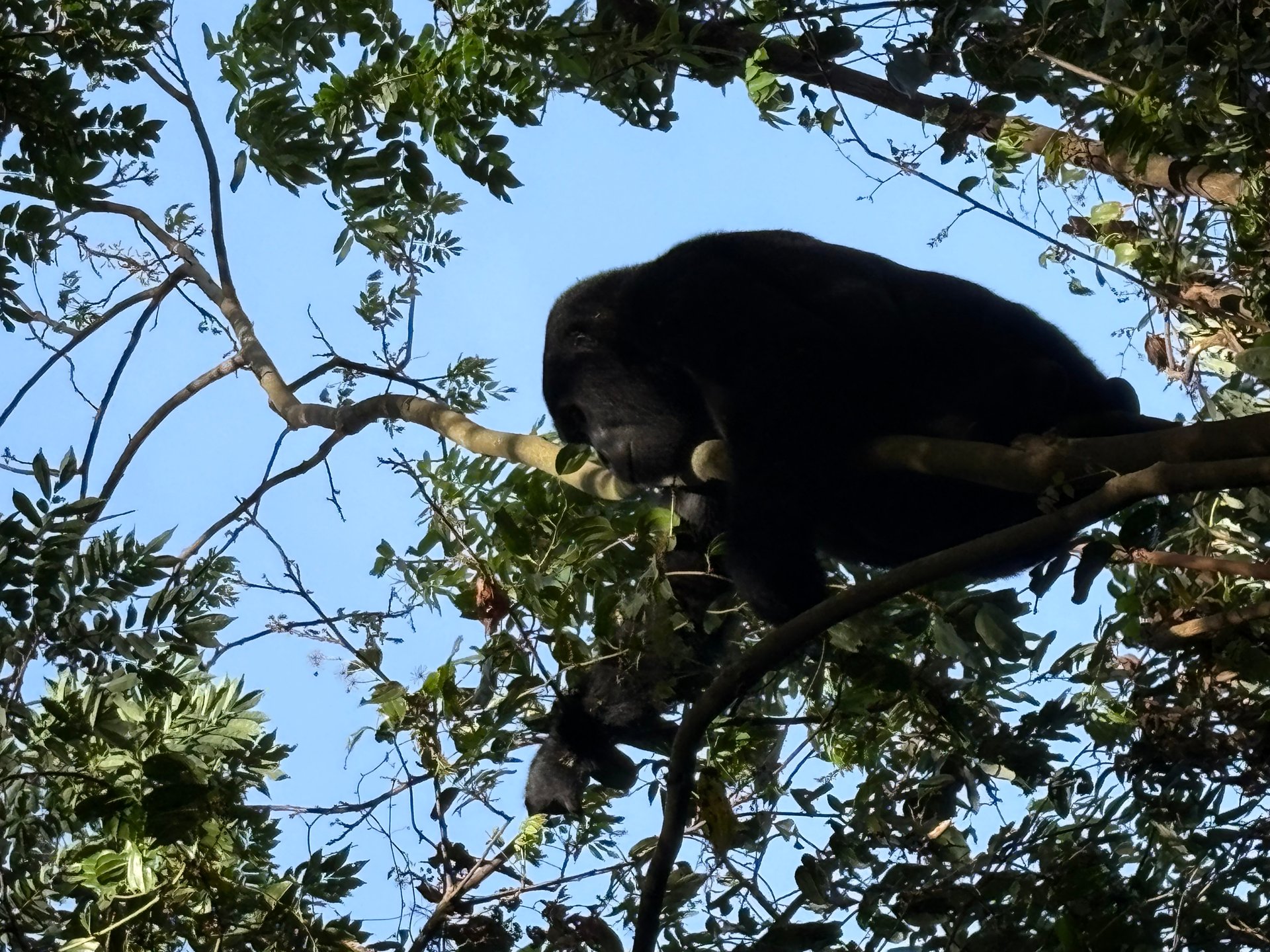
After three hours of climbing through dense, dripping cloud forest in January 2026, we reached a gorilla family in the Buhoma sector. The animals were entirely calm — a large male sitting high in the branches of a fig tree, methodically pulling leaves into his mouth. We were close enough to hear the sound of chewing. The GPS-verified coordinates of that encounter, -0.9764°N, 29.6225°E, place it deep inside the Bwindi Impenetrable Forest — a UNESCO World Heritage Site covering 331 square kilometres in south-western Uganda. That proximity, the silence, and the animal's complete indifference to our presence: these are the things no photograph quite communicates.
This guide draws on multiple on-site visits — January 2026 (two separate days in the park, including trekking from Buhoma), June 2026 (additional Bwindi visit) — and published data from UWA and the Reiseführer Uganda 2020. Permit prices and regulations are verified for 2026; confirm before travel as UWA periodically revises terms.
The Mountain Gorilla and Bwindi's Impenetrable Forest
The mountain gorilla (Gorilla beringei beringei) is one of the world's most closely monitored wild animals. The Bwindi population was assessed at approximately 459 individuals in the 2018–2020 survey period, according to data published in conjunction with UWA. This represents a distinct genetic population from the Virunga mountain gorillas shared between Uganda, Rwanda, and the DR Congo. The two populations do not interbreed, making the Bwindi gorillas a separate conservation priority.
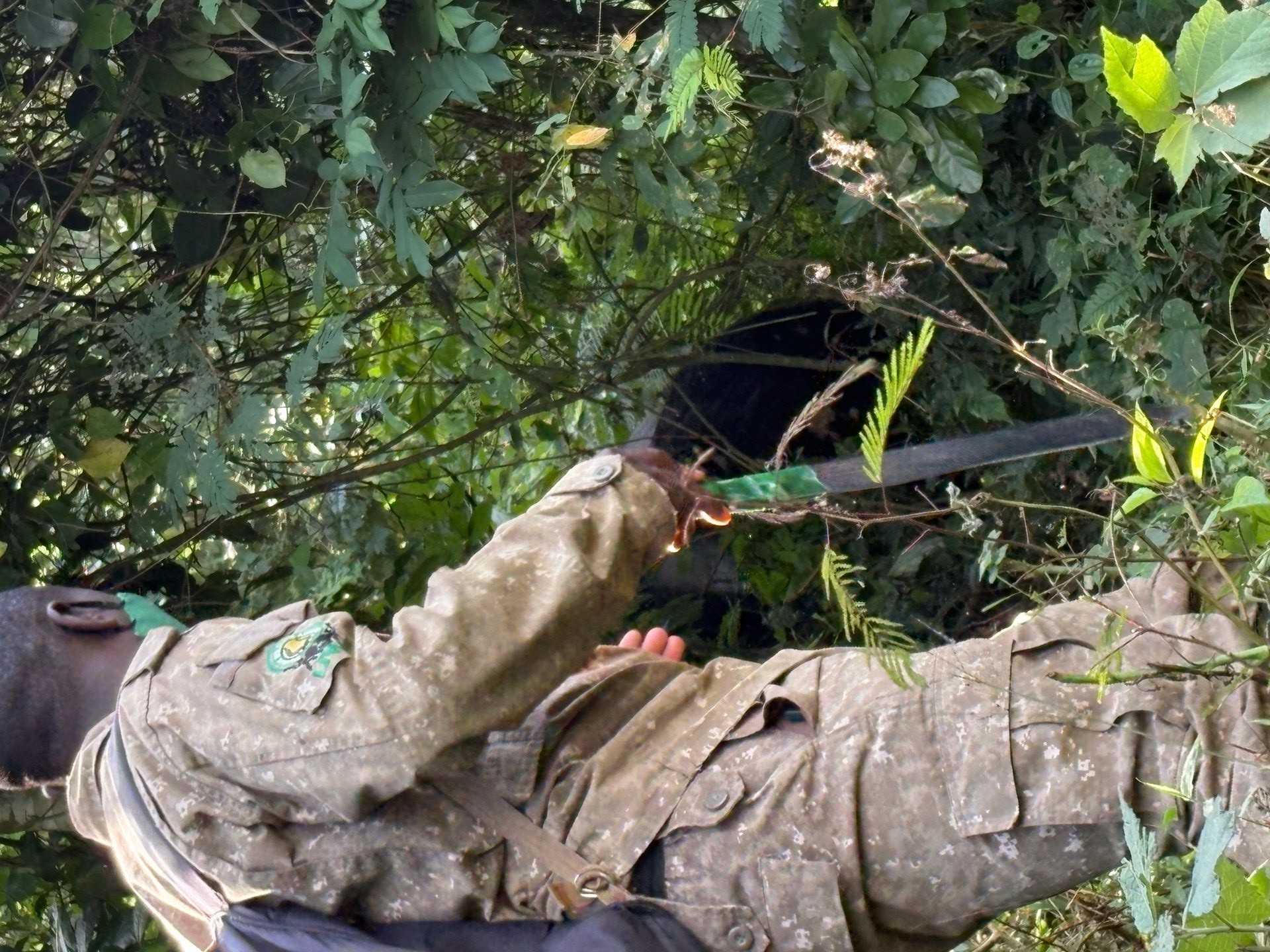
The Bwindi Impenetrable Forest itself — the park's defining ecosystem — is a montane rainforest with multiple vegetation zones ranging from lowland mixed forest to Afromontane communities above 2,000 metres. The forest contains over 1,000 plant species, 350 bird species, and 120 mammal species. It is "impenetrable" in a literal sense: the understorey is dense enough that walking off-trail without a machete-clearing guide is genuinely impossible in most areas. This density is exactly what makes gorilla trekking here so physically demanding — and so memorable when the family is finally found.
The habituated gorilla families in Bwindi became accustomed to human presence through a multi-year habituation process managed by UWA researchers. Field teams spent years approaching the families daily, initially from a distance, then progressively closer, until the animals accepted human proximity without distress. Only fully habituated families are open to trekking permits. The process is ongoing: as of 2026, more than 20 families are habituated across the four sectors, with additional families in various stages of the process.
The Four Bwindi Trekking Sectors Compared
Bwindi is administratively divided into four gorilla trekking sectors. Selecting the right sector affects trek difficulty, available accommodation, and how many families you can choose between. Each sector operates independently — permits are issued per sector, not per park, and you cannot simply switch on the day.
| Sector | Location | Key features | Trek difficulty |
|---|---|---|---|
| Buhoma | North | Park's oldest sector; community infrastructure; multiple lodge options incl. Gorilla Bluff Lodge, Buhoma Community Rest Camp | Moderate — some treks shorter than other sectors |
| Ruhija | Northeast | Less visited; excellent birdwatching; Ruhija Gorilla Safari Lodge (Asyanut); fewer daily visitors | Moderate–High |
| Nkuringo | South | High elevation (±2,090m); Nkuringo Bwindi Gorilla Lodge (community-owned, 18 rooms, Carbon Bureau offset); panoramic views | High — steep descent into park and steep return |
| Rushaga | South | Most habituated families in one sector; only sector offering Gorilla Habituation Experience (4 hrs, from USD 1,500) | Moderate–High |
Buhoma: The North Sector
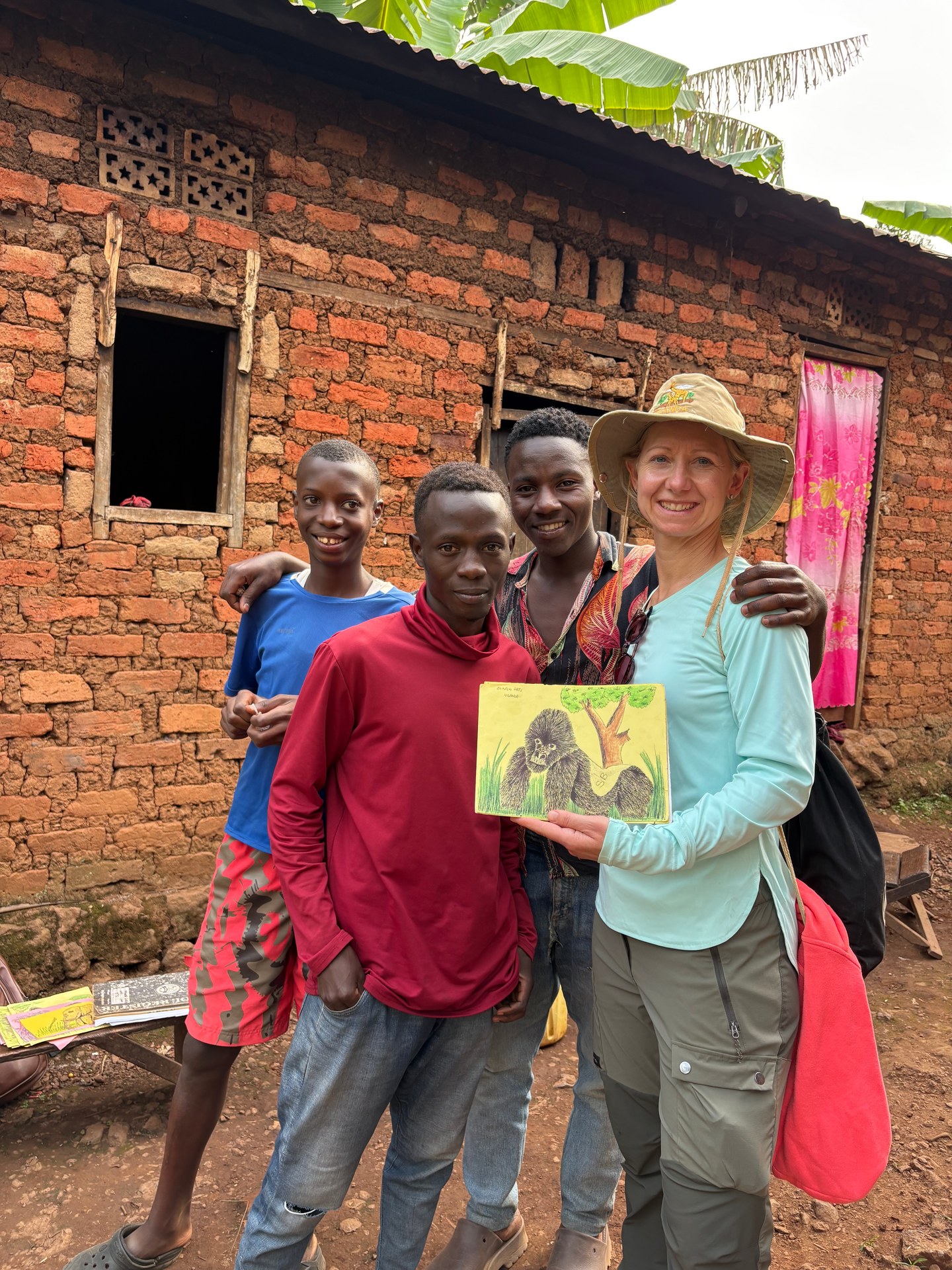
Buhoma, in Kanungu District, is where gorilla trekking in Bwindi began and remains the best-known entry point. The sector gate sits at the edge of Buhoma village — a small, active community whose main street is scheduled to receive tarmac surfacing in 2026, a visible indicator of the economic change that gorilla tourism has driven over the past three decades. On the street opposite Gorilla Bluff Lodge in January 2026, we met Clinton, a 17-year-old from Buhoma who sells hand-painted pictures to supplement his family's income following the death of his father. He supports his mother, two brothers, and a younger sister with a disability. His ambition is to become a tour guide — the job he sees as the most meaningful the park economy offers.
Several lodges cluster at Buhoma across a wide price range, from the community-operated Buhoma Community Rest Camp (directly at the park gate) to mid-range options like Gorilla Bluff Lodge (built into the hillside on the park boundary, with wooden staircase terraces connecting rooms to the main building). At Gorilla Bluff Lodge in January 2026, the morning routine before each trek was the same: coffee and African tea delivered to the room terrace, followed by the permit briefing at the UWA office. The simplicity of that structure — wake, drink, hike — is part of what the Bwindi experience offers.
Ruhija: The Northeast Sector
Ruhija is the least visited of the four sectors, which carries both advantages and disadvantages. Permit availability tends to be slightly easier to secure than Buhoma or Rushaga, and the trailhead environment is quieter. The sector's position in the park's northeast gives it a distinct vegetation character — higher altitude forest that overlaps with exceptional birdwatching habitat. The Ruhija Gorilla Safari Lodge, operated by Asyanut Safari, offers double rooms and wooden cottages positioned within walking distance of the sector gate, and represents a practical and unfussy base for visitors whose priority is the gorilla encounter rather than premium lodge facilities.
Nkuringo: The High-Altitude South
Nkuringo sits at approximately 2,090 metres above sea level on the park's southern edge, overlooking a steep drop into the gorilla-inhabited forest below. The descent into the park from this entry point is physically demanding, and the return climb is the steepest of any sector. For visitors with sufficient fitness, the elevation brings one significant advantage: the views across the Bwindi canopy from Nkuringo's ridge position on clear days are unlike anything visible from the other sectors.
The Nkuringo Bwindi Gorilla Lodge is a community-owned property with 18 rooms that has formalised an environmental responsibility framework through the Uganda Carbon Bureau — one of the few Bwindi lodges with a formally verified carbon offset programme. The lodge structure channels revenue into a community trust, making it a financially transparent option for visitors who want gorilla trekking income to reach the surrounding community directly.
Rushaga: The Family-Rich South
Rushaga holds more habituated gorilla families in a single sector than anywhere else in Bwindi. For visitors booking late, this means permit availability is often better than in Buhoma. Rushaga is also the only sector where the Gorilla Habituation Experience is available — a four-hour permit that allows four visitors to spend extended time with a family that is still in the habituation process, monitored throughout by a UWA research team. The habituation permit is more expensive (from USD 1,500 per person) and more physically demanding, but gives a qualitatively different and considerably deeper encounter.
The Batwa community has a strong presence in the Rushaga area. The Batwa — the forest people who lived inside what is now Bwindi before the park's establishment in 1991 — have developed cultural tourism programmes in the buffer zone that offer visitors a separate and important layer of context for the forest they are entering. Several lodges near Rushaga incorporate Batwa community visits as part of their package.
Permits: How to Book and What the Process Involves
A gorilla trekking permit costs USD 800 per person (peak season, 2026). This figure is uniform across all four Bwindi sectors and is set by UWA. During the designated low season — April, May, and November — reduced permits at USD 450 are sometimes available, subject to availability. UWA issues a fixed daily quota per habituated family: typically eight visitors. Demand across Buhoma and Rushaga in peak months regularly exhausts supply three to six months in advance.
Permits can be purchased directly through the UWA headquarters in Kampala or through any licensed Ugandan tour operator. Most visitors book through operators who hold permit blocks and can confirm availability before flights are committed. Walk-in availability at sector gates exists but is rare and cannot be depended upon for firm travel plans. Online booking through the UWA portal is available, though completing a bank transfer from overseas requires patience — tour operator intermediaries often handle this more efficiently.
Each permit specifies the family and sector assigned on the day. You do not choose which family you trek to — this is allocated by UWA based on daily conditions and permit distribution. Treks depart at 08:00 from each sector gate. All groups receive a safety and conduct briefing before departure, covering the seven-metre distance rule, flash photography prohibition, the no-feeding protocol, the under-15 age restriction, and the requirement that any participant with infectious illness symptoms must declare them before the trek begins.
Equipment and Physical Preparation
No gorilla trek in Bwindi is flat. The terrain is steep, the ground is frequently wet and rooted, and the altitude means that a pace comfortable at sea level feels harder in the forest. Physical preparation in the weeks before a trek — walking on hilly terrain, particularly with a loaded daypack — pays dividends on the day.
Essential Equipment
- Waterproof hiking boots with ankle support — this is the single most important item. Boots should be broken in before the trip; new boots on Bwindi terrain are a reliable source of blisters and ankle problems.
- Long-sleeved shirt and long trousers — stinging plants and biting insects are present throughout the forest. Synthetic or merino fabrics dry faster than cotton when wet.
- Lightweight waterproof jacket — cloud forest receives rain year-round. Even in the dry season, a morning shower is not unusual.
- Lightweight garden gloves — for gripping vegetation on steep ascents and descents. More useful than they sound in Bwindi's terrain.
- Gaiters — optional but practical for keeping mud and plant debris out of boots on wet days.
- Daypack with at least 2 litres of water and energy snacks — trekking can take between 30 minutes and 6 hours depending on where the family has moved.
- Camera without flash — flash photography is strictly prohibited. Bring a camera body and lens that performs in lower light conditions (f/2.8 or wider if possible).
Porter hire is available at all sector gates for a modest fee payable directly to the porter. On the steep terrain of Nkuringo and Ruhija in particular, porter support — for carrying the daypack and providing a steadying arm on difficult sections — significantly improves the experience and puts money directly into the local economy. On our January 2026 trek from Buhoma, the group was guided by a lead ranger and accompanied by two armed UWA rangers who cleared vegetation and monitored the gorilla family's GPS signal throughout the walk. The presence of armed rangers felt unusual at first, but their role was primarily logistical — and their assistance on the steepest sections was welcome.
Best Time to Go, Sector Choice, and Mgahinga
Seasonal Conditions in Bwindi
Bwindi receives rain year-round — it is a cloud forest. Two dry seasons reduce trail difficulty and improve photography conditions: June to September (the long dry) and December to February (the short dry). During these months, trails are firmer, morning mist clears earlier, and the risk of multi-hour delays from heavy mud is lower.
January sits in the short dry season and is a reliable trekking month. When we visited in January 2026, the trails were firm for the majority of the walk, the morning air clear before cloud moved in by midday, and the park operating at moderate visitor volume — quieter than the June–September peak. The gorilla family we found within the first hour of the Buhoma trek was relaxed; one animal sat in a tree feeding on leaves while younger family members moved in the understorey below. The forest was quiet enough that the sound of the tree branches flexing under the gorilla's weight was audible.
The rainy seasons — March to May and October to November — make trails considerably more demanding. Mud is deep in the approach trails; the return climb after a long trek can add significant effort. However, permits are easier to obtain in these months, reduced pricing sometimes applies, and the forest's green intensity and bird activity reach a seasonal peak.
Mgahinga Gorilla National Park: The Virunga Alternative
Mgahinga Gorilla National Park, in south-western Uganda adjacent to Rwanda's Volcanoes National Park and the DR Congo's Virunga National Park, offers a structurally different gorilla trekking experience. The park is considerably smaller than Bwindi — 33.7 km² — and hosts a single habituated mountain gorilla family that roams freely across the international borders of Uganda, Rwanda, and the DR Congo. On any given day, the family may have crossed into Rwandan or Congolese territory, which means that availability cannot be guaranteed regardless of permit booking status. Visitors whose permit day is disrupted by a cross-border movement typically receive a full refund or rescheduling.
The Mgahinga landscape is the Virunga volcanic range — the chain of eight volcanoes, three of which fall within Uganda, that form the dramatic backdrop to the region's highland conservation area. The scenery is more open and dramatic than Bwindi's dense interior forest, and the trek approaches the gorilla family through a different vegetation type. Permit prices are the same (USD 800 in 2026), also issued by UWA. For visitors with sufficient time to combine both parks, Bwindi and Mgahinga offer meaningfully different experiences of the same species.
The African Wildlife Foundation and other international conservation organisations have been involved in community projects around both parks, and the Uganda Carbon Bureau works with park-adjacent lodges on sustainability frameworks. The broader conservation network around these parks — particularly the partnership between Uganda, Rwanda, and the DR Congo in the Virunga Massif — is one of the more complex international wildlife management arrangements in Africa, and the reason the mountain gorilla population has grown from a low of around 250 individuals in the early 1980s to over 1,000 today.
A Note on Leonard Sharp and the Region's History
The south-western Uganda highlands that contain Bwindi have a layered missionary and colonial history that intersects with the region's conservation story. Leonard Sharp, a Scottish missionary and physician, established a hospital for leprosy patients on Bwama Island in Lake Bunyonyi — approximately 40 kilometres south of Buhoma — in 1921. Sharp's institution was one of the most significant early medical interventions in this part of Uganda. The region's subsequent development — education, healthcare infrastructure, the colonial-era economy — created the local communities that surround the park today, and those communities' relationship with Bwindi's wildlife is inseparable from the region's post-colonial history. Community tourism programmes, benefit-sharing from permit revenues, and employment at lodges and as trackers are all part of how that relationship has been formalised in the conservation era.
From the field
Frequently asked questions
How much does a gorilla trekking permit cost in Uganda in 2026?
A standard gorilla trekking permit costs USD 800 per person in 2026, set by the Uganda Wildlife Authority (UWA). Permits can be purchased through UWA headquarters in Kampala or through a licensed tour operator. During low season months — April, May, and November — reduced permits at USD 450 are sometimes available, subject to availability. Each permit allows a maximum of one hour with a single habituated gorilla family. The Gorilla Habituation Experience in Rushaga sector costs from USD 1,500 and allows up to four hours.
Which sector of Bwindi is best for gorilla trekking?
The best sector depends on your priorities. Buhoma (north) is the most established, with the widest range of accommodation and some of the shorter possible treks — on our January 2026 visit, we reached a gorilla family within the first hour. Rushaga (south) has the highest number of habituated families and the Gorilla Habituation Experience. Nkuringo (south) offers high-altitude scenery but the most demanding terrain. Ruhija (northeast) is quietest and best for combining gorilla trekking with serious birdwatching.
What equipment do I need for gorilla trekking in Bwindi?
Broken-in waterproof hiking boots with ankle support are the most critical item — the terrain is steep and the forest floor is routinely wet and rooted. Long-sleeved clothing and long trousers protect against stinging plants and insects. A lightweight waterproof jacket, lightweight garden gloves (for gripping vegetation on steep sections), at least 2 litres of water, and energy snacks complete the essentials. A camera without flash is permitted; flash photography is strictly prohibited at all times near the gorillas. Porter hire is available at all gates and strongly recommended on the more demanding sectors.
When is the best time to go gorilla trekking in Bwindi?
The dry seasons of June to September and December to February offer the firmest trails and most predictable weather. January is particularly good: we trekked in January 2026 and found dry conditions and moderate visitor numbers. The rainy seasons (March–May and October–November) make trails harder but permit availability is better and low-season pricing may apply. Bwindi receives rain year-round regardless of season — pack rain gear whatever month you visit.
Is gorilla trekking in Mgahinga different from Bwindi?
Yes. Mgahinga Gorilla National Park (33.7 km²) hosts a single habituated mountain gorilla family that ranges freely across the Uganda-Rwanda-DRC border. This means there is a real risk that the family is on the Rwandan or Congolese side of the border on your permit day, in which case the trek cannot proceed and a refund or rescheduling is typically offered. The setting — the Virunga volcanic highlands — is dramatically different from Bwindi's dense interior forest. Permit prices are the same (USD 800, 2026), issued by UWA.