Overview
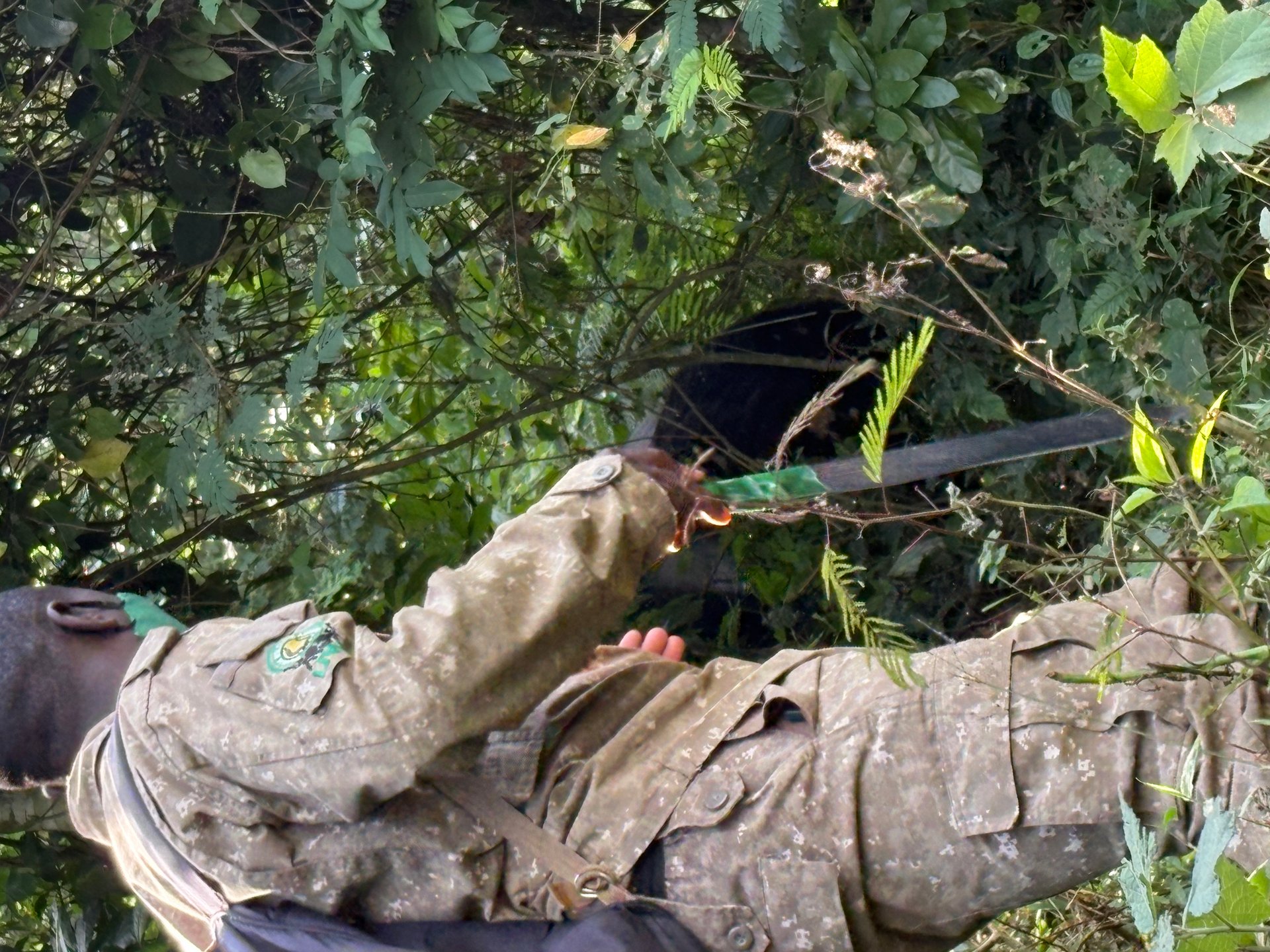
The ranger ahead of us carried a rifle slung across his back and a machete in his right hand. He moved with the efficiency of someone who had done this a thousand times — parting fern walls, stepping over roots, signaling the group with quiet hand gestures. Our gorilla trekking group in Bwindi Impenetrable National Park was accompanied by a lead guide and two rangers from the Uganda Wildlife Authority (UWA). During my visit in January 2026, GPS-tagged at -0.9762°N, 29.6282°E in the Buhoma sector, the armed escort initially felt incongruous with what is, at its core, a wildlife experience. Within twenty minutes of entering the forest, it felt entirely right.
The sight of a firearm in a national park raises a natural question for first-time visitors: is it actually necessary? The answer is historical as much as practical. Understanding why rangers carry weapons in Bwindi requires going back to the origins of gorilla tourism here — and to a specific morning in March 1999 that changed everything about how this park operates.
Today, Bwindi is home to roughly half of the world's remaining mountain gorillas. According to population survey data covering the period 2018 to 2020, Uganda's share of the mountain gorilla (Gorilla beringei beringei) population stands at approximately 459 individuals across Bwindi and Mgahinga. That figure represents one of conservation's genuine success stories — a population that was declining a generation ago and has since stabilized and grown. The tourism infrastructure built around gorilla trekking, including the ranger corps that accompanies every visitor group, is central to why those numbers are moving in the right direction.
How Gorilla Tourism Began in Bwindi
Gorilla trekking in Bwindi began in 1993, when the Uganda Wildlife Authority opened the forest to paying visitors for the first time. The model was borrowed from Rwanda's Volcanoes National Park, where habituation programs had been running since the 1970s under the influence of researchers including Dian Fossey. In Uganda, the logic was straightforward: a live gorilla visible to tourists generated more revenue than one poached for bushmeat, and that revenue could fund the ranger patrols needed to stop poaching in the first place.
The early years were operationally modest. A handful of habituated groups, a limited number of permits, and a conservation infrastructure that was still finding its footing. The revenue model worked in principle, but the security infrastructure had significant gaps — gaps that were exposed in the most violent way possible six years after trekking began.
The 1999 Attack and the Security Transformation That Followed
On 1 March 1999, a group of armed Rwandan Hutu rebels — members of the Interahamwe militia responsible for the 1994 Rwandan genocide — crossed from the Democratic Republic of Congo into Bwindi. They attacked a trekking camp near Buhoma village, killing eight tourists from the United States, the United Kingdom, and New Zealand, along with several Ugandan staff members. The assault lasted several hours. Some victims were abducted before being killed deeper in the forest.
The immediate effect was devastating for Uganda's nascent tourism industry. Permits went unsold, lodges stood empty, and the international perception of Bwindi shifted from extraordinary wildlife destination to dangerous border zone. The longer-term effect, however, was a complete restructuring of how security operates inside and around the park. The Ugandan government, UWA, and international conservation organizations invested in permanent ranger posts, cross-border intelligence sharing with Rwandan and Congolese authorities, and the mandatory armed escort system that remains in place today.
In the years that followed, the security situation along the Uganda-DRC border stabilized significantly. The rebel groups responsible for the 1999 attack were progressively weakened by military pressure from multiple directions. By the mid-2000s, gorilla trekking had resumed and was growing. By 2016, the United States alone accounted for nearly 50,000 tourist arrivals in Uganda, according to national statistical data, with Bwindi a primary draw. The park that had been written off as too dangerous had become one of East Africa's most sought-after wildlife destinations.
The Role of the UPDF and Cross-Border Stability
In certain areas of the park — particularly sectors closer to the DRC border — security arrangements have historically included support from the Uganda People's Defence Force (UPDF), Uganda's national army. The level of military involvement depends on the current security assessment and varies by sector and season. In practice, for the overwhelming majority of trekkers visiting Buhoma, Ruhija, Rushaga, or Nkuringo today, the escort consists of UWA rangers rather than soldiers. But it is worth knowing that the coordination between wildlife authorities and the military is an active, ongoing part of how Bwindi's security perimeter is maintained.
What Armed Rangers Actually Do on the Trek
The rangers accompanying gorilla trekking groups serve multiple functions simultaneously. Protection against wildlife threats — not from gorillas, which are habituated and generally calm, but from forest buffalo and elephant, which can be encountered on the approach trails — is one. Forest security is another. And the practical function that most visitors notice first: helping people through the terrain.
On our January 2026 trek, one of the rangers used his machete continuously to clear overhanging vegetation, widen narrow passages, and cut handholds into steep muddy banks. The Bwindi forest does not have manicured trails. Sections of the climb involve grabbing roots, scrambling on all fours, and navigating slopes where the soil is loose and the undergrowth dense enough to obscure your feet. The ranger's physical assistance — a steadying hand, a cleared step, a pointed shortcut — made the difference between a difficult hour and a genuinely hazardous one. The firearm on his back was the most visible element of his equipment, but the machete was the tool that mattered most for the ninety percent of the trek that involved terrain rather than threat.
[QUOTE: local guide on first impressions of working with foreign visitors in the forest]
The rangers I observed on this trek were visibly experienced in reading the forest. They tracked gorilla nesting sites using a combination of radio contact with trackers who had been following the group since dawn and their own knowledge of the terrain. The group we found had moved approximately two kilometers overnight. Finding them took just under two hours — well within the typical range.
The Gorilla Groups: Habituation, Research, and the Ethics of Access
Not every gorilla group in Bwindi is open to tourist visits. Habituation — the multi-year process of accustoming wild gorillas to close human presence — is a deliberate and carefully managed undertaking. A group typically requires two to four years of daily contact with a habituating team before it is cleared for tourist visits. During that period, the gorillas are followed but not approached closely, allowing them to normalize human proximity on their own terms.
Bwindi currently has more than a dozen habituated groups distributed across its four trekking sectors: Buhoma in the north, Ruhija in the northeast, Rushaga in the south, and Nkuringo in the southwest. Each permit specifies the group to be visited — a detail that matters for logistics. Visitors who want to see a particular group should note this when purchasing the permit, and should ideally choose accommodation near the sector where that group ranges. Driving two hours in the early morning to reach a distant sector trailhead, then trekking for another two to four hours, is a demanding way to start a day that will already be physically substantial.
One group deserves separate mention. The Kyaguriro research group, which had 21 members as of 2018, is habituated for scientific purposes rather than tourism. Visits to Kyaguriro are available to researchers but are treated with additional caution by conservation organizations, given that the group's primary function is to support long-term behavioral and health studies. Its status reflects an ongoing discussion within the conservation community about how to balance research access, tourism revenue, and minimal behavioral interference — a discussion that has not produced a settled consensus.
Gorilla Population Context: Uganda, Rwanda, and the DRC
Uganda's mountain gorillas do not exist in isolation. The broader mountain gorilla population spans three countries: Uganda (Bwindi and Mgahinga), Rwanda (Volcanoes National Park), and the Democratic Republic of Congo (Virunga National Park). Rwanda's gorillas are generally considered easier to observe for visitors who prioritize photographic conditions — the Virunga volcanic habitat features less dense vegetation than Bwindi's montane rainforest, and group sizes tend to be larger in some sectors. Uganda's Bwindi, by contrast, offers the deeper immersion of a more complex forest ecosystem, and the knowledge that the gorillas here represent a genetically distinct subpopulation with a longer evolutionary history in this particular landscape.
The African Wildlife Foundation, which has been involved in conservation projects in and around Bwindi, along with UWA and international research institutions, contributes to cross-border population monitoring and veterinary response for sick or injured gorillas. The Bwindi gorilla population's recovery over the past three decades — from a nadir of under 300 individuals to the current figure approaching 500 — is a direct result of this coordinated, multi-country approach.
Behavior Rules: What Every Visitor Needs to Know
The behavioral rules for gorilla trekking exist primarily to protect the gorillas, not the visitors. Respiratory diseases transmitted from humans — influenza, the common cold, and similar infections — can be fatal to gorillas, whose immune systems have had no opportunity to develop resistance. This is why visitors with active colds or fever are turned away at the trailhead without exception. It is also why masks are required at close proximity in some sectors.
The rules themselves are practical:
Maintain a minimum distance of seven meters from the gorillas at all times. In practice, the gorillas do not always maintain this distance themselves — a curious juvenile or a silverback establishing dominance may approach much closer. If a gorilla comes toward you, the guide's instruction is always the same: move away slowly, avoid direct eye contact, and do not turn your back. Crouching slightly and averting your gaze is interpreted by the gorillas as submissive behavior, which reduces the likelihood of a charge being pressed. Mock charges by silverbacks do occur, though rarely, and the appropriate response is to hold your position, look down, and follow the ranger's lead.
Flash photography is prohibited without exception. The sudden light is disorienting and stressful for the animals. In practice, modern cameras perform well in the filtered light of the Bwindi canopy, and the available light is generally sufficient for clear shots without flash.
Children under 15 years of age are not permitted on gorilla treks. This restriction reflects both the physical demands of the terrain — which can be genuinely challenging for adults in good physical condition — and the behavioral unpredictability of young children in the presence of large primates. There is no exception to the age rule.
The time limit with the gorillas is one hour. This is enforced firmly. The restriction exists to minimize cumulative behavioral disruption across the many daily visits the habituated groups receive. A single hour is enough time to observe feeding, grooming, play, and the full social dynamics of a gorilla group if conditions are favorable. For most visitors, it passes faster than expected.
Choosing Your Trek: Sector, Group, and Practical Preparation
The choice of trekking sector meaningfully affects both the experience and the logistics. Buhoma, in the north of the park, is the most established sector with the longest operational history and the best-developed infrastructure for visitors. It is the natural base if you are arriving from Kampala or Kabale and want the most straightforward access. The ranger escort I joined in January 2026 departed from the Buhoma trailhead.
Nkuringo, in the southwest at an elevation of approximately 2,090 meters, offers a more physically demanding trek and a higher-altitude perspective on the forest. The Nkuringo Bwindi Gorilla Lodge at this sector is community-run and has developed a carbon offset partnership with the Uganda Carbon Bureau. The elevation means cooler temperatures and a somewhat different vegetation profile compared to Buhoma.
Whichever sector you choose, the standard preparation advice applies: waterproof hiking boots, long trousers, gloves for gripping vegetation on steep sections, and rain gear. The Bwindi forest is genuinely wet — even during drier months, ground moisture and canopy drip are constants. January, when I visited, is part of a transitional period between the long rains and the short dry season. The trails were heavy with moisture but largely passable, and the forest was extraordinarily dense and green.
Arriving the evening before your trek and sleeping locally is strongly advisable. The briefing for trekkers typically begins at 8:00 am, and driving from a distant town on the morning of the trek adds logistical risk and fatigue before the physical effort has even begun. The accommodation options near each sector range from the premium end — Volcanoes Bwindi Lodge and Silverback Lodge near Buhoma — to budget-friendly guesthouses in Buhoma village itself.
The Tourism Economy and the Gorilla's Future
The connection between gorilla trekking revenue and gorilla survival is not abstract. The Uganda Wildlife Authority allocates a portion of every permit fee to community programs in the villages surrounding the park — road maintenance, school funding, medical access. The communities that live alongside Bwindi have a direct financial stake in the gorillas' continued presence and health. This alignment of interests is one of the primary reasons that poaching pressure in Bwindi has declined significantly since the early years of the park.
Tourismus as an economic sector in Uganda creates employment, generates foreign exchange, and draws private investment into infrastructure that benefits residents as well as visitors. The Bwindi model — where conservation generates a revenue stream that is partially shared with adjacent communities — has become a reference point for wildlife protection strategies globally. The Bank of Uganda's tourism statistics document steady growth in gorilla trekking revenue over the past decade, reflecting both the expansion of habituated groups and the increase in the permit price from earlier, lower levels to the current USD 800 for peak season.
The ranger I watched work through the undergrowth on that January morning is employed because permits sell and tourists come. His colleagues patrol the park perimeter at night for the same reason. The gorilla group we found — a silverback, three females, and two juveniles moving through mid-elevation bamboo — exists in its current number because that revenue funds the infrastructure that keeps them safe. That chain of causation is the central story of gorilla tourism in Bwindi, and it began, in earnest, in 1993 — then had to be rebuilt, harder and more carefully, after 1999.
From the field
Frequently asked questions
Are there armed rangers on gorilla trekking in Bwindi?
Yes. Every gorilla trekking group in Bwindi is accompanied by a lead guide and at least two rangers from the Uganda Wildlife Authority, who carry firearms. Their role is forest security and wildlife safety, not a signal of active threat. The presence feels reassuring once you are in the forest and understand the historical context behind it.
What happened in Bwindi in 1999?
In March 1999, armed Rwandan Hutu rebels crossed from the Democratic Republic of Congo and attacked a gorilla trekking camp near Buhoma. Eight tourists and several Ugandan staff members were killed. The incident led to a complete overhaul of security protocols, including the systematic deployment of armed rangers on every trek — a system that has been in place ever since.
Is gorilla trekking in Bwindi safe today?
Gorilla trekking in Bwindi is considered safe for tourists today. The Uganda Wildlife Authority maintains a substantial ranger presence throughout the forest, and the western border area has been stable for over two decades. Hundreds of thousands of visitors have trekked without incident since the security reforms implemented after 1999. The armed escort is a precautionary system, not a response to current threats.
What are the behavior rules during gorilla trekking in Bwindi?
Visitors must maintain a minimum distance of seven meters from the gorillas, avoid direct eye contact with silverbacks, and never attempt to touch the animals. If a gorilla approaches, move slowly away — do not run. Flash photography is prohibited. The visit is limited to one hour per group to minimize behavioral disruption. Visitors with active respiratory illnesses are turned away at the trailhead.
How long does gorilla trekking in Bwindi take?
The trekking time to locate the gorillas varies from one to two hours under normal conditions, but can extend to four or five hours depending on where the group has moved overnight. The time with the gorillas themselves is strictly limited to one hour. Plan for a full day including the return trek, briefing, and travel to and from your accommodation — an early start is standard.