Overview
The lodge you choose at Bwindi Impenetrable National Park affects your gorilla trek more than most visitors expect. Not because the quality of the trek itself changes — the gorilla families are the gorilla families — but because where you sleep determines which sector you trek from, how much time you spend on logistics on trek day, and whether the rest of your time in the forest feels like an expedition or a transaction.
This guide covers the full range, from budget camps charging 20 USD per night to luxury lodges above 500 USD, and explains what the difference buys in practice. The gorilla permit itself costs 800 USD regardless of where you stay.
Choosing by Sector First
Before comparing individual lodges, choose your sector. Bwindi has four main trekking areas, and most lodges operate in just one of them.
Buhoma is the oldest sector, opened when gorilla tourism began here in 1993. It sits on the northern edge of the forest and is the closest sector to the main road from Kabale. The habituated families here are well-studied and accessible. Infrastructure is relatively developed — Buhoma is where the majority of international lodges and budget camps are located.
Rushaga is in the south and has expanded rapidly over the past decade. It now has the highest number of habituated gorilla families of any sector, which means more permits available — and therefore more option for visitors booking at shorter notice. The landscape is dramatic, with steep terrain and forest that feels less managed than Buhoma.
Ruhija is the most remote accessible sector, in the eastern part of the forest. It sits at a higher altitude than Buhoma or Rushaga and the forest here has a different character. Tourism infrastructure is thinner, which is exactly why some visitors prefer it.
Nkuringo shares a landscape sector with Rushaga on the southern edge. The Nkuringo gorilla family was one of the first to be habituated, and the sector has a small number of lodges positioned for spectacular elevated views over the forest canopy.
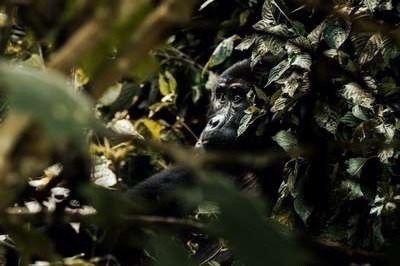
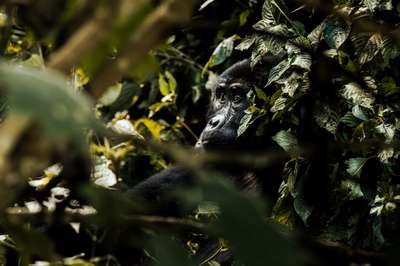
Bwindi gorilla encountered on the forest edge during a January 2026 trek. The density of the vegetation here — and the speed with which gorillas move through it — gives some sense of what tracking on foot involves. Photo: Mark Suer.
The Road to Buhoma
In January 2026, we drove to Buhoma from Kabale. The road from Kabale takes two to three hours depending on conditions and vehicle type. The final section into the village — the last several kilometres — runs through the national park buffer zone on an unpaved road that requires a 4WD in wet conditions.
What strikes most visitors arriving at Buhoma for the first time is the abrupt transition: you pass through increasingly small communities, then the treeline of the forest closes in on both sides, and the village itself feels less like a tourism hub than a genuinely inhabited place where the forest happens to begin at the garden's edge.
The morning of the gorilla trek in January 2026, we assembled at the Uganda Wildlife Authority (UWA) offices in Buhoma at 7:30 AM with a group of seven other permit holders. The briefing was thorough — rules, distances, what happens if a gorilla charges. Our group was assigned a tracker team and entered the forest on foot.
Luxury Lodges
Bwindi Lodge (Volcanoes Safaris) — Buhoma Sector
Bwindi Lodge is the flagship luxury property in the Buhoma sector and one of the most cited names in upmarket gorilla trekking across East Africa. The lodge occupies an elevated ridge above Buhoma village with views into the forest canopy. The accommodation consists of individual forest cottages with private verandas, each designed to be embedded in the landscape rather than isolated from it.
Rates sit above 500 USD per person per night in high season, typically as part of all-inclusive packages that include meals, guides, and transfer to the park briefing point. The positioning is direct: this is accommodation designed for international travellers for whom the 800 USD gorilla permit is one line item in a larger travel budget.
In practice, the advantages over mid-range options are: proximity to the forest edge (no morning transfer required), a concierge team with direct relationships with UWA allocation staff, and an experience designed so that logistics are invisible. The food, the service, and the physical setting are all at a consistent standard.
Buhoma Lodge (Uganda Exclusive Camps) — Buhoma Sector
Buhoma Lodge is an ecologically oriented property managed by Uganda Exclusive Camps, set in the Buhoma sector with direct forest access. Cottages start from 500 USD with full board included; the lodge has Wi-Fi. The property is smaller and less architecturally prominent than Bwindi Lodge or Mahogany Springs, but its forest positioning and inclusive pricing make it a competitive option in the upper tier.
Mahogany Springs — Buhoma Sector
Mahogany Springs is adjacent to Bwindi Lodge on the Buhoma ridge and operates at a comparable price point. The aesthetic differs slightly — more emphasis on architectural detail and curated interiors than on the raw forest setting — but the service and positioning are similar. Both are appropriate starting points for travellers wanting full-service luxury at Bwindi without flying into a private airstrip.
Sanctuary Gorilla Forest Camp — Buhoma Sector
Sanctuary Gorilla Forest Camp is positioned literally at the park boundary. The tented camp format means the structure is less permanent than a lodge — which, paradoxically, creates a more direct relationship with the forest. The sound of the forest at night, and the proximity to the boundary fence, are both more present here than in a stone-and-timber lodge.
Mid-Range Lodges
The middle tier at Bwindi — roughly 100 to 300 USD per person per night — has grown considerably over the past decade. These properties offer private rooms, hot water, reliable meals, and park proximity, without the full concierge infrastructure of luxury lodges.
Buhoma Community Rest Camp — Buhoma Sector
Buhoma Community Rest Camp is the closest mid-range option to the park entrance in Buhoma, operated in partnership with the local community. It is not a luxury property — the bandas are functional and the grounds are modest — but it is well-managed, the staff are professional, and the location means trek-day logistics are simple. Revenue from the camp contributes to the Buhoma Community Development Fund.
This is a property worth choosing specifically for the community revenue dimension. Guests who stay here are contributing to the model that Buhoma has built over three decades of gorilla tourism — a model that has not been without criticism but has been more transparent about benefit distribution than many comparable sites in the region.
Ruhija Community Rest Camp — Ruhija Sector
In Ruhija, the community rest camp model is replicated at a smaller scale. The site is basic — camping and simple bandas — and the altitude means temperatures at night can drop considerably. What Ruhija offers is solitude. The sector sees fewer visitors than Buhoma or Rushaga, the landscape is different, and the morning experience before and after the trek has a quieter quality that some travellers specifically seek out.
Gorilla Mist Camp — Ruhija Sector
Gorilla Mist Camp is a mid-range property in Ruhija with elevated views and comfortable accommodation. It was built specifically to service the eastern sector trekking operations and offers a full accommodation and meals package. The "mist" in the name is accurate: Ruhija sits high enough that morning cloud regularly sits in the valley below the property, which creates an effect that is either atmospheric or disorienting depending on your expectations.
Budget Accommodation
Bwindi Backpackers Hostel — Buhoma Sector
Bwindi Backpackers is the most referenced budget option in Buhoma, with dorm beds from approximately 15–20 USD and simple private rooms from 30–40 USD. It operates a bar and restaurant used by both staying guests and day visitors. The standard is hostel-level — shared bathrooms, basic furniture, variable hot water — but the location is correct and the staff are experienced with gorilla trek logistics.
For permit holders who have spent 800 USD on the trek itself and are managing the rest of the trip on a reduced budget, Bwindi Backpackers is the functional choice. The trek experience is identical regardless of where you slept the night before.
Camping at UWA Sites
Uganda Wildlife Authority operates official camping sites near the park entrances in Buhoma and Rushaga. Rates are low (typically 10–15 USD per person) and facilities are minimal — pit latrines, no hot water, basic cooking areas. The sites are functional for self-sufficient travellers arriving with camping equipment. The UWA site in Buhoma is walking distance from the morning briefing point.
Side-by-Side: What Each Tier Actually Delivers
| Budget | Mid-Range | Luxury | |
|---|---|---|---|
| Price (per person/night) | 15–50 USD | 80–250 USD | 350–600+ USD |
| Distance to briefing point | 5–15 min | 5–10 min | Walking distance |
| Meals included | Usually not | Usually yes | Yes, all meals |
| Gorilla trek quality | Identical | Identical | Identical |
| Hot water reliability | Variable | Yes | Yes |
| Park logistics support | Basic | Good | Full concierge |
| Community revenue | Moderate | Varies | Varies |
| Sector options | Buhoma, Rushaga | All sectors | Buhoma mainly |
The key row is trek quality: identical. The 800 USD permit buys the same experience regardless of where you sleep. What the lodge price buys is comfort, logistics simplicity, and the overall texture of the visit — not a better gorilla encounter.
Spa and Wellness at Bwindi
The HopeContent briefing flagged this as a specific question. The short answer: this is not a spa destination. Luxury lodges at Bwindi (Bwindi Lodge, Mahogany Springs, Gorilla Forest Camp) typically offer basic in-room massage by arrangement and some have small spa facilities — but the standard is far below what you would expect at a destination wellness resort. Visitors coming specifically for spa treatments should look at lodges in Rwanda's Virunga sector, where the tourism infrastructure is more developed and the facilities more invested.
For the majority of Bwindi visitors, the primary activity is the gorilla trek, and a day after trekking is more likely to be spent resting than seeking wellness programming. The forest setting itself — the air quality, the altitude, the absence of urban stimulation — functions as the wellness component.
Key Facts — Bwindi Lodge Comparison
- Gorilla permit: 800 USD per person (all sectors, all lodge tiers)
- Trekking sectors: Buhoma, Rushaga, Ruhija, Nkuringo
- Trek quality: identical across all accommodation tiers
- Bookings: permits via Uganda Wildlife Authority (UWA); lodges direct or via Kampala operator
- Best season: dry (June–September, December–February) — trails firmer, forest drier
- Altitude range: 1,160 m (Buhoma) to 2,607 m (Ruhija peak)
Frequently asked questions
Which Bwindi sector is best for gorilla trekking?
There is no objectively best sector — each has different characteristics. Buhoma has the most established infrastructure and the most lodges. Rushaga has the most habituated gorilla families and therefore more permit availability. Ruhija is the most remote and has the most consistently atmospheric landscape. Your choice should be based on where you can get a permit, which family you are allocated to, and where you prefer to stay.
How much do Bwindi lodges cost in 2026?
Budget accommodation starts at approximately 15–20 USD per person per night at Bwindi Backpackers or UWA camping sites. Mid-range properties (Buhoma Community Rest Camp, Gorilla Mist Camp) run 80–200 USD. Luxury lodges (Bwindi Lodge, Mahogany Springs, Gorilla Forest Camp) sit above 400 USD per person per night, often sold as all-inclusive packages. The gorilla permit is 800 USD separately.
Does it matter which lodge I choose for my gorilla trek?
For the trek experience itself: no. The permit and group allocation are managed by UWA regardless of your accommodation. What changes with lodge choice is convenience (proximity to the briefing point), service level, and — if you choose community-operated properties — who receives your accommodation spending.
How do I book a gorilla permit at Bwindi?
Permits are booked through Uganda Wildlife Authority (UWA) directly or through licensed Ugandan tour operators. Availability is limited — gorilla trekking at Bwindi is capped to protect the gorilla families — and peak season permits (July–August) should be booked many months in advance. For context on the full permit and trek process, see the Gorilla Trekking in Uganda guide .
What is the best time of year to visit Bwindi?
The dry seasons — June to August and December to February — are most comfortable for trekking. Trails are firmer, the risk of rain during the trek is lower, and forest views are clearer. That said, Bwindi receives rainfall year-round and the wet seasons are not impossible — they are simply muddier and more physically demanding. Permits are available year-round.
Is it safe to trek gorillas at Bwindi?
Yes. For a full account of the security situation, including the 1999 attack and how safety systems have changed since, see the Bwindi Safety and History guide . In January 2026, the standard security arrangement was one lead guide plus two armed rangers per trekking group. Related reading: Gorilla Trekking in Uganda: The Complete Guide · Bwindi: Safety, History and the 1999 Attack · Kabale to Bwindi: Transport & Access