When you arrive at the Bwindi Impenetrable Forest in the early morning for a gorilla trek, the briefing is brief and practical: stay behind the guide, keep the group together, maintain 7 metres from the animals, one hour maximum. You sign a register, check your gear, and walk into the forest.
What is not said during that briefing — and what most visitors do not think to ask — is that the same path had to be closed for months after eight tourists were killed here in 1999. The gorilla trekking that feels routine in 2026 exists within a specific history. Understanding that history is not a reason to stay away. It is a reason to appreciate what the programme now is.
1993: The Beginning
Gorilla trekking at Bwindi Impenetrable National Park opened formally in 1993, the same year the Uganda Wildlife Authority was established. The park had been gazetted in 1991, incorporating a forest that had been protected as a Crown Forest Reserve since the colonial period (source: Reiseführer Uganda 2020 — Teil 11).
The decision to open Bwindi to tourism required a multi-year habituation process: researchers and rangers spent extended periods with specific gorilla families, accustoming them to human presence at close range. Only when a family was reliably calm around people could they be offered to visitors. The first families to complete the habituation process were in the Buhoma sector — the park's northern gateway, and the area that would later become the site of the 1999 attack.
In the early 1990s, gorilla trekking was still an obscure activity. Rwanda's mountain gorilla programme at Volcanoes National Park had been running since the 1970s, and the work of Dian Fossey had made mountain gorillas internationally recognisable. But Uganda's programme was new, the infrastructure at Buhoma was basic, and visitor numbers were low. The tourism economy around Bwindi was just beginning to form.
1 March 1999: The Buhoma Attack
On the morning of 1 March 1999, a group of Rwandan Interahamwe rebels crossed the border from the Democratic Republic of Congo into Uganda. The Interahamwe were Hutu militias responsible for the 1994 Rwandan genocide who had fled across the border after the fall of the génocidaire government. In the years following the genocide, they operated in the Congolese forests of North Kivu, raiding communities on both sides of the Uganda–DRC border (source: Reiseführer Uganda 2020 — Teil 11).
The rebels descended on the tourist camp at Buhoma at night and in the early morning. They abducted a group of tourists who had arrived to trek the following day. The kidnapping became a killing — eight tourists died during the incident. The victims included American, British, and New Zealand nationals. Some had been shot; others were killed with machetes during the forced march through the forest.
The Ugandan government suspended gorilla trekking immediately. The Bwindi programme — six years old at the time — was effectively shut down overnight. For the communities around the park that had built the early accommodation and guiding infrastructure, the consequences were severe. Tourism was, even then, the primary economic driver of the Buhoma area.
The attack received substantial international coverage. It was the deadliest assault on tourists in Uganda's history, and it raised fundamental questions about whether wilderness tourism in conflict-affected border regions was manageable. The answer that Uganda and UWA ultimately gave was yes — but only with structural changes to how the programme operated.
Recovery and the Security Overhaul
Gorilla trekking at Bwindi resumed in the early 2000s with a fundamentally different security architecture. The Ugandan military — the Uganda People's Defence Force (UPDF) — established a permanent presence in the Bwindi border area. UWA significantly expanded its ranger force, and every gorilla trekking group was required to be accompanied by armed rangers in addition to the wildlife guides.
The Interahamwe's capacity to operate inside Uganda was substantially reduced over the following decade through a combination of military pressure, regional cooperation between Uganda, Rwanda, and the DRC, and the gradual attrition of the original génocidaire cohort. The border region remains sensitive — this is one of the most complex political geographies in Africa — but the specific threat that produced the 1999 attack has been addressed at its source.
The communities around Bwindi rebuilt their tourism economy with notable determination. The Buhoma sector, where the attack occurred, is today the park's best-established tourism zone, with a range of accommodation from budget lodges to high-end camps. Gorilla Bluff Lodge, where we stayed in January 2026, sits on the edge of the forest above Buhoma and looks out over the valley that leads into the park.
What Security Looks Like on the Trail Today
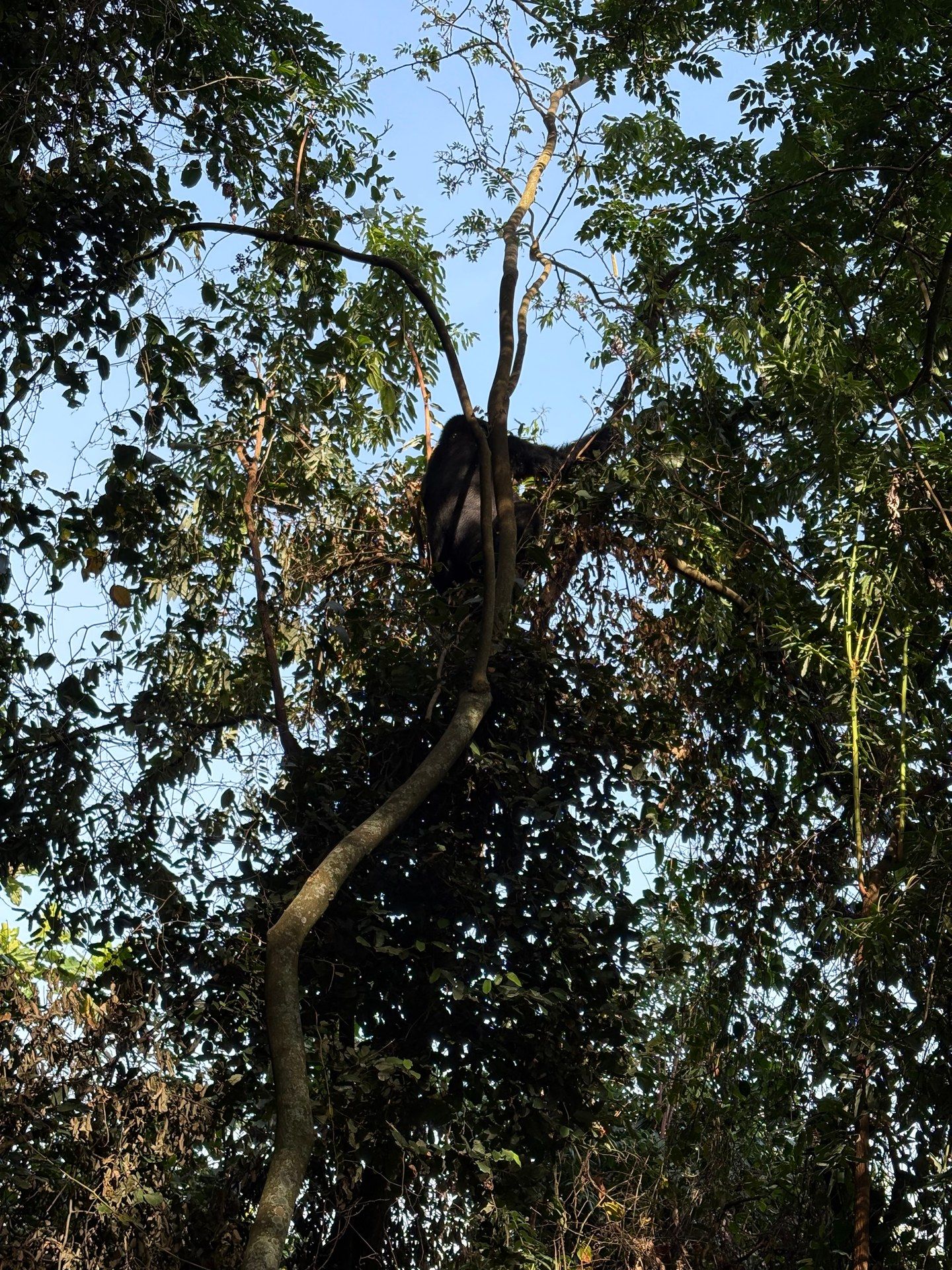
On our gorilla trek in January 2026, we were accompanied by one UWA guide and two armed rangers. The rangers were positioned at the front and rear of the group. They carried rifles and communicated by radio throughout the trek. Their function was not decorative — they were part of a coordinated patrol structure that covers the forest continuously, not only during tourist visits.
The guide managed the approach to the gorilla family, calling a halt when we got within range and instructing us on positioning. The rangers maintained a wider perimeter. The whole operation had a practiced quality — movements choreographed through repetition, everyone clear on their role. It did not feel tense. It felt like a system that works.
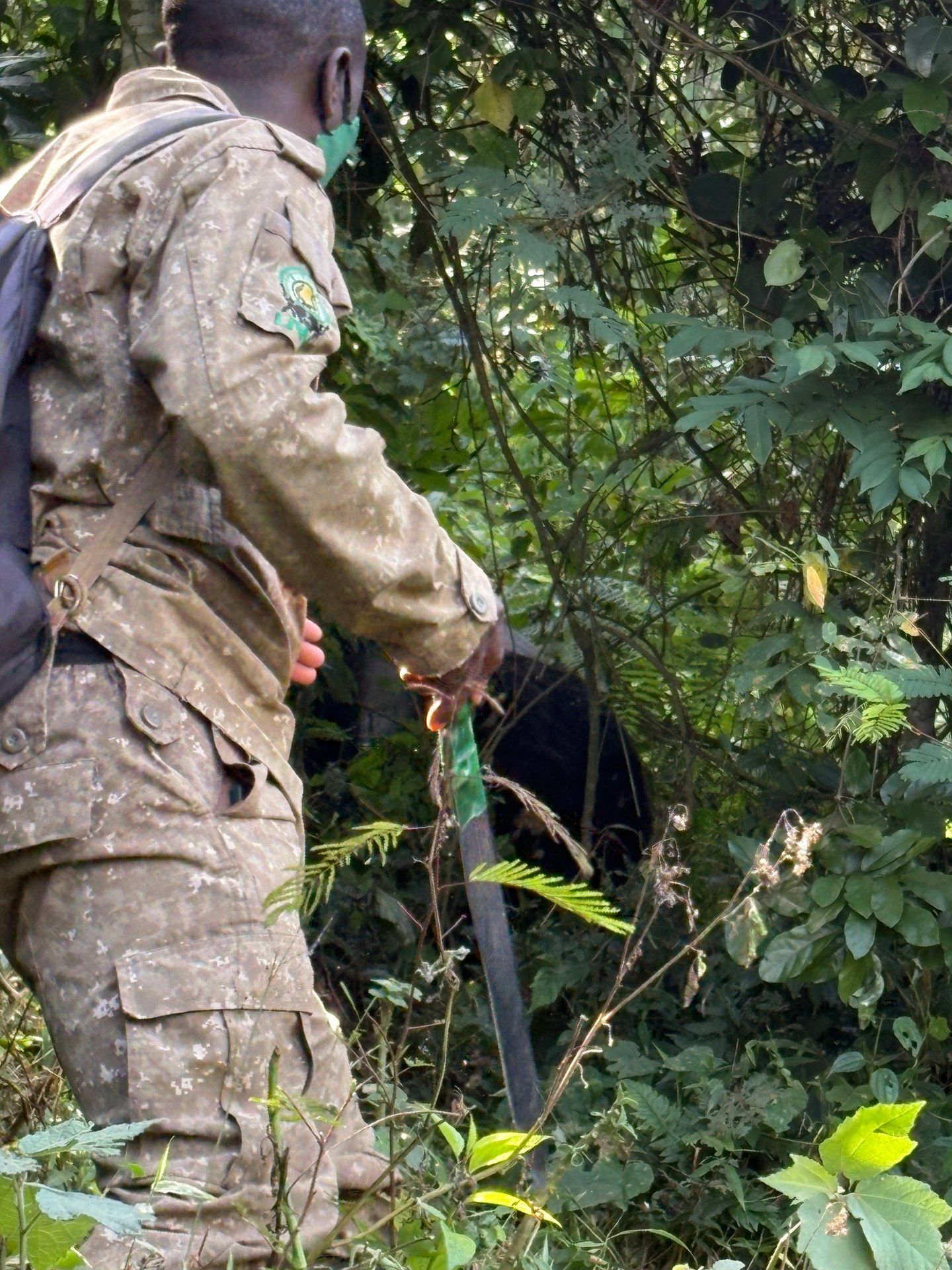
The trek itself took approximately three hours before we found the family. Gorillas move overnight, and the trackers — a separate team that goes out before dawn — radio ahead with coordinates once they have located the family's position. The walk through the forest to that position is part of the experience: the Bwindi forest is dense, steep, and genuinely difficult terrain. We were at altitude. The undergrowth was wet from the previous night's rain. The path, where it existed, was cut by machete.
When we reached the family, everything changed. The gorillas were entirely calm — a silverback male, several females, two infants. They moved through the vegetation around us, occasionally glancing at the group with what looked like mild curiosity. One female passed within two metres of the guide, who stepped aside without urgency. The hour passed very quickly.
Practical Rules: What UWA Requires
The rules governing gorilla trekking at Bwindi and Mgahinga have been developed over three decades of programme experience. They serve both visitor safety and the welfare of the gorillas themselves — mountain gorillas are susceptible to human respiratory infections, which is the primary rationale behind the distance and time limits.
- Minimum distance: 7 metres from the gorillas at all times
- Maximum time: 1 hour with the family per visit
- Group size: maximum 8 visitors per gorilla family per day
- Minimum age: 15 years
- Photography: permitted; flash photography prohibited
- Health: visitors with contagious illness should withdraw; guides will ask
- Porter hire: available at the trailhead; strongly recommended for steep terrain (approx. USD 20)
- Nature trail (no gorillas): approx. USD 30
The permit itself — USD 800 per person — must be booked in advance through UWA or a licensed operator. Same-day permits are not available. For the most popular families and sectors, especially during peak season (June to August and December to February), permits sell out months ahead.
Bwindi's Four Sectors
The park is divided into four trekking sectors, each with habituated gorilla families and its own access logistics. For how to reach each sector from Kabale, including distances, road conditions, and transport options, see our Kabale to Bwindi transport guide.
The Buhoma sector — the oldest and most established — is where gorilla tourism began in 1993 and where the 1999 attack occurred. It remains the most visited sector, with the widest range of accommodation and the most developed infrastructure. Its history is now part of what makes it significant.
Bwindi Beyond the Gorillas
The gorilla trek is the centrepiece of a Bwindi visit, but the park and surrounding area have considerable depth beyond it. The community around Buhoma has developed cultural activities — traditional dance performances, craft workshops, village walks — that connect the tourism economy to local households in ways that the early 1990s programme had not yet established.
We visited the orphanage run by Nicholas and Media in Buhoma over multiple days. On the final afternoon, the children performed traditional dances — sustained, physically demanding, the rhythms relentless in the midday heat. The performance was an act of cultural preservation as much as hospitality: something being actively passed forward.
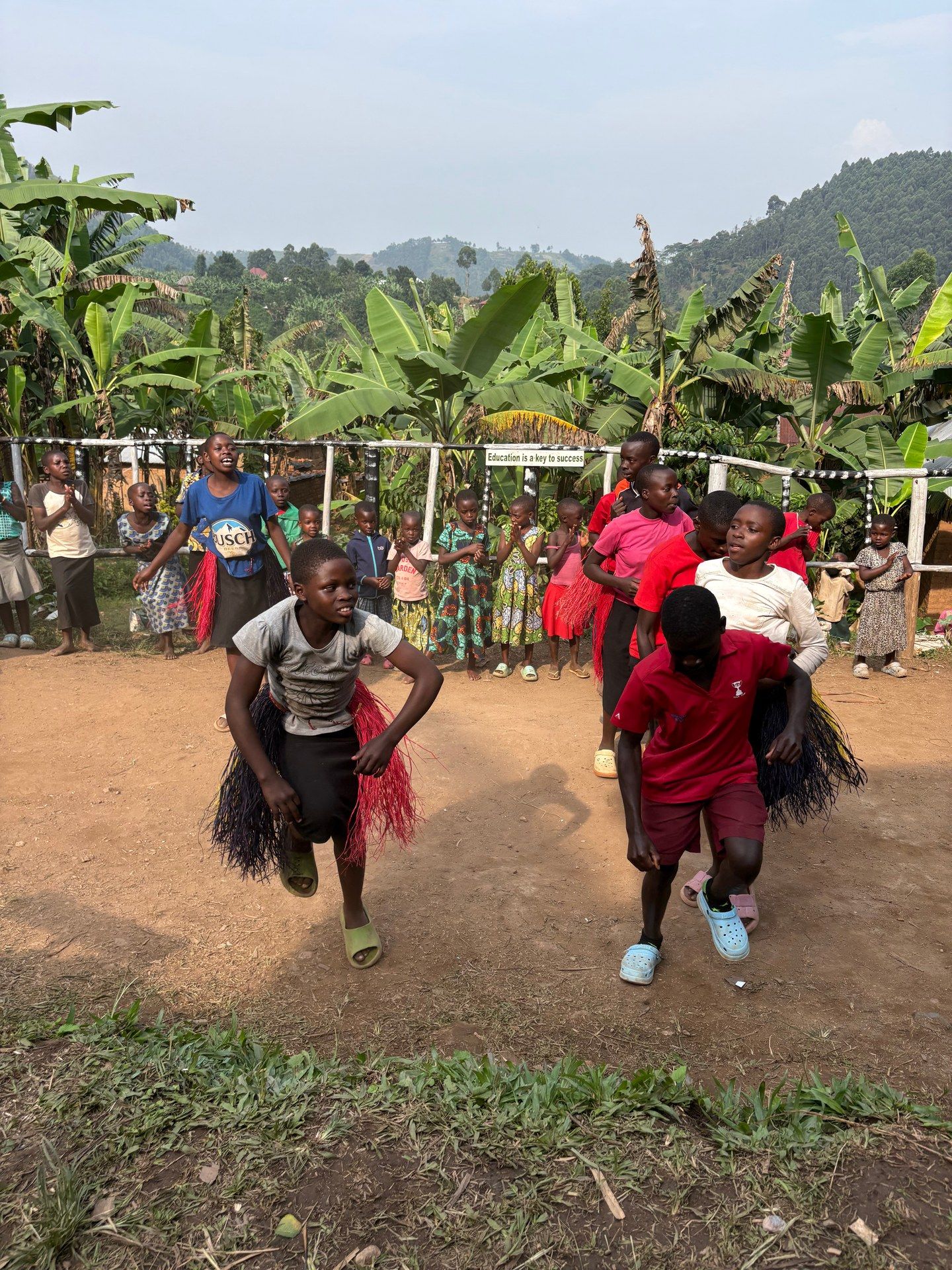
The gorilla programme funds this community through a mechanism embedded in the permit structure: a portion of the USD 800 permit fee is allocated directly to community development projects in the villages around the park. The children dancing in Buhoma, the families in the houses visible from the forest edge, the lodge staff who carry your bags — all of them are part of an economy that the gorilla programme created, nearly lost in 1999, and rebuilt.
Beyond Bwindi: Uganda's Wider Wildlife
Most visitors who come for the gorillas extend their Uganda circuit to include other wildlife experiences. The combination we found most rewarding paired Bwindi with Murchison Falls National Park in the north: an elephant boat trip up the Nile to the base of the falls, then a game drive on the north bank. The contrast in landscape and animal density between tropical montane forest and northern savannah is substantial — two entirely different ecosystems within the same country.
Ziwa Rhino Sanctuary, on the road between Kampala and Murchison Falls, offers a rhino walk — the only place in Uganda where white rhinos can currently be seen in the wild. The Ziwa programme is a reintroduction effort: the last wild rhinos in Uganda were killed during the Idi Amin era, and Ziwa is rebuilding the population from animals donated by Kenya and the US. The walk takes place on foot with an armed ranger, at very close range.
For the full gorilla trekking logistics — what to book, when to go, which sector to choose, and what the trek involves physically — see our complete gorilla trekking guide. For accommodation and practical information in the Kabale region, see our Kabale regional guide.