Uganda holds more than 1,000 recorded bird species — roughly 10 percent of the world total within a country the size of the United Kingdom. The western circuit, centred on Kibale Forest National Park and its surrounding wetlands and reserves, is among the most productive birdwatching destinations on the continent. Kibale offers forest-interior species difficult or impossible to find elsewhere. Bigodi Wetlands, immediately adjacent, is a community-managed site with exceptional access and papyrus specialists. Katonga Wildlife Reserve, approximately 60 kilometres to the east, extends the range into additional wetland habitats.
Kibale Forest National Park
Kibale Forest National Park covers 766 square kilometres in western Uganda at an elevation of 1,110 to 1,590 metres (source: Reiseführer Uganda 2020 — Teil 15). It is internationally known for chimpanzee trekking, but its bird list is equally compelling and considerably less crowded with visitors focused on it.
The park's mosaic of forest types — lowland rainforest to montane forest — supports a range of habitat specialists. Notable target species include the African pitta, green-breasted pitta, blue-headed sunbird, and several forest-interior turacos. [RECHERCHE NOETIG: full verified bird species count for Kibale NP] Early mornings, before the forest quietens, produce the highest activity. The canopy density makes light a constant challenge — 8x42 binoculars are the practical minimum.
The Kanyanchu Visitor Centre, 36 kilometres from Fort Portal, is the main access point (source: Reiseführer Uganda 2020 — Teil 16). Guided primate walks last 2 to 4 hours and include time with a habituated chimpanzee community. Birdwatchers benefit from requesting a guide who can slow the pace — birding in closed-canopy forest requires stopping and listening in a way that primate walks rarely allow.
The park holds 13 primate species, including approximately 17,000 red colobus monkeys — the majority of the world population of this endangered species. More than 140 butterfly species have also been recorded (source: Reiseführer Uganda 2020 — Teil 15). The biodiversity density per hectare makes Kibale one of the richest forest patches in East Africa.
Bigodi Wetlands: Community Birdwatching at Its Best
Bigodi Wetland Sanctuary is managed by the Kibale Association for Rural and Environmental Development (KAFRED), a community organisation that has operated the site since the early 1990s. It sits at the southern boundary of Kibale Forest, accessible from the same road as the park headquarters.
The papyrus swamp, forest edge, and open-water habitats support species not found in the closed-canopy interior: papyrus gonolek, papyrus yellow warbler, and white-winged swamp warbler are the primary targets. [RECHERCHE NOETIG: full verified bird count for Bigodi Wetlands] Entry fees go directly to KAFRED's community development fund. Guided walks are available in the early morning and late afternoon; the trail system is maintained and accessible without specialist equipment.
Katonga Wildlife Reserve
Katonga Wildlife Reserve lies approximately 60 kilometres east of Queen Elizabeth National Park and Kibale Forest National Park (source: Reiseführer Uganda 2020 — Teil 16). It is less visited than either neighbour, which is part of its value: habitat that receives low visitor pressure often holds more relaxed wildlife behaviour.
The reserve's wetland and forest mosaic supports waterbirds and papyrus specialists. The shoebill stork — one of Uganda's most sought-after birds globally — has been recorded in papyrus habitats in this region. [RECHERCHE NOETIG: confirm shoebill presence in Katonga specifically] Access requires advance arrangement through a guide or operator based in Fort Portal or Kampala.
Getting There: The Road West from Kampala
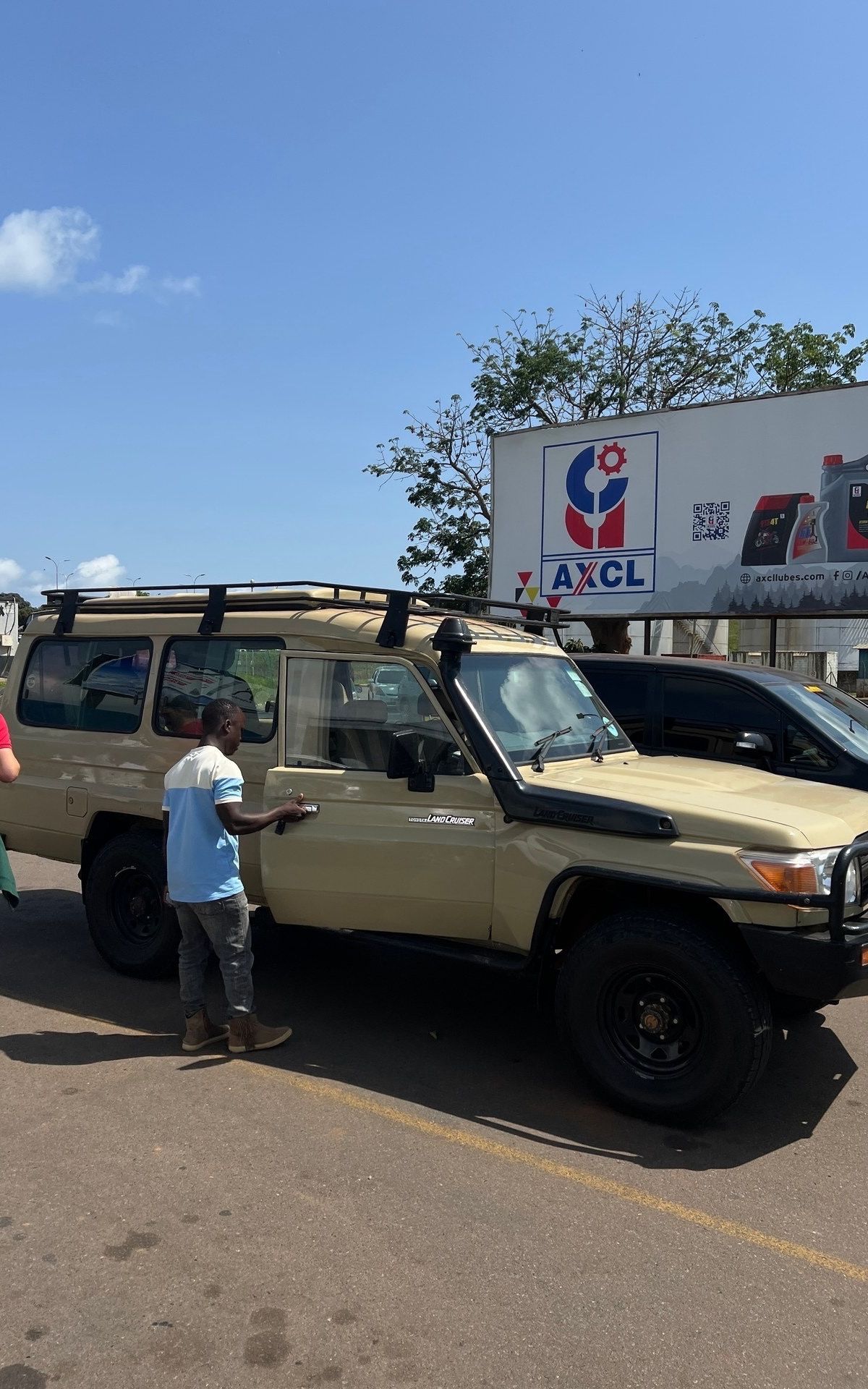
Reaching western Uganda from Kampala requires a full day of travel. On our January 2026 visit, we were collected at Entebbe Airport by a driver in a Safari Jeep — the standard vehicle for longer overland routes in Uganda and a practical choice for managing camera and optics kit.
Driving through Kampala on the way out of the city is an experience worth anticipating. The streets carry trucks, boda-bodas (motorcycle taxis), minibuses, and private cars moving in patterns that appear improvised from the outside but have their own internal logic. Budget additional time through the city — there is no shortcut.
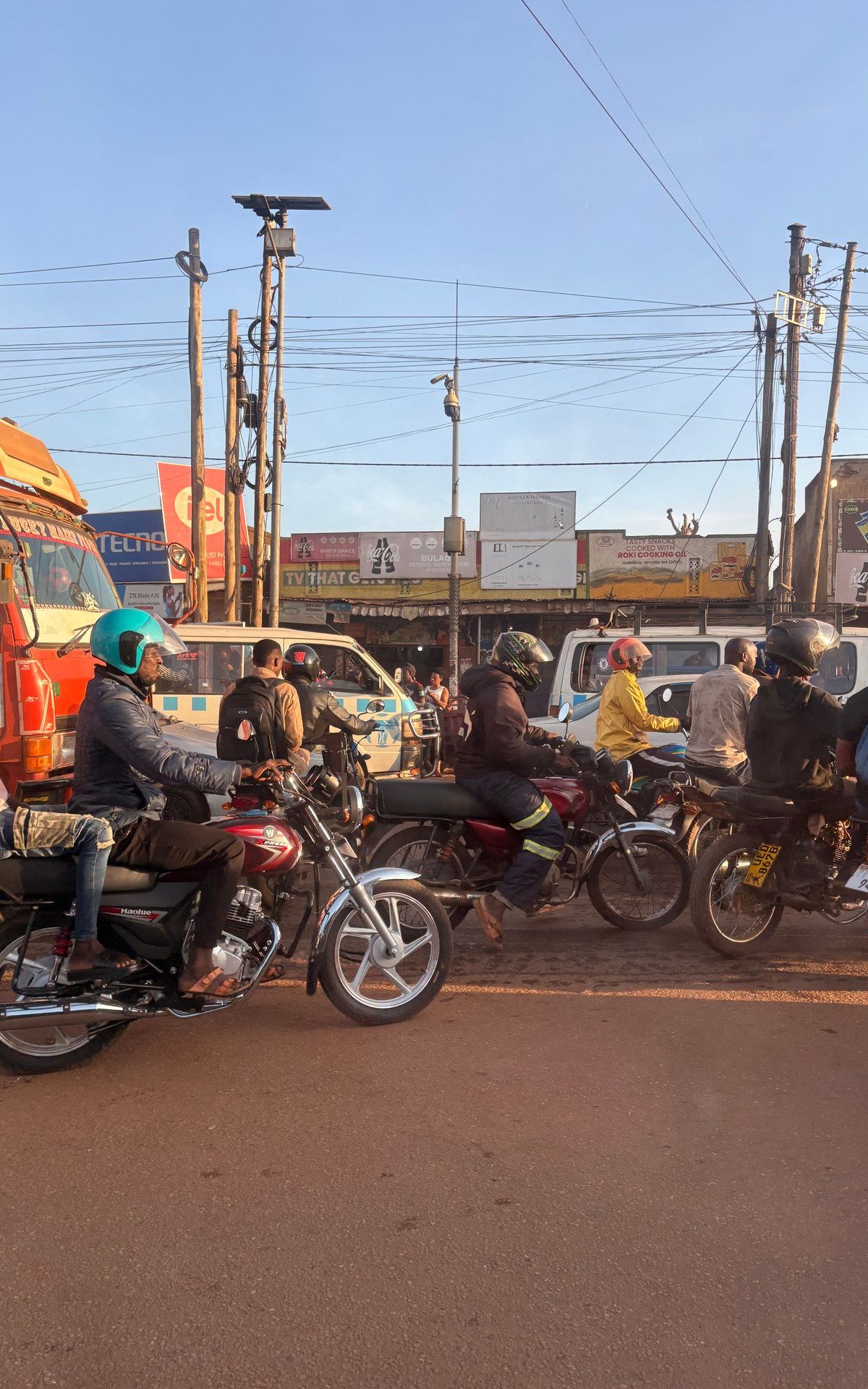
The Masaka Highway — the main route toward western Uganda — was under active construction during our October 2024 passage: sections were unpaved, dusty, and shared by heavy lorries, private vehicles, and boda-bodas simultaneously. Conditions improve with the paving work, but build contingency time into any western Uganda itinerary.
The Post Bus from Kampala to Fort Portal departs daily at 07:00, takes approximately 5 hours, and costs around 30,000 UGX (source: Reiseführer Uganda 2020 — Teil 14). For travellers with optics and camera gear, a private vehicle is more practical. Fort Portal is the last reliable provisioning point before the road to Kibale.
For travellers combining western Uganda birdwatching with gorilla trekking at Bwindi Impenetrable National Park or a stay at Lake Bunyonyi, the Post Bus to Kabale departs from Kampala's main post office every morning except Sunday at 08:00 (source:Reiseführer Uganda 2020 — Teil 10). Journey time is 7 to 9 hours over approximately 400 kilometres.
What to Bring for Forest Birdwatching
- Binoculars: 8x42 or 10x42 for low-light forest conditions
- Field guide: Birds of East Africa (Stevenson & Fanshawe) covers Uganda thoroughly
- Waterproofs: Kibale receives rain year-round; the forest floor stays wet regardless of season
- Boots: Ankle support, waterproof; Bigodi and Kibale trails involve mud after rain
- Early start: 06:00 to 09:00 is peak activity at all three sites
- Notebook: A written list helps guides tailor subsequent sessions
Combining Birdwatching with Other Activities
Kibale pairs naturally with chimpanzee trekking (same park, same guides, same morning schedule), the Ndali-Kasenda crater lake field approximately 30 kilometres southeast of Fort Portal (source: Reiseführer Uganda 2020 — Teil 15), and Queen Elizabeth National Park to the south for open-country and Kazinga Channel waterbird species.
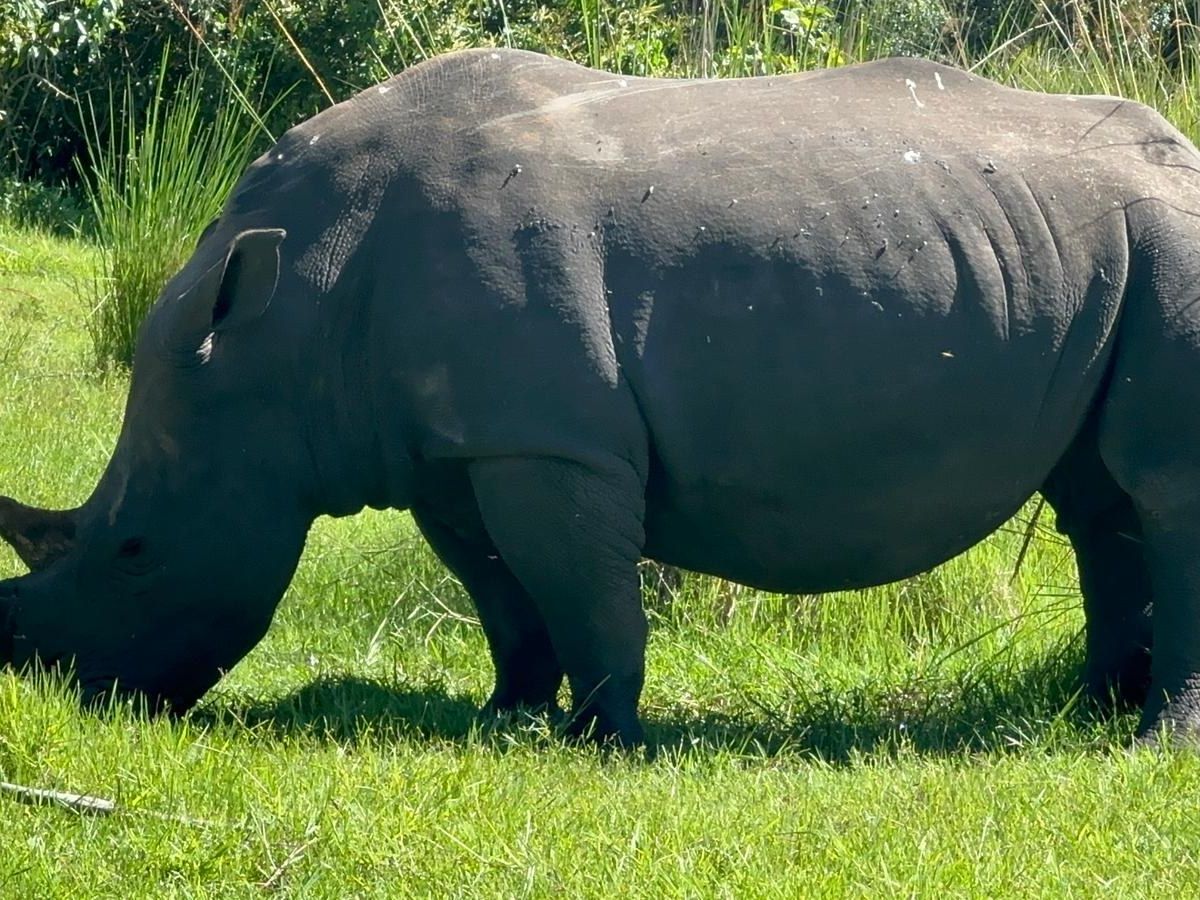
Uganda's wildlife coverage extends well beyond birds. At Ziwa Rhino Sanctuary, we walked to within close range of a white rhinoceros grazing alone — a large, heavy animal with a quiet presence that stays with you. It is Uganda's only location where rhinos can be seen in a natural-habitat setting.
For planning and logistics, our gorilla trekking guide covers the southwest circuit in detail, and our Kabale region guide covers the main logistics hub for southwest Uganda.