Bwindi Impenetrable National Park is approximately 120 kilometres from Kabale by road (source: Reiseführer Uganda 2020 — Teil 10). The journey takes between 1.5 and 2.5 hours depending on which sector you are travelling to, road conditions, and your departure time. Kabale is the main logistics base for the entire southwest circuit — most travellers spend a night here before heading to the park. This guide covers every transport option, sector by sector, with times and costs that reflect conditions on the ground.
The Four Bwindi Sectors: Distances from Kabale
Bwindi has four gorilla trekking sectors, each at a different distance and in a different direction from Kabale. Your permit determines your sector — transfers cannot be made on the day. Know your destination before you book transport.
| Sector | Distance from Kabale | Drive time | Notes |
|---|---|---|---|
| Ruhija | ~36 km | 1–1.5 hrs | 2,340 m elevation; closest but steep road |
| Buhoma | ~80–90 km | 2–2.5 hrs | Oldest sector; north of park; most established infrastructure |
| Rushaga | ~50–60 km | 1.5–2 hrs | Most habituated families; highest permit availability |
| Nkuringo | ~55 km | 1.5–2 hrs | Southwest edge; ~45 min from Rushaga (source: Reiseführer 2020) |
Sources: Reiseführer Uganda 2020 — Teil 10, 11, 12. Road times are estimates; conditions vary seasonally.
Transport Options: How to Actually Get There
Private Vehicle Hire (Recommended)
For gorilla trekking, private hire is the practical standard. The UWA briefing starts at 07:30 at your sector gate — to arrive on time, you need to leave Kabale between 05:00 and 06:00 depending on sector. Shared transport to more remote sectors does not run at that hour reliably.
Private vehicle hire for a one-way transfer from Kabale to any Bwindi sector typically costs 80,000 to 150,000 UGX depending on sector and negotiation. Most hostels in Kabale — including Kwanzi and Kabale Backpackers — can arrange this the evening before. Confirm price and departure time in writing, and make clear you need to reach the gate by 07:15 at the latest.
Shared Taxi (Matatu)
Shared minibuses run from Kabale taxi park toward Buhoma and southward sectors. They depart in the early morning — typically between 06:00 and 07:30 — but exact times are not fixed. Confirm the evening before at the taxi park directly. Fare is significantly lower than private hire (typically 5,000 to 15,000 UGX depending on destination) but timing risk is real. A late or missed departure means a missed trek and a non-refundable permit.
Shared taxis work reliably for travellers without a fixed trekking time — for example, those heading to lodges the day before a trek, or returning to Kabale after the trek is complete.
Boda-Boda (Motorcycle Taxi)
Boda-bodas operate on routes near Kabale and on shorter stretches within the Bwindi region. They are not practical for the full Kabale–Bwindi transfer with luggage, but are useful for short hops — for example, from a lodge to a trailhead, or between Rushaga and Nkuringo. On the road between Buhoma and surrounding areas, boda-bodas are the primary local transport mode.
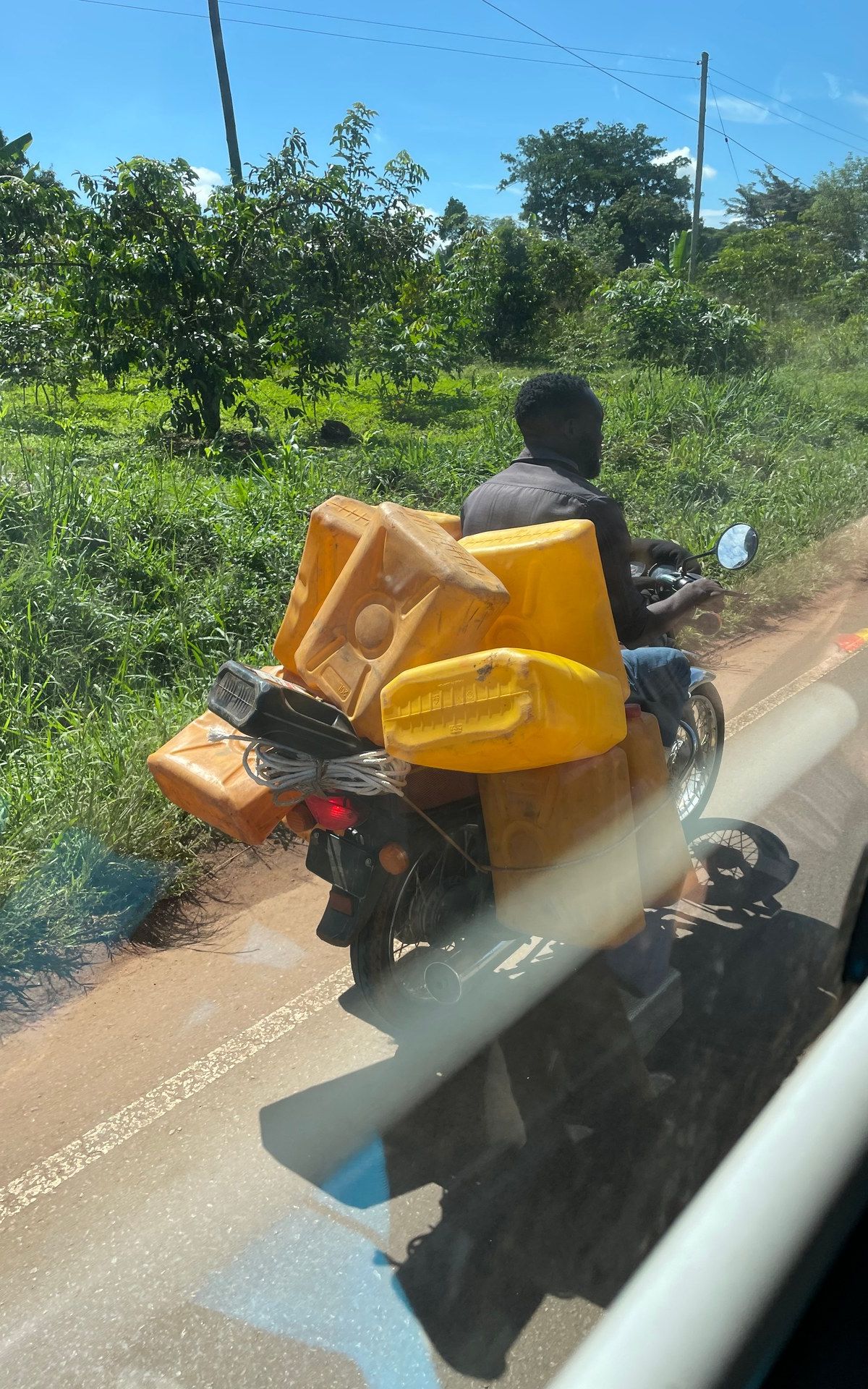
Watching a boda-boda driver navigate a rural road carrying stacked water canisters — no helmet, sandals, completely at ease — is one of those moments that reminds you how different the practical calculus of daily life is here. It is not reckless; it is functional. The same is true of the gorilla country roads: they require different expectations than paved highways.
What the Road Is Actually Like
The roads from Kabale to Bwindi are unpaved for most of the distance beyond the tarmac junction. Laterite surface, red dust in dry season, mud and ruts in the wet. A standard 4WD is adequate; a high-clearance vehicle is recommended after heavy rain. The Ruhija road climbs steeply to 2,340 metres and can be challenging in wet conditions.
During our January 2026 trip, the main arteries were in fair condition — dry season had compressed the surface. The final kilometres to the Buhoma gate involved the kind of track that makes you understand why gorilla lodges charge premium rates for their location. You are genuinely remote. That remoteness is, of course, exactly the point.
On the Trail: What to Expect
During our gorilla trek in January 2026, we were accompanied by a guide and two armed rangers. The rangers are not ceremonial — they are experienced forest navigators whose role is both safety and orientation in terrain that disorients quickly. Armed escorts sound dramatic before you experience it; in the forest, it is simply part of the structure of the day. The rangers on our trek were in excellent spirits, helped with the steeper sections of the climb, and knew the forest in a way that no map could replicate.
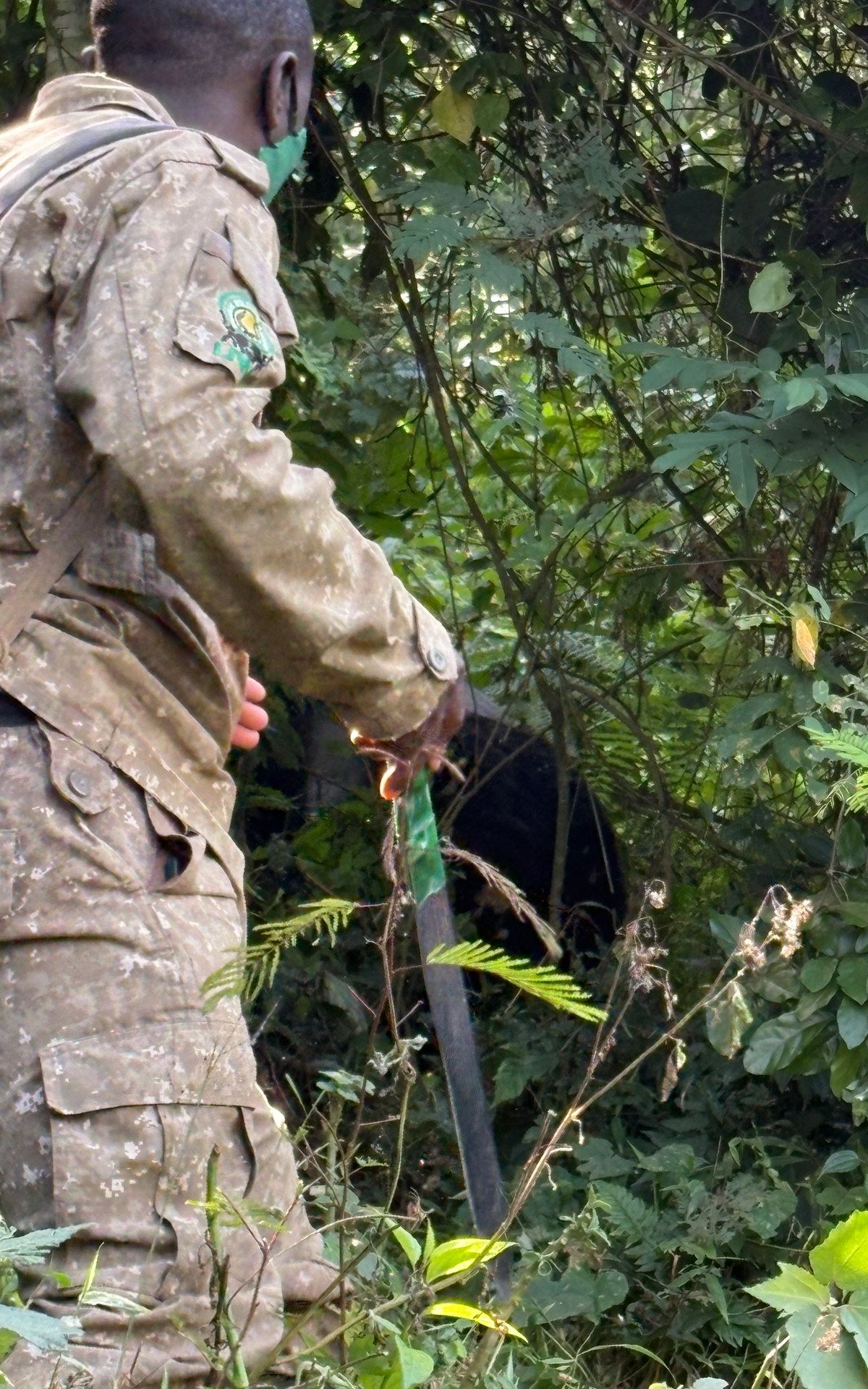
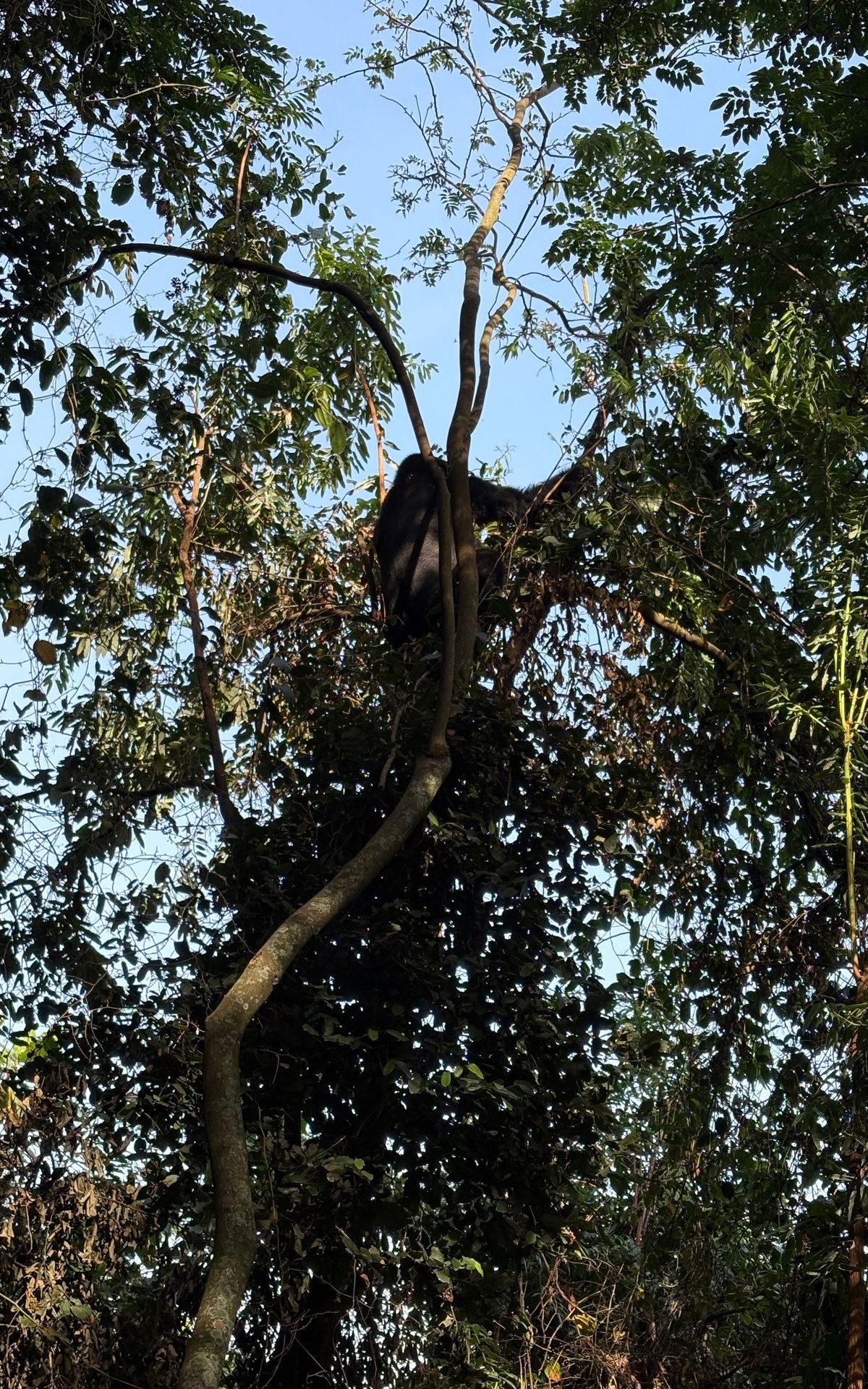
After three hours of walking, our group reached a gorilla family. After roughly an hour, on our January 2026 trek, we found the first individual after just one hour — a gorilla sitting in a tree, feeding on leaves with complete indifference to the group below.
The families were peaceful. At 7 metres — the mandatory minimum distance (UWA rule) — you are genuinely close. There is nothing between you and the animal. The hour goes quickly.
Permits and Practical Logistics
Gorilla trekking permits cost 800 USD per person for foreign non-residents (UWA, 2025). Always verify current rates directly with the Uganda Wildlife Authority before booking. Foreign residents of East Africa pay 600 USD. Ugandan citizens pay UGX 250,000.
- Minimum age: 15 years (UWA rule; source: Reiseführer Uganda 2020 — Teil 11)
- Minimum distance to gorillas: 7 metres (strictly enforced)
- Porter hire: approximately 20 USD for a full day (source: Reiseführer Uganda 2020 — Teil 11)
- Briefing time: 07:30 at the sector gate — do not be late
- Group size: maximum 8 visitors per gorilla family per day
[VOICE FEHLT: local driver or guide on road conditions by season and preferred departure times from Kabale]
Lake Bunyonyi: Worth a Stop Before or After Bwindi?
Lake Bunyonyi lies approximately 10 kilometres west of Kabale — about 30 minutes by boda-boda (source: Reiseführer Uganda 2020 — Teil 10). It is a natural addition to a Bwindi itinerary, either as a rest day before the trek or as a recovery day afterward.
One practical note that surprises many visitors: Lake Bunyonyi is safe for swimming. Its high mineral salt content makes it inhospitable to the snail host of bilharzia (schistosomiasis), the parasitic infection that renders most Ugandan lakes unsafe for swimming. Local residents swim in the lake regularly, and it is one of the few freshwater bodies in East Africa where this is the case (source: Reiseführer Uganda 2020 — Teil 10).
For full details on Kabale, Lake Bunyonyi, and the southwest circuit, see our complete Kabale guide. For everything about gorilla trekking itself — permits, what to pack, what to expect — see our gorilla trekking complete guide.