In 1921, a Scottish physician named Leonard Sharp paddled across Lake Bunyonyi and chose an island. He was not looking for a view. He was looking for a place to manage a disease that Uganda's colonial administration was struggling to control — and isolation, in the medical thinking of the time, was the most practical tool available. What he built on Bwama Island over the following decades became one of the most significant medical institutions in East Africa, and one of the most layered footnotes in the history of a lake that today markets itself primarily for its scenery.
Who Was Leonard Sharp?
Leonard Sharp was a Scottish missionary physician affiliated with the Church Missionary Society (CMS). He arrived in Uganda in the early twentieth century during a period when colonial medical infrastructure in southwest Uganda was rudimentary. Leprosy — a chronic bacterial infection causing progressive nerve damage and disfigurement — was spreading through communities without any formal treatment or containment system.
Sharp identified Lake Bunyonyi, then a relatively isolated body of water in what is now Kabale District, as a viable location for a dedicated hospital. Bwama Island, one of the lake's 29 islands, offered physical separation from mainland communities and sufficient flat land for a functional facility (source: Reiseführer Uganda 2020 — Teil 10).
Bwama Island: From Leprosy Colony to School
Sharp founded the hospital in 1921, according to Reiseführer Uganda 2020 — Teil 10. The facility grew as patients were referred — and transported — from communities across the southwest. At the epidemic's peak in the 1980s, the hospital was caring for approximately 5,000 patients (source: same, to verify).
That figure reflects something important: Bwama was not a clinic. It was a settlement. Patients lived there — some for years, some for decades. Families formed on the island. A community developed around the medical compound, with its own rhythms and social structures shaped by the fact of shared illness and enforced separation from the mainland.
The transformation came in the 1980s, when multi-drug therapy made leprosy treatable on an outpatient basis. Patients no longer needed residential isolation — they could be treated at home and recover fully. The population of Bwama declined as the medical rationale for residency disappeared. The hospital eventually closed.
Today, Bwama Island is a school. A boarding institution now occupies much of the land where patients once lived. The shift from medical isolation colony to educational community carries a quiet significance — a place defined by exclusion becoming one defined by possibility.
Sharp Island: Where the Family Lived
Immediately adjacent to Bwama is Njuyeera Island, known locally and in guidebooks as Sharp Island — named directly for Leonard Sharp, whose family made it their home during his years of medical work at Bwama. The main house in which the Sharps lived still stands. It is now the centrepiece of the Sharp Island Gorilla Lodge, which operates from the island today (source: Reiseführer Uganda 2020 — Teil 10).
The lodge's name fuses history and contemporary tourism in a way that is distinctly Ugandan: a Victorian missionary residence functioning as a gateway property for gorilla trekking visitors. On Lake Bunyonyi, that kind of layered use is more typical than unusual.
The Lake: Geography and the Other Islands
Lake Bunyonyi stretches approximately 25 kilometres in length and 7 kilometres in width, according to Reiseführer Uganda 2020 — Teil 10. It sits in a valley at roughly 1,960 metres above sea level — high enough that the water is cool and free of the bilharzia parasites that make swimming in most Ugandan lakes inadvisable. The lake is genuinely swimmable, which sets it apart.
The 29 islands vary in size, character, and history. Akampene — Punishment Island — carries the most uncomfortable past: unmarried pregnant women from the Bakiga community were historically abandoned there, a death sentence rooted in the economics of bride price. The practice ended during the colonial period. Today, guides discuss it on canoe tours with appropriate directness — it is not concealed, but it is also not sensationalised. It is history, which is to say it is complicated and worth knowing.
Community Life Today: A Southwest Uganda Perspective
During our visit to southwest Uganda in October 2024, we spent time in Buhoma in the Kanungu District — a region within the same cultural geography as Lake Bunyonyi. The communities there carry traditions and daily structures that predate the missionary hospitals and the colonial medical administration that brought Sharp to this part of the world.
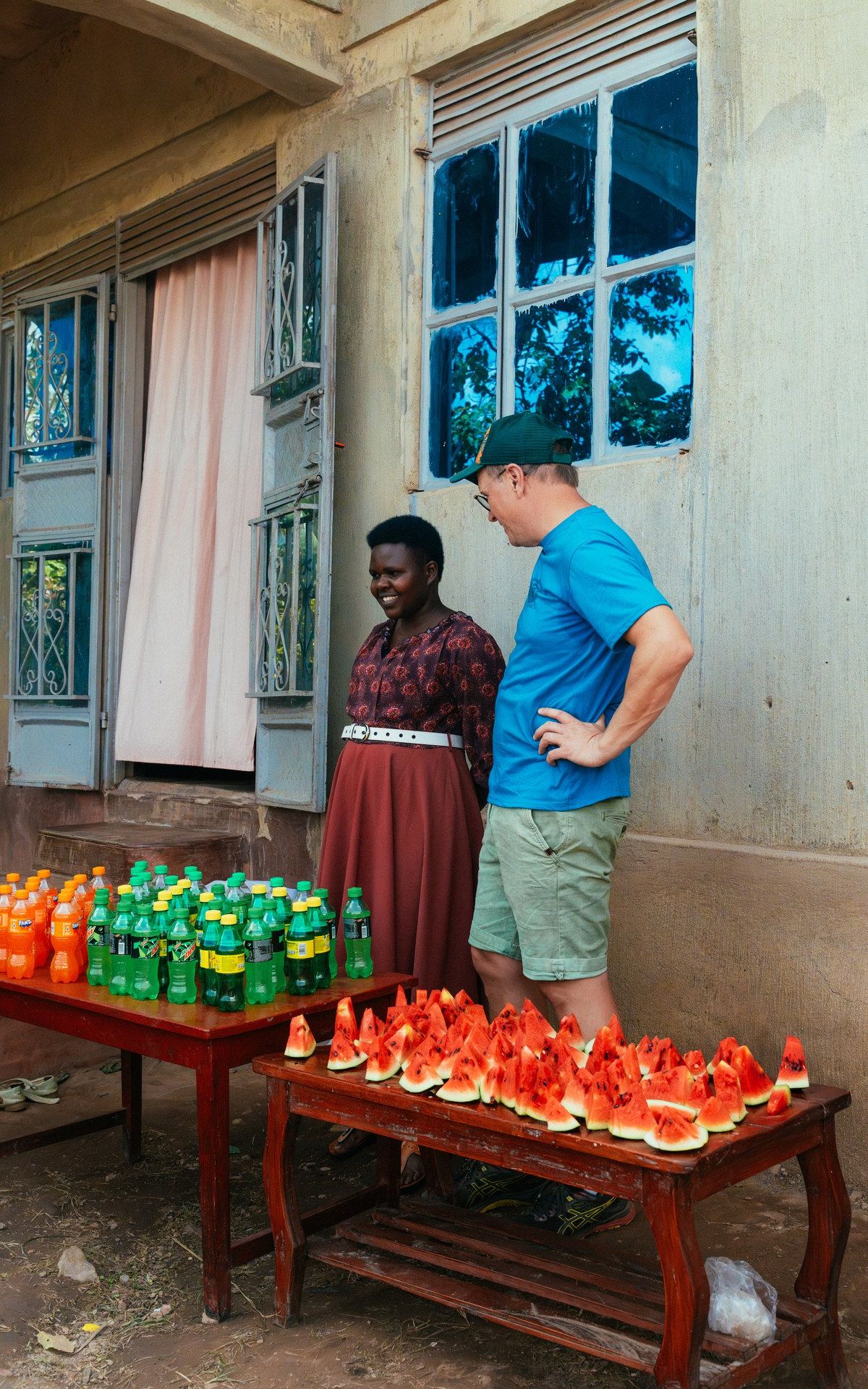
We visited an orphanage in Buhoma run by Nicholas and Media — a small, structured community where children have found care and stability. On the final day, we bought soda and fresh watermelon for a farewell gathering with the children and staff. The occasion was simple: drinks, sliced fruit, conversation. But those gestures of shared hospitality are precisely what Leonard Sharp would have navigated daily on Bwama Island — the social texture of caring for people who have nowhere else to go.
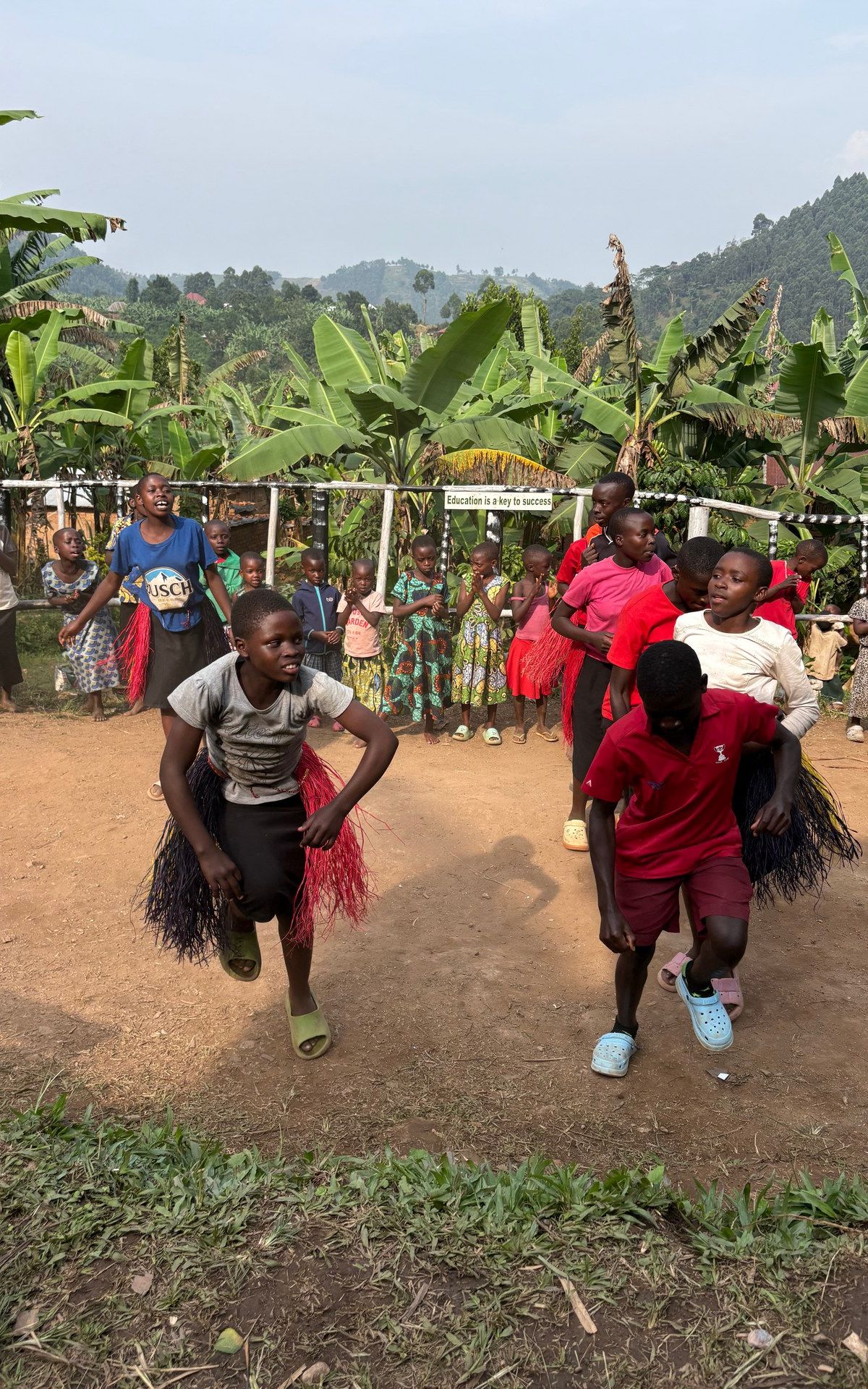
On one visit, the children performed a traditional dance that the staff described as representing episodes from Uganda's history. The performance was sustained and physically demanding — the rhythm relentless, the children dancing for an extended period in the midday heat. Watching it, you become aware of something being actively preserved: not just movement, but a way of holding history in the body and passing it forward.
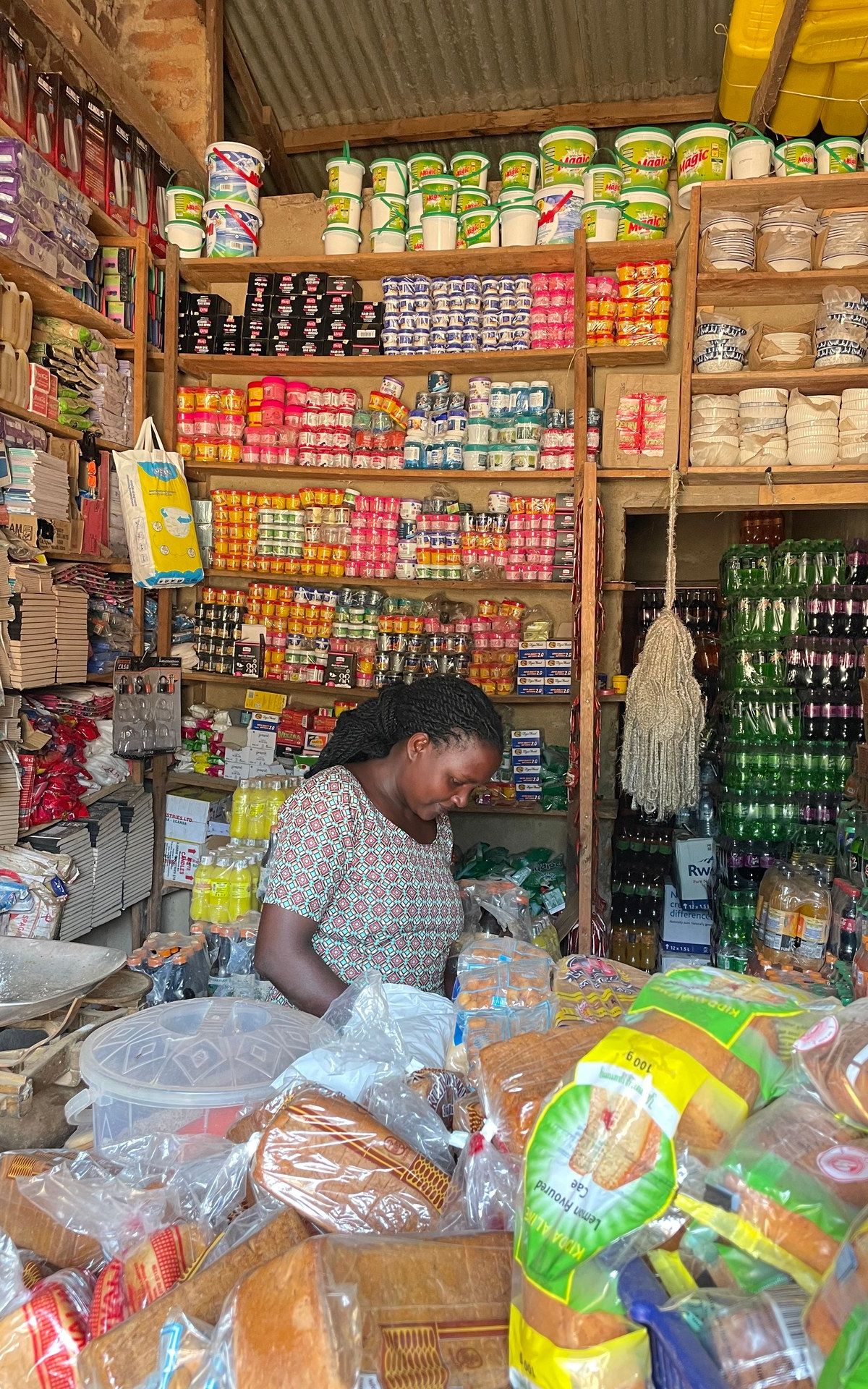
We also bought food from a small shop near the orphanage for families in the community. The shop had no windows — just a single entrance door — with shelves holding dried beans, soap, bread, and basic goods. This is the daily supply infrastructure of rural southwest Uganda: modest, complete, and largely unchanged in its essentials since the time when patients on Bwama Island depended on similar mainland connections for everything they needed to survive.
What Sharp's Legacy Actually Means
Sharp's work on Bwama Island is sometimes described in purely heroic terms — the lone doctor, the remote island, the thousands treated. That framing is not false, but it is incomplete. Residential isolation as a leprosy policy is now understood to be medically unnecessary: the disease's transmission risk is low, and separating patients from their families caused significant psychological and social harm that the treatment benefits did not justify. Sharp operated within the medical consensus of his era. Evaluating him requires holding both facts at once.
The patients who lived on Bwama for years, the families that formed there, the community that survived the hospital's closure and is now, in some form, a school — these are the stories that are hardest to recover and most worth knowing. The oral histories held by communities around the lake are the primary record. The building on Sharp Island is a secondary one.
Visiting Bwama and Sharp Island
Both islands are accessible from the Lake Bunyonyi shore by dugout canoe or motorboat. Bwama Island's school is an active institution — visitors should approach respectfully and confirm whether the site receives visitors before landing. Sharp Island's lodge operates as a guesthouse.
Canoe hire can be arranged through accommodation on the lake, or independently at the water's edge. For how to reach Lake Bunyonyi from Kabale, including transport options and where to stay, see our complete Kabale guide. For context on gorilla trekking in the same region, see our gorilla trekking guide.