Overview
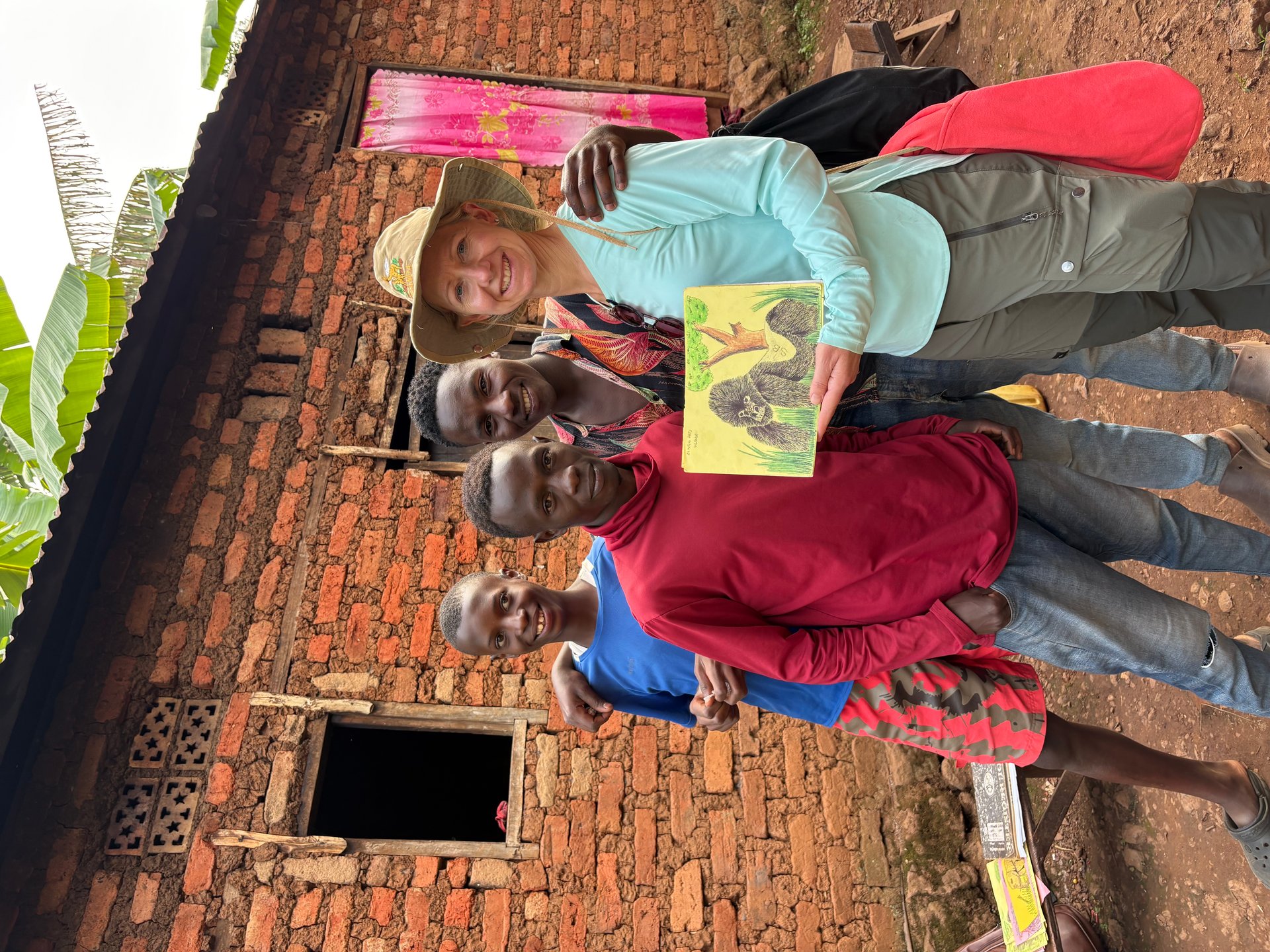
On the road opposite the Gorilla Bluff Lodge in Buhoma, we met Clinton. He was seventeen, standing with a small stack of hand-painted canvases — gorillas, mostly. His father had died. With the paintings he was supporting his mother, two brothers, and a younger sister with a disability. His ambition, stated without drama, was to become a tour guide.
That encounter, on 20 January 2026 (GPS: -0.9791, 29.6180), frames what gorilla trekking in Bwindi actually involves. It does not begin with the briefing at seven-thirty in the morning, and it does not end when the one-hour window with the gorilla family closes. It begins the moment you arrive in Buhoma and find yourself inside an economy, a community, and a conservation story that has been building since 1993. This guide covers the practical architecture of that experience: permits, sectors, lodges, best time, and packing list. It is based on five separate visits, three days in October 2024 and multiple days in January and May 2026 — GPS-documented, on foot, inside the forest.
The Gorilla Trekking Permit: Cost, Booking, and Where to Buy
A gorilla trekking permit in Uganda costs 800 USD per person as of 2026, issued by the Uganda Wildlife Authority (UWA). This is the standard rate for both Bwindi Impenetrable National Park and Mgahinga Gorilla National Park. The permit covers one hour with a habituated gorilla family and full park access on the day of the trek — no additional entry fee applies. Groups are capped at eight persons per family, per day.
A discounted low-season rate has historically applied during April, May, and November — the wetter months that deter some visitors. The 2020 edition of Reiseführer Uganda listed a reduced rate for these months at considerably below the standard price; as pricing has changed since that edition, verify the current low-season rate directly with UWA or through a licensed Ugandan tour operator before booking.
Where to Buy a Permit in Kabale
Visitors organising permits independently can purchase them at the UWA Gorilla Tourism Office in Kabale, located next to the Green Hills Hotel in the Makanga Hill district of the city (source: Reiseführer Uganda 2020 — Teil 10). The Green Hills Hotel offers 24 rooms, a swimming pool, and a restaurant; its proximity to the UWA office makes it a practical base for the night before travel to Bwindi. The National Parks Information Office on the Kabale-Kisoro Road also provides current travel information and transport assistance to the park entrance.
Most international visitors, however, book permits through a licensed Ugandan tour operator before departure. This is strongly recommended for July and August, when permits are typically allocated weeks or months in advance. Operators handle the UWA allocation process and can advise on which sector has availability for your specific travel dates.
For visitors focused on the southern sectors, the local operator Virunga Adventure Tours (Kisoro-Bunagana Road, near the police station; virungaadventuretours.com) offers day tours to both Nkuringo and Rushaga tracks from a base in the Golden Monkey Guesthouse. Nkuringo Walking Safaris (Plot 17, Bunagana Road; nkuringowalkingsafaris.com) is another locally rooted option.
Choosing Your Sector: Four Trekking Areas, One Decision
Bwindi Impenetrable National Park has four main trekking sectors, each managing a set of distinct habituated gorilla families. Your choice of sector determines which family you are allocated to — you select the sector, UWA assigns the family. Permits are issued per family, per day; sector choice and current availability are therefore inseparable.
Buhoma — The Original Gateway
Buhoma, in the northern part of the park, is where Uganda's gorilla tourism began in 1993. It is the most accessible sector from Kabale — approximately two to three hours by road — and the most developed in terms of tourism infrastructure. The UWA briefing point is well-organised, the community of Buhoma itself functions as a proper service village with accommodation at multiple price points, and the trail network is the most established of the four sectors. The trek duration to the gorilla family from Buhoma tends to be shorter than from the southern sectors on average, though this fluctuates daily as families move.
Rushaga — Most Permits Available
Rushaga in the south has expanded rapidly over the past decade and now holds more habituated gorilla families than any other sector in the park. More families means more permits available per day — which in turn means better availability at shorter booking notice. The Gorilla Safari Lodge in Rushaga operates sixteen spacious, rustic cottages arranged around a main building with restaurant and lounge, positioned on a hillside facing the forest approximately one kilometre from the trekking point. Double rooms with full board start from around 300 USD (source: Reiseführer Uganda 2020 — Teil 12; gorillasafarilodge.com — verify current rates).
Ruhija — Altitude and Solitude
Ruhija sits at the highest altitude of the four sectors, in the eastern part of the forest. Tourism infrastructure is thinner than in Buhoma or Rushaga — intentionally so. Visitors who choose Ruhija typically do so for the quieter trail experience, the different forest character at elevation, and the morning mist that settles in the valley below. There are fewer groups, fewer lodge options, and a noticeably different atmosphere from the northern sector.
Nkuringo — Elevated Forest Views
Nkuringo occupies elevated terrain on the southern edge of the park. The Nkuringo gorilla family was among the first to be habituated for tourism in Uganda, and the sector offers views across the forest canopy toward the Virunga volcanoes in the Democratic Republic of Congo on clear days. The physical terrain here is among the most demanding of the four sectors.
On the Trail: What Gorilla Trekking Actually Involves
Permit holders assemble at the UWA offices on the morning of their trek — 7:30 AM at Buhoma. The pre-trek briefing covers the regulations: maintain a minimum seven-metre distance from the gorillas, no flash photography, do not eat or drink within sight of the family, withdraw immediately if you feel unwell. These are not guidelines; they are enforced. The one-hour time limit with the family is strictly observed.
On our January 2026 trek from Buhoma, our group was assigned one lead guide and two armed rangers. The presence of armed security is initially surprising — it is not a standard feature of most wildlife walks. But it was entirely unobtrusive. The rangers were relaxed and experienced, and they proved practically useful on the steeper sections of the trail: steadying hands over root systems, holding branches aside on narrow off-trail passages, and providing real support on the difficult ascent. Their knowledge of the forest was evident from the first hour.
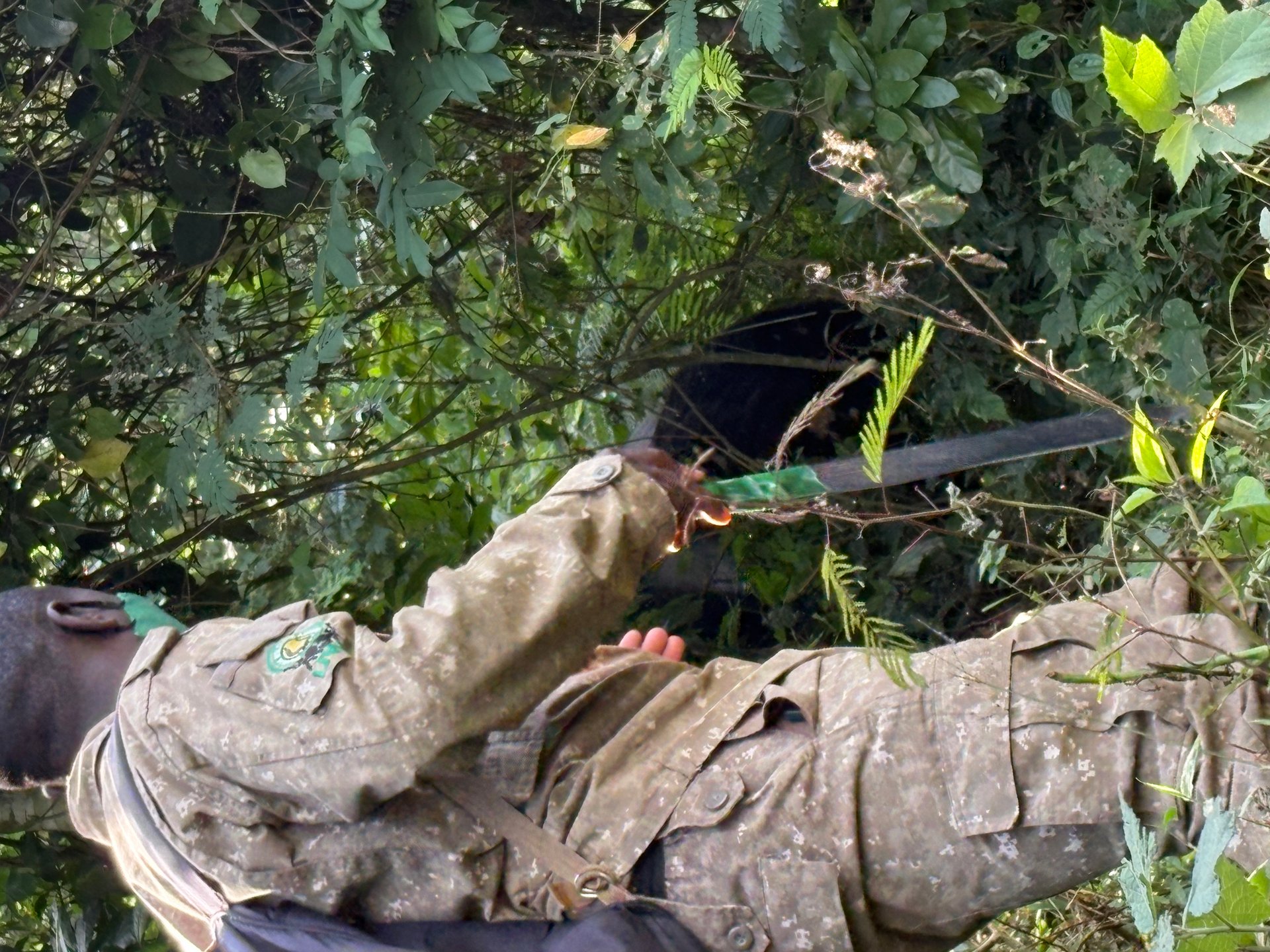
After approximately one hour on the trail, the guide's radio confirmed the family's location. Within minutes, we found the first gorilla: a large male, high in a tree, eating leaves. He moved slowly through the canopy with complete indifference to the group below, pulling branches toward him, occasionally looking down with an expression that conveyed nothing remotely like threat. The density of the vegetation made photography genuinely difficult. That difficulty, in some way, is part of the experience — you are inside the gorilla's environment, not observing it from a vehicle.
On a second trek in the same period — three hours of walking before the family was located — the encounter was different in character. The group was settled on a sloped clearing, feeding quietly. A mother moved past within several metres. A younger male watched the group with calm curiosity. The guide provided a quiet running narration: individual names, family relationships, the silverback's current position on the hillside. That narration transforms what would otherwise be remarkable wildlife observation into something closer to an introduction.
[QUOTE: local UWA guide in Buhoma on how the gorilla families' personalities differ from one another]
Best Time to Visit Bwindi for Gorilla Trekking
The two dry seasons are the established recommendation for gorilla trekking in Bwindi: June to August and December to February. Trails are firmer, rain during the trek is less likely, and forest visibility is generally better. For first-time visitors in particular, dry season conditions significantly reduce the physical difficulty of the experience.
During our January 2026 visit, conditions were dry throughout. The main trail from Buhoma was in good condition and the gorilla family was located within roughly the first hour. For reference, January sits in the middle of Uganda's short dry season (December to February), which is somewhat drier in the Bwindi microclimate than the longer dry season that runs from June to August.
Our October 2024 visit — three days in Buhoma, GPS-documented — fell in the transitional period between seasons. Conditions were manageable but noticeably wetter, with morning cloud settling over the forest on two of the three days. The experience was no less worthwhile; the forest itself is at its most vivid in wetter conditions. The physical demands are simply higher.
The low season months of April, May, and November bring heavier rainfall and softer ground. They also bring considerably fewer visitors per day and, historically, a discounted permit rate. For visitors who are comfortable with mud, have reasonable fitness, and prefer fewer groups on the trail, these months offer a meaningfully quieter experience with the same gorilla families.
Where to Stay: Lodges Across Every Budget
Accommodation at Bwindi ranges from community rest camps at around 20 USD per night to full-service luxury lodges above 500 USD. Lodge choice affects logistics and comfort, not the quality of the gorilla encounter — the trek experience is identical regardless of where you slept the night before. For a full sector-by-sector comparison, see the Bwindi lodges comparison guide.
Gorilla Bluff Lodge
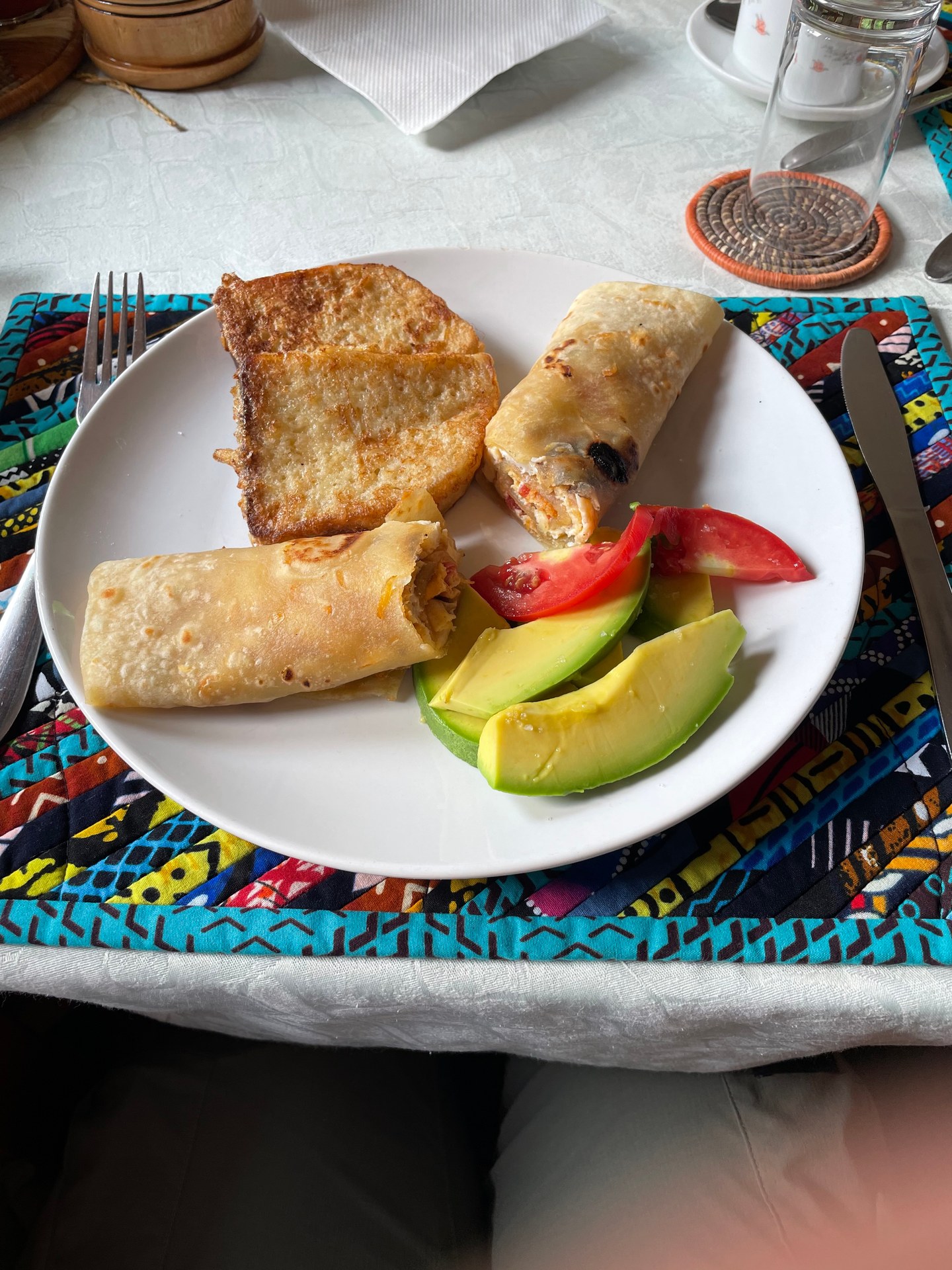
We stayed at the Gorilla Bluff Lodge in Buhoma during our January 2026 visit. The lodge is positioned on the forest edge and operates at a mid-range price point. Breakfast — avocado, rolex (a rolled chapati with egg and vegetables, Uganda's street-food standard), and French toast served on traditional fabric — was well-prepared and generous. The setting is honest rather than curated. Clinton's painted canvases were visible from the entrance, across the road, every morning.
Gorilla Safari Lodge (Rushaga)
The Gorilla Safari Lodge in Rushaga offers sixteen spacious, rustic cottages on a hillside facing the forest, approximately one kilometre from the Rushaga briefing point. The main building includes a restaurant and lounge. Double rooms with full board from around 300 USD (source: Reiseführer Uganda 2020 — Teil 12; gorillasafarilodge.com — verify current pricing). The proximity to the trek start makes the morning logistics straightforward.
Clouds Mountain Gorilla Lodge
Clouds Mountain Gorilla Lodge is the highest-altitude lodge in Uganda, positioned above 2,000 metres on the Nkuringo ridge. It is operated as a joint project between Wildplaces Africa and the African Wildlife Foundation — a partnership that embeds conservation funding into the accommodation's operating structure. The lodge's elevation gives it views across the Virunga volcanoes on clear mornings, and its conservation credentials are among the strongest of any lodge in the Bwindi area.
Volcanoes Bwindi Lodge
Volcanoes Bwindi Lodge offers eight individual bandas in the Buhoma area, renovated in 2018. It operates at the upper end of the luxury range and provides the logistics infrastructure — direct UWA permit access, porter coordination, pre-trek briefings — that removes organisational friction from the experience. For visitors for whom the 800 USD permit is one line item in a larger travel budget, it is the natural choice in the northern sector.
Packing List: What to Bring for Gorilla Trekking
The forest is dense, steep in sections, and unpredictable in terms of how far the family has moved overnight. These are the items that make a material difference on the day:
- Waterproof ankle-support hiking boots: The trails involve roots, mud, and stream crossings. Trainers are not appropriate. Boots should be broken in before the trek.
- Long-sleeved shirt and long trousers: The undergrowth includes stinging nettles and thorny plants. Exposed skin on off-trail sections causes real discomfort.
- Light waterproof jacket: Packable, minimal weight. Even in dry season, forest rain arrives quickly and leaves just as fast.
- Leather or gardening gloves: For gripping vegetation on steep climbs. Rangers hold out branches for the group to grasp; bare hands on thorny stems are painful enough to affect your focus.
- At least two litres of water: The trek can last several hours in each direction. Dehydration at altitude amplifies physical difficulty significantly.
- Energy snacks: Nuts, dried fruit, energy bars. The one-hour window with the gorillas is the endpoint of the outward trek; you need fuel reserves for the return.
- Camera without flash: Flash photography near habituated gorillas is prohibited. A longer lens helps in dense vegetation; a 300mm equivalent is the practical minimum for frame-filling shots at permitted distances.
- Porter hire: Available at the gate for a set community fee. Hiring a local porter carries your pack, provides physical support on difficult terrain, and puts money directly into the Buhoma economy. It is one of the more straightforward decisions on the day.
Clinton was still standing outside the Gorilla Bluff Lodge on our last morning in Buhoma. He had sold two paintings the day before. His assessment of the previous day's trekkers, shared with the directness of someone who had been watching tourists for years, was that the German couple had been the strongest hikers. The ambition to become a guide remained intact. That is, in the end, what gorilla trekking in Bwindi looks like from the village side of the road.
From the field
Frequently asked questions
How much does a gorilla trekking permit cost in Uganda in 2026?
A gorilla trekking permit costs 800 USD per person as of 2026, issued by the Uganda Wildlife Authority (UWA). The permit covers one hour with a habituated gorilla family and full park access on the day of the trek. A discounted low-season rate has historically been available in April, May, and November — verify the current differential directly with UWA or through a licensed Ugandan tour operator before booking.
Where can I buy a gorilla trekking permit in Kabale?
The UWA Gorilla Tourism Office in Kabale is located next to the Green Hills Hotel in the Makanga Hill district (source: Reiseführer Uganda 2020 ). The National Parks Information Office on the Kabale-Kisoro Road also assists with permit organisation and transport to the park. Most international visitors book permits in advance through a licensed Ugandan tour operator — strongly recommended for July and August travel.
What is the best time of year for gorilla trekking in Bwindi?
The dry seasons — June to August and December to February — offer the most comfortable trekking conditions, with firmer trails and less rain. During our January 2026 visit, conditions were dry and the gorilla family was located within the first hour on the trail. The low season months (April, May, November) are wetter but significantly quieter, with fewer trekking groups and historically discounted permit pricing.
How long does gorilla trekking in Bwindi actually take?
The time with the gorilla family is capped at one hour by UWA regulation. The trek to reach them varies from under one hour to up to eight hours, depending on where the family has moved overnight. On our January 2026 trek from Buhoma, the first family was found after roughly an hour; on a separate occasion, it took three hours of walking before the family was located. Plan for a full day; carry sufficient water and food for up to six hours on the trail.
What should I pack for gorilla trekking in Bwindi?
Essential items are waterproof ankle-support boots, long-sleeved shirt and trousers (against nettles and thorns in the undergrowth), a light rain jacket, leather or gardening gloves for gripping vegetation on steep climbs, at least two litres of water, energy snacks, and a camera without flash. Walking sticks are available to hire at the park gate. Hiring a local porter is recommended — they carry your pack, support on difficult terrain, and contribute to the Buhoma community economy directly.