Overview
Uganda's tourism sector generated USD 979 million in 2013 — the country's single largest source of foreign exchange, surpassing coffee by more than double, according to the Uganda Statistical Abstract 2014. The same year, revenue shared with communities neighbouring national parks increased 29 percent to 2,454 million Ugandan shillings. Those two numbers belong in the same sentence, because the story of Uganda's tourism economy only becomes coherent when both are visible.
During a visit to Buhoma in June 2026 — GPS-verified at 0.9617°S, 29.6109°E — three children from the neighbourhood of the local orphanage stood at the edge of a compound where food was being prepared. Their clothes were worn; their manner was tentative. They had not been invited. We invited them. They came forward and ate. That moment, within walking distance of one of Uganda's most productive gorilla trekking trailheads, is part of the landscape that tourism revenue shapes — or fails to shape — depending on how far the money actually travels.
This article traces the flow of Uganda's tourism income: its scale, its contribution to employment and GDP, the formal mechanisms for distributing it to park-adjacent communities, and the wider cultural and wildlife economy that operates alongside the headline figures. The data comes primarily from the Uganda Statistical Abstract 2014 and its successor volumes; the on-site observations from fourteen documented personal visits totalling more than fifty days in Uganda across 2024 and 2026.
Tourism as Uganda's Largest Economic Sector
The USD 979 million tourism expenditure figure for 2013 represents total inbound visitor spending captured through expenditure surveys conducted at Uganda's four major entry and exit points, with a survey cycle of every two years, according to the Statistical Abstract 2014. The growth from USD 834 million in 2012 — a 17.4 percent increase — continued into subsequent years: by 2015, visitor exports reached USD 1.35 billion, accounting for 23.5 percent of Uganda's total exports of goods and services, according to the Statistical Abstract 2016.
Framing tourism's dominance requires a comparator. Coffee is Uganda's most widely recognised export crop and a backbone of smallholder livelihoods across the central and western regions. Tourism revenue in 2013 exceeded coffee earnings by more than two to one. That ratio is what the Statistical Abstract 2014 captures when it describes tourism as Uganda's largest foreign exchange earner — not a marginal lead but a structural dominance that has been sustained across multiple reporting periods.
The total contribution of travel and tourism to Uganda's GDP — including direct, indirect, and induced effects — reached UGX 6,395 billion in 2014, equivalent to 9.9 percent of GDP, up from UGX 5,619 billion (7.9 percent of GDP) in 2013, according to figures compiled in the Statistical Abstract 2015. The hotels and restaurants subsector alone contributed UGX 3,110 billion in 2013, representing a 5.3 percent share of GDP at current prices and a 12 percent increase from 2012, according to the Statistical Abstract 2014.
By 2025, tourism had further consolidated its position: the Uganda Tourism Satellite Account report for that year identifies tourism as accounting for approximately 10 percent of total exports of goods and services and 57.2 percent of service exports, with accommodation and food and beverage contributing 54 percent of total tourism receipts.
Employment in the Tourism Sector
Uganda's tourism sector employs approximately 200,000 people directly, with a further 284,000 positions supported indirectly and through induced economic activity, according to data compiled in the Statistical Abstract 2014. This total of roughly 484,000 tourism-linked jobs spans roles across national parks, lodges, transport, guiding, catering, craft production, and the broader supply chains that connect rural producers to visitor consumption.
The employment figure acquires different meaning in the context of where those jobs are located. Park-based employment — rangers, guides, hospitality staff at lodges near Bwindi, Queen Elizabeth, or Murchison Falls — tends to concentrate in remote areas where formal employment is otherwise very limited. A ranger position at Bwindi Impenetrable National Park is not a routine labour market outcome for a young person from Kanungu District; it represents access to formal income, health coverage, and pension contributions that most peers in the same village do not have.
[QUOTE: park guide or lodge staff member on what the job has meant for their household — collect on next visit to Buhoma sector]
Community Revenue Sharing: The 29 Percent Story
Uganda Wildlife Authority operates a revenue-sharing programme that allocates a portion of national park gate fees to communities in designated areas surrounding each park. In 2013, revenue distributed under this programme reached 2,454 million Ugandan shillings — a 29 percent increase from 1,899 million shillings in 2012, according to the Statistical Abstract 2014. The growth in community revenue tracking closely with overall visitor growth is not coincidental: it reflects a programme structure where distributions are calculated as a percentage of gate receipts rather than as a fixed annual allocation.
The mechanism works as follows. A defined share of UWA's fee income from each park — the exact percentage is set in UWA's revenue-sharing policy — is held in a community development fund and disbursed to parish-level committees in the park's buffer zone. Committees determine local priorities within guidelines: eligible expenditure categories have historically included school construction, health post equipment, water source development, and community road maintenance. The programme is administered jointly by UWA and local government structures.
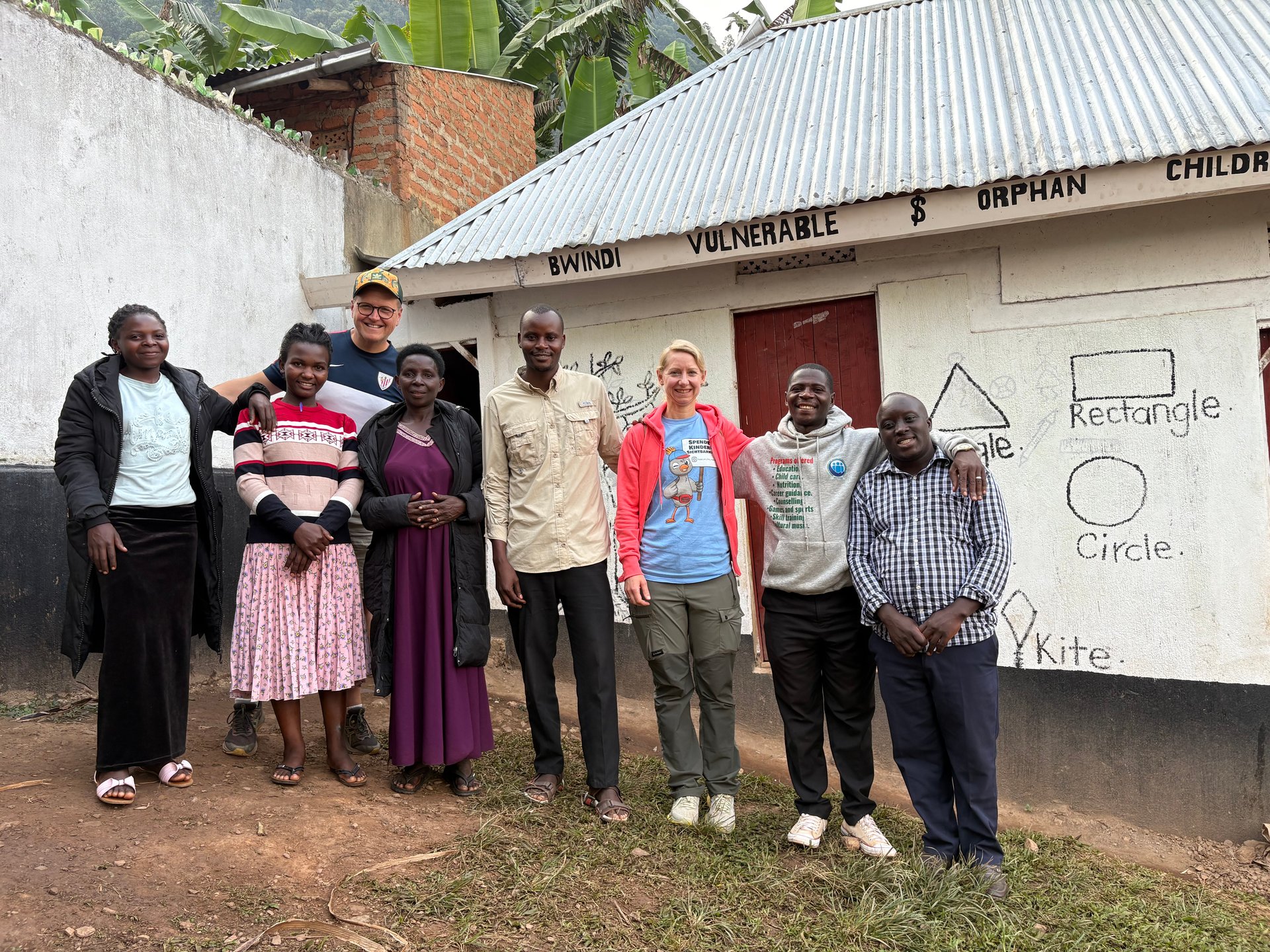
In Bwindi's case, community revenue sharing has funded school classrooms, a health centre at Buhoma, and infrastructure improvements to the access roads that serve both the trekking operation and the community it passes through. These outcomes are real and documented. They are also partial: the 2,454 million shillings distributed nationally in 2013 represented a small fraction of total tourism revenue, and the households that most need the investment — those not employed directly in the tourism economy — are not always the ones who benefit most from infrastructure-focused expenditure.
Social Programs Alongside Revenue Sharing
Several organisations operate in park-adjacent communities with programmes that address what revenue sharing alone does not. Stichting SYPO, a Dutch NGO with an operational arm in Uganda (SYPO Uganda Ltd.), provides micro-credit to households in remote areas including communities within Bwindi's buffer zone. Its model targets people excluded from formal financial institutions — a population that includes most households in the villages adjacent to the park boundary.
Graduation Programmes operating in Uganda employ a four-component framework: social protection, economic strengthening, financial inclusion, and social empowerment. Adapted from programmes developed in South Asia, the model is designed to bring chronically poor households to a minimum livelihood threshold that allows them to participate in — and benefit from — a functioning local economy. In tourism-heavy areas, graduation programme participants have been supported to establish small businesses serving the visitor supply chain: food production, transport, and craft manufacture.
The SUPREME project provides skills training, entrepreneurship support, and finance access for young people in Ugandan communities, including those in tourism corridors. The Rural Finance Initiative extends micro-financial services to refugees and local communities in Uganda and South Sudan — relevant in areas like the north and northeast where refugee populations live alongside Ugandan communities near parks including Kidepo Valley. REACH conducts climate hazard assessments in refugee-hosting districts, an increasingly important function as shifting rainfall patterns begin to affect both agricultural livelihoods and wildlife habitat in these areas.
Beyond the Parks: UWEC, Museums and Cultural Tourism
Uganda's tourism economy extends well beyond national park entry gates. The Uganda Wildlife Education Centre (UWEC) in Entebbe received 257,098 visitors in 2013 — a 1 percent increase from 253,911 the previous year, according to the Statistical Abstract 2014. That single figure is larger than the visitor count at any individual national park that year: more than Murchison Falls (70,799), more than Queen Elizabeth (69,193), more than Bwindi (21,695). UWEC's dominance reflects its location on the Entebbe peninsula, accessible from Kampala in under an hour, and its role as the primary wildlife education venue for Ugandan schoolchildren and domestic visitors.
UWEC holds a living collection of Ugandan wildlife, including animals that have been rescued, rehabilitated, or cannot be released. Shoebills — the prehistoric-looking stork endemic to the papyrus swamps of central Africa — are reliably viewable here in captive conditions. This accessibility matters: a Ugandan family from Kampala can afford the UWEC entry fee and the transport cost in a way that a trip to Murchison Falls, requiring overnight accommodation and a long road journey, typically does not permit.
Uganda's museums recorded 112,684 visitors in 2013, a 14 percent increase from 98,435 in 2012, according to the Statistical Abstract 2014. The Uganda Museum in Kampala, the largest of the country's museum institutions, holds collections covering ethnography, archaeology, and natural history. Ugandan museums are defined in official statistics as non-profit, permanent public institutions that preserve and research collections — a definition that encompasses the national museum network and several specialist sites including the Kabaka's Palace museum at Kasubi.
Domestic tourism — a dimension of the sector that international visitor statistics do not capture — has grown steadily. According to the Uganda Tourism Satellite Account 2025, domestic visitor numbers rose from 2.66 million in 2022 to 2.80 million in 2023, a 5.2 percent increase. The Uganda National Household Survey 2023/24 was used to compile domestic tourism data for that year. This domestic base provides a degree of resilience to the tourism economy that international-visitor-only figures understate: when international arrivals contract, as they did during the COVID-19 pandemic, domestic visitation to UWEC, museums, and accessible parks like Lake Mburo provides a floor.
Lions and the Wildlife Economy
Among Uganda's wildlife, the lion (Panthera leo) occupies a particular position in the tourism value chain. Not because lions generate more revenue than gorillas — the USD 800 gorilla trekking permit is unmatched — but because lion presence in a park signals a functional predator-prey ecosystem, which in turn drives the quality of the broader game-drive experience and justifies the long journey times to parks like Murchison Falls and Queen Elizabeth.
Uganda's lions are found in three parks: Murchison Falls in the northwest, Queen Elizabeth in the west, and Kidepo Valley in the northeast. They are protected under the Uganda Wildlife Regulations 2022 and cannot be hunted, traded, or removed from the wild without specific authorisation. The populations at all three parks are relatively small by East African standards — Kidepo is considered to hold the highest density — and lion conservation in Uganda intersects with the same community revenue-sharing logic that applies to gorillas: communities with economic stakes in a functioning park have lower incentives to tolerate or participate in livestock-protection killings of predators.
Queen Elizabeth National Park's Ishasha sector, in the south of the park near the Democratic Republic of Congo border, is the primary site for Uganda's tree-climbing lions — a behaviour documented here and in Tanzania's Lake Manyara, and rare enough globally to constitute a specific draw for visitors. The Kazinga Channel game drive and boat safari remain the park's dominant visitor activities, but the tree-climbing lions provide a distinctive point of difference in regional tourism marketing.
Wildlife Trade: Decline and the Conservation Signal
Two wildlife trade statistics from the Statistical Abstract 2014 point in opposite directions and together tell a more complete story than either does alone. Wildlife trophy exports from Uganda increased by 32 percent in 2013 compared to the previous year, according to data from the Ministry of Tourism, Wildlife and Antiquities. Live chameleon exports declined by 82 percent over four years, falling from 1,796 animals in 2010 to 330 in 2013, according to the same source.
The trophy export increase requires context. Uganda's Wildlife Use Rights system licences specific operators to conduct controlled hunting in designated areas outside national parks. Legal hunting under this framework generates revenue for the Uganda Wildlife Authority and, in theory, provides an economic incentive for wildlife conservation in private and community land outside park boundaries. The 32 percent increase in 2013 reflects both expanded licensed activity and potentially higher-value species composition in that year's consignments.
The chameleon decline tells a different story. Live chameleon exports from Uganda supplied the international reptile pet trade through the early 2010s. The 82 percent reduction from 2010 to 2013 most likely reflects tightening of export licensing rather than a collapse in wild populations — an interpretation consistent with global policy trends toward stricter regulation of live reptile trade during that period. Uganda's chameleon diversity is significant; the country is home to several endemic and near-endemic species in the montane forests of the southwest, including the Rwenzori region.
Frequently asked questions
How much does tourism contribute to Uganda's economy?
In 2013, tourism expenditure reached USD 979 million — a 17.4 percent increase from 2012 — making it Uganda's largest foreign exchange earner, surpassing coffee by more than double, according to the Uganda Statistical Abstract 2014. By 2015, visitor exports reached USD 1.35 billion (23.5 percent of total exports). Total travel and tourism's contribution to GDP, including indirect effects, reached 9.9 percent in 2014.
How many people does tourism employ in Uganda?
Uganda's tourism sector employs approximately 200,000 people directly, with a further 284,000 positions supported indirectly and through induced activity, according to the Statistical Abstract 2014. These roles span national parks, lodges, transport, guiding, and the broader supply chain connecting rural producers to visitor spending. In remote areas like Bwindi and Murchison Falls, park employment represents some of the most accessible formal work available to local communities.
How do national park fees benefit local communities in Uganda?
Uganda Wildlife Authority's revenue-sharing programme distributes a portion of park gate fees to communities surrounding protected areas. Shared revenue grew from 1,899 million UGX in 2012 to 2,454 million UGX in 2013 — a 29 percent increase — according to the Statistical Abstract 2014. Funds have supported school construction, health post equipment, and water infrastructure in areas including Bwindi's buffer zone communities.
What is the Uganda Wildlife Education Centre?
UWEC is a wildlife facility in Entebbe that functions as both a conservation centre and Uganda's most visited single tourism venue — 257,098 visitors in 2013, exceeding any individual national park that year. Located about an hour from Kampala, it holds a living collection of Ugandan wildlife including shoebills, crocodiles, and primates, and serves primarily Ugandan domestic visitors and schoolchildren. It is a more accessible introduction to Uganda's wildlife than a national park trip for families based in Kampala.
Where are lions found in Uganda?
Lions (Panthera leo) are present at Murchison Falls, Queen Elizabeth, and Kidepo Valley national parks. Kidepo is considered to have the highest lion density. Queen Elizabeth's Ishasha sector is particularly noted for its tree-climbing lions — an unusual behaviour shared only with a population in Tanzania's Lake Manyara. All Ugandan lion populations are protected under the Uganda Wildlife Regulations 2022.