Overview
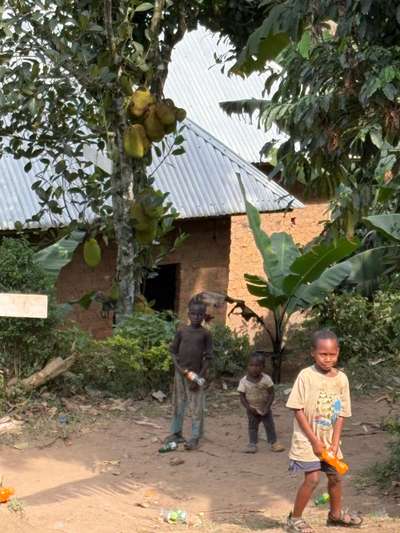
During my June 2026 visit to Buhoma, I visited a small poultry farmer who keeps his chicks with care and attention. His operation is modest — a few dozen chicks at any time, sold to neighbors and the local orphanage. The predator threat to his animals is not from lions or leopards — Bwindi Impenetrable National Park's dense montane forest does not support large savannah carnivores. But the principle is identical to what communities near Queen Elizabeth or Kidepo Valley National Park experience: an animal in the night, livestock gone in the morning, and the question of what to do about it.
For farmers near Uganda's savannah parks, that question has real economic stakes. A single lion kill can represent weeks or months of household income in livestock value. Without compensation and without practical methods to protect animals at night, the rational response — from an individual household's perspective — is to remove the threat permanently. Poison on a carcass, wire traps, spears in the night. Uganda's Large Carnivore Action Plan 2024–2034 exists precisely to change that calculation — to make coexistence more economically rational than retaliatory killing.
Large carnivore conservation in Uganda sits at the intersection of wildlife management, rural livelihoods, and human psychology. The animals involved — lions, leopards, spotted hyenas — are apex predators that require large territories and prey on the same animals that farmers keep. They do not distinguish between wild prey and domestic livestock. Their presence at park boundaries is a function of habitat connectivity, prey availability, and territorial range — all of which overlap with agricultural and pastoral land. Conflict is not exceptional. It is structurally inevitable where parks border dense agricultural communities.
The Mechanics of Conflict
Human-predator conflict in Uganda follows a predictable pattern. Lions or hyenas enter farming or pastoral areas at night, when livestock are most vulnerable. They target the easiest prey — often goats or calves kept in inadequate enclosures. A single lion pride can kill multiple animals in a single night. The farmer discovers the kill in the morning, assesses the loss, and faces a choice between absorbing it and responding.
Carcass poisoning is the most common retaliatory method. The farmer poisons the killed animal's remains with readily available agricultural pesticides. The predator returns to feed on the kill and dies from the poison. This method is highly effective at killing the specific animal responsible — but it is not targeted. Vultures that feed on the poisoned carcass also die, along with any other scavenger that accesses the remains. Poisoning events can kill dozens of non-target animals from a single poisoned carcass. They represent one of the most significant non-intentional wildlife mortality sources in East Africa.
Wire snare trapping, while more associated with bushmeat poaching, is also used in human-predator conflict contexts — particularly for leopards and smaller predators. Leopards captured in wire snares suffer injuries that are often fatal if not treated, and treatment requires veterinary access that is rarely available in rural Uganda. The Large Carnivore Action Plan addresses snare removal and predator injury response as part of its comprehensive conflict mitigation strategy.
The Action Plan's Framework
The Uganda Large Carnivore Action Plan 2024–2034 is UWA's ten-year strategic framework for addressing the conflict between large carnivores and human communities. It covers four interlinked areas: population monitoring and research; community-based conflict mitigation; ranger enforcement and poaching response; and stakeholder engagement and communication.
Community-based conflict mitigation is the area with the most direct impact on retaliatory killing rates. The core interventions are practical: predator-proof livestock enclosures (bomas) that prevent lion and hyena access at night; community wildlife scouts trained to respond quickly when conflict incidents occur; and rapid, verified compensation schemes for livestock losses attributable to predators. Each of these interventions changes the economic calculation for the farmer.
If the livestock are in a predator-proof enclosure, the attack is prevented and there is nothing to retaliate against. If a scout arrives quickly after an incident and verifies the loss, compensation can follow — removing the economic incentive for retaliatory action. If the community understands that large carnivores are connected to tourism revenue and that their park generates 20% community revenue sharing, the calculus shifts further. None of these factors eliminates conflict. Together, they make coexistence more viable.
Revenue Sharing and Local Economic Stakes
Uganda Wildlife Authority distributes 20% of park gate fees to communities in revenue-sharing zones surrounding national parks. In 2013, this distribution amounted to 2,454 million UGX — an increase of 29% from the previous year. For communities adjacent to Queen Elizabeth, Kidepo Valley, and Lake Mburo national parks, this revenue is tangible and significant.
The connection between carnivore conservation and revenue sharing is direct: a park that does not have viable wildlife populations — including the large carnivores that tourists specifically come to see — generates less tourism revenue, and therefore less revenue sharing for surrounding communities. This economic logic is the foundation of Uganda's community-based conservation model: if communities benefit directly from wildlife, they have an incentive to tolerate and protect it rather than eliminate it.
The logic is sound but imperfect in practice. Revenue sharing funds are often insufficient to compensate individual households for specific livestock losses — they are distributed broadly across sub-counties, not as direct payments to affected farmers. The farmer who loses a goat to a hyena tonight does not receive a revenue sharing payment tomorrow. This disconnect between the costs of coexistence (immediate and individual) and its benefits (distributed and delayed) is one of the persistent challenges of community conservation programmes everywhere in East Africa.
Leopards at the Forest Edge
Leopards present a different conflict dynamic from lions or hyenas. While lions are restricted to open savannah and woodland habitats, leopards are highly adaptable and occur across a wider range of Uganda's habitats — including forest edges, agricultural mosaic, and even peri-urban areas. They are better adapted to living in human-modified landscapes and are more likely to occur near communities in forested parts of Uganda.
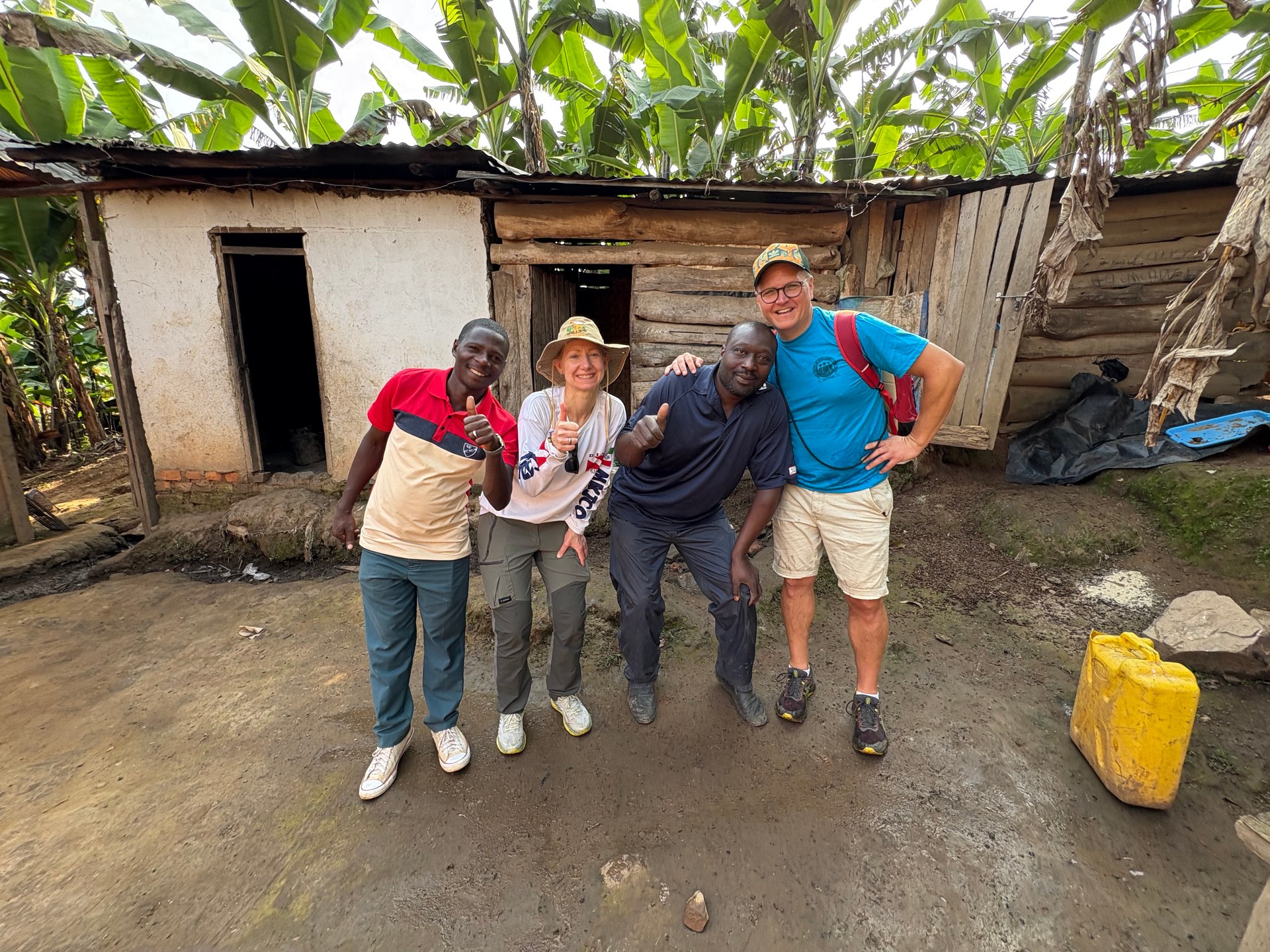
Near Bwindi in southwest Uganda — the area I know from multiple visits — leopard presence is documented but rarely encountered. The forest itself is dense enough to support prey (duikers, bushpigs, primates) without requiring leopards to raid agricultural areas. But at forest edges, where farms meet the park boundary, incidents occur. A goat penned near the forest, a dog in an outlying homestead: these are occasional targets for forest-edge leopards whose territories overlap with the agricultural fringe.
The CITES status of leopards in Uganda has been a specific point of controversy. The species is listed on CITES Appendix 1 globally — the highest level of international trade protection — but Uganda historically had a classified quota for trophy hunting of leopards, representing an effective Appendix 2 implementation. The action plan's approach to leopard management navigates both conservation and the legal framework for limited controlled off-take in specific circumstances.
What Coexistence Requires
The Large Carnivore Action Plan is honest about the limits of conservation approaches that focus exclusively on animals. Coexistence — the long-term sustainable relationship between human communities and large predators — requires addressing both sides of the equation. Wildlife managers must control problem animals (individual animals that repeatedly and severely prey on livestock deserve lethal or translocation responses). Communities must have genuine economic incentives, not just moral arguments, for tolerating risk.
The ten-year timeframe of the action plan reflects the realistic pace at which these conditions can be built. Boma construction takes time to scale. Scout training and deployment requires budget. Compensation schemes require administrative systems. Attitude change — the most durable foundation of coexistence — is generational. The plan's success will be measured not only in large carnivore population trends, but in how many fewer farmers in 2034 are reaching for poison when they find a killed animal in the morning.
From the field
Frequently asked questions
What large predators cause conflict with communities in Uganda?
Lions, leopards, spotted hyenas, and African wild dogs are the primary species. Lions and hyenas are the most frequent livestock killers in savannah areas; leopards occur more widely and cause conflicts at forest edges and in agricultural mosaics across Uganda.
What is Uganda's Large Carnivore Action Plan?
The Uganda Large Carnivore Action Plan 2024–2034 is UWA's ten-year framework for managing human-predator conflict, protecting lion, leopard, hyena, and wild dog populations, and building coexistence through community-based mitigation, monitoring, and stakeholder engagement.
How does livestock loss drive retaliatory killing in Uganda?
When predators kill livestock, farmers face immediate economic loss. Without compensation, the rational response is carcass poisoning — which kills the predator but also kills vultures and other scavengers that feed on the poisoned remains. Carcass poisoning is the primary driver of large carnivore population decline near human settlements.
What conservation measures address human-predator conflict?
Effective measures include predator-proof livestock enclosures, community wildlife scouts who respond rapidly to incidents, verified compensation schemes for livestock losses, and community conservation education. Revenue sharing — 20% of park gate fees to surrounding communities — creates broader economic incentives for wildlife tolerance.
Where in Uganda is human-predator conflict most severe?
Conflict is most intense around savannah national parks — Queen Elizabeth, Murchison Falls, Kidepo Valley, and Lake Mburo — where lion and hyena populations are largest and agricultural communities live at park boundaries. Kidepo Valley in the north and Queen Elizabeth in the southwest have the most documented conflict history.