Bwindi Impenetrable National Park: A Complete Guide to Its Flora and Fauna
Bwindi Impenetrable National Park in south-western Uganda contains one of Africa's most concentrated examples of afromontane biodiversity: over 200 tree species, 357 recorded bird species, 120 mammal species, and 9 distinct primate species inhabit a single protected forest of approximately 331 square kilometres. The park is perhaps best known as home to roughly 60 percent of the world's remaining mountain gorillas (Gorilla beringei beringei), according to the National Status of the Environment Report 2024, but that statistic alone understates what this forest holds.
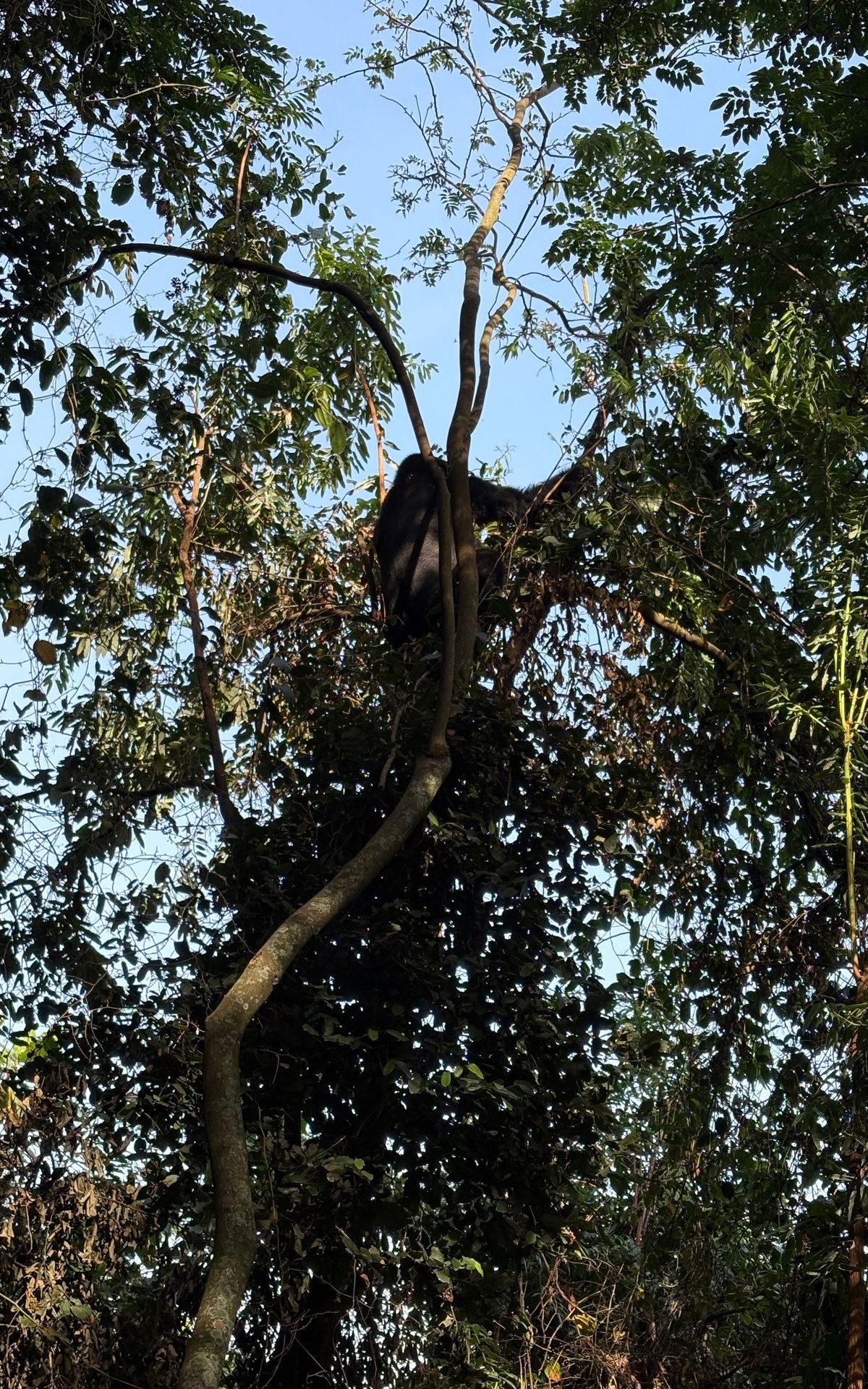 A mountain gorilla feeding in the forest canopy at Bwindi Impenetrable National Park, photographed on 21 June 2026. Foto: Mark Suer
The Afromontane Forest: Understanding Bwindi's Vegetation Zones
Bwindi's forest is classified as afromontane rainforest, a vegetation type found only at elevations typically between 1,160 and 2,607 metres above sea level across central Africa. The park is notable for remaining largely intact since the Pleistocene era, which partly explains its exceptional species richness — it served as a refugium for flora and fauna during past climate shifts.
Tree Species and Forest Structure
The park contains over 200 documented tree species, ranging from giant Symphonia globulifera and Entandrophragma excelsum in the lower elevations to Podocarpus milanjianus and Hagenia abyssinica higher up. This layered canopy structure — emergent trees, a main canopy layer, understorey trees, shrubs, and a ground layer of ferns and mosses — creates the diverse microhabitats that support the park's extraordinary animal life.
Epiphytes, including orchids, ferns, and mosses, colonise branches at every level. The forest floor is dense with herbaceous plants, many of which form the core diet of mountain gorillas. Gorillas in Bwindi are notably terrestrial feeders, consuming leaves, stems, bark, and roots from dozens of plant species — a habit visible on any trekking encounter.
Why "Impenetrable"?
The park's full name is not purely poetic. The lower valley floors and swampy areas are choked with dense secondary growth, climbing plants, and interlocking bamboo stands that make passage without trail-cutting genuinely difficult. Rangers and guides carry machetes as standard equipment. During our gorilla trekking in January 2026, the guide and two accompanying rangers used machetes continuously to clear sections of the route — the terrain demands it, and the rangers' familiarity with the forest was evident at every step.
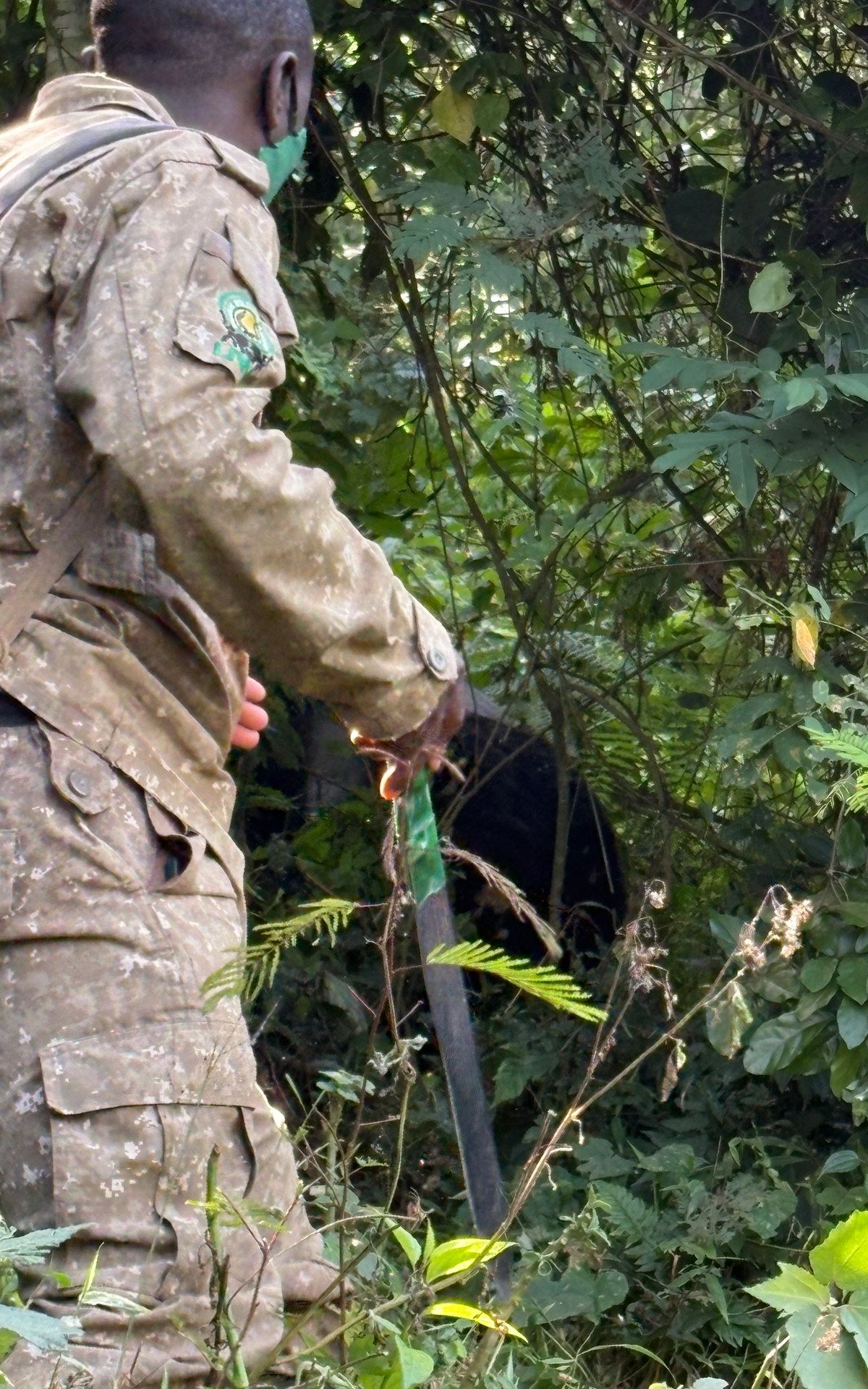 An armed ranger clears a path through dense undergrowth during gorilla trekking at Bwindi, January 2026. Foto: Mark Suer
Mammals: Nine Primate Species and Counting
Bwindi is home to 120 mammal species, a figure that places it among the most mammal-rich protected areas in East Africa by area. The most significant are its nine primate species, which range from the mountain gorilla down to smaller forest monkeys.
Mountain Gorillas: The Primary Draw
Uganda, together with neighbouring Rwanda and the Democratic Republic of Congo, holds the entire world population of mountain gorillas. According to the National Status of the Environment Report 2024, Bwindi and Mgahinga Gorilla National Park together shelter approximately 60 percent of the global mountain gorilla population, with Uganda hosting more than half of all remaining individuals — a figure cited as approximately 459 animals.
Gorillas in Bwindi live in habituated family groups, each monitored daily by Uganda Wildlife Authority (UWA) rangers. During our visit in January 2026, we encountered our first gorilla family after roughly one hour of walking: a male sat in a large tree feeding calmly on leaves, entirely unbothered by the group below. A second family, reached after approximately three hours of trekking, allowed us to approach within a few metres — the animals were peaceful, moving slowly through the understorey while younger individuals played nearby.
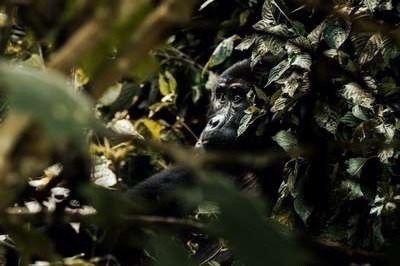 A mountain gorilla observing the trekking group at close range, Bwindi Impenetrable National Park. The photograph was taken during a gorilla trekking visit after approximately three hours on trail.
Other Primate Species
Beyond mountain gorillas, Bwindi's eight additional primate species include:
- Chimpanzees (Pan troglodytes schweinfurthii) — present but unhabituated in most sectors
- L'Hoest's monkey (Cercopithecus lhoesti) — a Bwindi specialist rarely seen outside montane forests
- Red-tailed monkey (Cercopithecus ascanius)
- Blue monkey (Cercopithecus mitis)
- Black-and-white colobus (Colobus guereza)
- Olive baboon (Papio anubis)
- Grey-cheeked mangabey (Lophocebus albigena)
- Bushbaby (Galago species)
Other Notable Mammals
The forest's larger mammals include African forest elephants, which occasionally move through from Queen Elizabeth National Park to the north, as well as giant forest hogs, side-striped jackals, African civets, and multiple mongoose species. Smaller mammals include several species of squirrel, otter shrew, and over a dozen bat species. Human-wildlife conflict remains a documented concern in communities bordering the park, according to the National Status of the Environment Report 2024, as elephants and other wildlife sometimes move into agricultural land at the forest edge.
[QUOTE: local guide on first encounter with a gorilla family]
Birds: 357 Species Across Forest Zones
Bwindi's 357 recorded bird species make it one of Uganda's premier birdwatching destinations. Of particular significance is the number of Albertine Rift endemics — species found nowhere else in the world outside this narrow mountain chain straddling Uganda, Rwanda, the DRC, and Burundi. The park is known to hold 23 or more of these endemic species, which is a primary reason birders travel specifically to Bwindi rather than to Uganda's larger savanna parks.
Key Species to Look For
Several bird families are particularly well-represented in Bwindi's forest layers:
- African green broadbill (Pseudocalyptomena graueri) — a globally threatened Albertine Rift endemic
- Shelley's crimsonwing (Cryptospiza shelleyi)
- Ruwenzori turaco (Ruwenzorornis johnstoni)
- Grauer's warbler (Graueria vittata)
- Black-faced apalis (Apalis personata)
- Collared apalis (Apalis ruwenzorii)
The best birdwatching in Bwindi tends to occur along forest edges and in areas of secondary growth, particularly in the Buhoma and Ruhija sectors. Early morning activity — between 06:30 and 09:30 — is when forest birds are most vocal and visible.
Bwindi vs. Other Ugandan Parks for Birding
For comparison, Uganda as a whole records over 1,040 bird species according to UWA 2020 data. Queen Elizabeth National Park holds around 600 species across its mix of savanna, wetland, and forest habitats. Bwindi's 357 is a smaller total count but reflects a highly specialised montane forest community, with a high proportion of range-restricted species that birders specifically target.
Invertebrates and Other Wildlife
Butterflies: Over 310 Species
Bwindi's 310-plus butterfly species account for a substantial portion of Uganda's total butterfly fauna. The forest's varied vegetation zones support species at every stage from lowland forest specialists to highland meadow types. Several swallowtail species are notable, and the density of butterflies on sunny mornings along forest trails is one of the more visually immediate indicators of the park's ecological health.
Reptiles and Amphibians
The park's high rainfall and dense vegetation support a diverse herpetofauna, including multiple chameleon species, skinks, and forest cobras. The montane forest amphibians are of particular scientific interest — several frog species in Bwindi have restricted ranges and are sensitive indicators of forest condition. Detailed inventories remain incomplete, and the park continues to be a site for biodiversity surveys.
Conservation Status and Pressures
Bwindi was designated a UNESCO World Heritage Site in 1994, a recognition of its global biodiversity significance. The National Status of the Environment Report 2024 notes that Uganda's biodiversity more broadly — spanning wetlands, forests, and savanna ecosystems — faces mounting pressure from human activity, including agricultural expansion at forest boundaries and reliance on forest resources for energy. Across Uganda, forests and woodland areas supply approximately 94 percent of household cooking energy, according to the same report.
Within Bwindi, UWA manages these pressures through ranger patrols, community benefit-sharing programmes, and strict limits on tourist group sizes during gorilla trekking. Each gorilla family is visited by one group of up to eight people per day, and the one-hour maximum contact time is enforced to limit stress on the animals.
Uganda is ranked among the ten most biodiverse countries in the world, with 18,783 recorded species of fauna and flora according to the National Status of the Environment Report 2024. Bwindi represents one of the most concentrated pockets of that national total.
Key Facts: Bwindi Impenetrable National Park Biodiversity
- Tree species: over 200
- Bird species: 357, including 23+ Albertine Rift endemics
- Mammal species: 120
- Primate species: 9, including mountain gorillas
- Butterfly species: over 310
- Mountain gorilla population: approximately 459 in Uganda (NSOER 2024, to be verified)
- Bwindi + Mgahinga share: approximately 60% of world's remaining mountain gorillas (NSOER 2024, to be verified)
- Park elevation range: approximately 1,160 to 2,607 metres above sea level
- UNESCO World Heritage designation: 1994
- Gorilla trekking permit: USD 800 per person for foreign non-residents (UWA 2026 rate)
- Nature trail fee: 30 USD per person (as of 2026)
Planning Your Visit to Bwindi
When to Go
Bwindi can be visited year-round, but the drier months of June to September and December to February are generally preferred for gorilla trekking. Trails are less muddy and visibility in the forest is somewhat better. During our January 2026 visit, conditions were manageable — the forest was green and dense, trails were firm in higher sections, and mornings began cool before warming by mid-day.
The rainy seasons — March to May and October to November — bring heavier precipitation but also lusher vegetation and fewer tourists. Gorilla trekking permits remain valid year-round and gorilla families remain accessible in all seasons.
Accommodation Near the Park
The Buhoma sector, on the northern edge of the park, is the main entry point and has the widest range of accommodation. Gorilla Bluff Lodge, located close to the Buhoma gate, offers comfortable rooms with private terraces overlooking the forest — each morning begins with coffee and African tea delivered to the terrace, with the sound of the forest as a backdrop. Breakfast at the lodge combines local options including avocado, rolex wraps, and French toast.
Budget travellers have community camp options near all four sectors. For detailed guidance on gorilla trekking permits, preparation, and costs, see our gorilla trekking guide for Bwindi.
 Morning coffee on the terrace at Gorilla Bluff Lodge, Buhoma, January 2026. Foto: Mark Suer
Explore More on Uganda Insights
For visitors combining Bwindi with Uganda's broader wildlife circuit, the Bwindi lodges comparison covers accommodation options across all four sectors. Travellers moving west from Kampala often stop at Lake Bunyonyi before continuing to Bwindi, adding two to three days at the lake's community camps and island resorts.
SEO Metadata
Title Tag: Bwindi Flora and Fauna: Complete Wildlife Guide 2026
Meta Description: Bwindi Impenetrable National Park holds 357 bird species, 120 mammals and 9 primates. Complete guide to the park's biodiversity, gorillas and birdwatching.
H1: Bwindi Impenetrable National Park: A Complete Guide to Its Flora and Fauna
Slug: /insights/bwindi-impenetrable-flora-fauna-wildlife
Primary Keyword: Bwindi Impenetrable National Park wildlife
Secondary Keywords: Bwindi bird species, mountain gorilla population Uganda, Bwindi primate species, afromontane forest Uganda, Bwindi biodiversity
Frequently asked questions
How many species of animals live in Bwindi Impenetrable National Park?
Bwindi is home to 120 mammal species, 357 bird species, over 310 butterfly species, and 9 primate species, according to the Uganda Travel Guide 2020. The park also records over 200 tree species, making it one of Africa's most biodiverse afromontane forests by area.
What primates can I see in Bwindi besides mountain gorillas?
In addition to mountain gorillas, Bwindi holds eight further primate species including chimpanzees, L'Hoest's monkey, red-tailed monkey, blue monkey, black-and-white colobus, olive baboon, grey-cheeked mangabey, and bushbabies. Not all are reliably sighted on a standard trekking visit; the forest trail walks and nature trails offer the best opportunities to encounter forest monkeys.
What percentage of the world's mountain gorillas live in Bwindi?
Bwindi and Mgahinga Gorilla National Park together host approximately 60 percent of the world's remaining mountain gorillas, according to the National Status of the Environment Report 2024. Uganda as a whole shelters more than half of the global mountain gorilla population, estimated at approximately 459 individuals in Uganda.
Is Bwindi good for birdwatching as well as gorilla trekking?
Yes. Bwindi's 357 bird species include 23 or more Albertine Rift endemics — species found only in this narrow mountain range. Dedicated birders often combine gorilla trekking with early morning walks along forest edges in the Ruhija or Buhoma sectors. The park is considered one of the most important sites for Albertine Rift endemic bird species in Uganda.
How does Bwindi's biodiversity compare to other Ugandan national parks?
Bwindi is Uganda's most biodiverse forest park, but different parks specialise in different habitats. Queen Elizabeth National Park covers 1,978 square kilometres and holds over 600 bird species across savanna and wetland habitats. Kibale National Park hosts over 1,500 chimpanzees. Kidepo Valley National Park records 77 mammal species and over 475 bird species in a semi-arid northern ecosystem. Bwindi's distinction is the density of Albertine Rift endemics and the mountain gorilla population within a relatively compact montane forest.