Overview
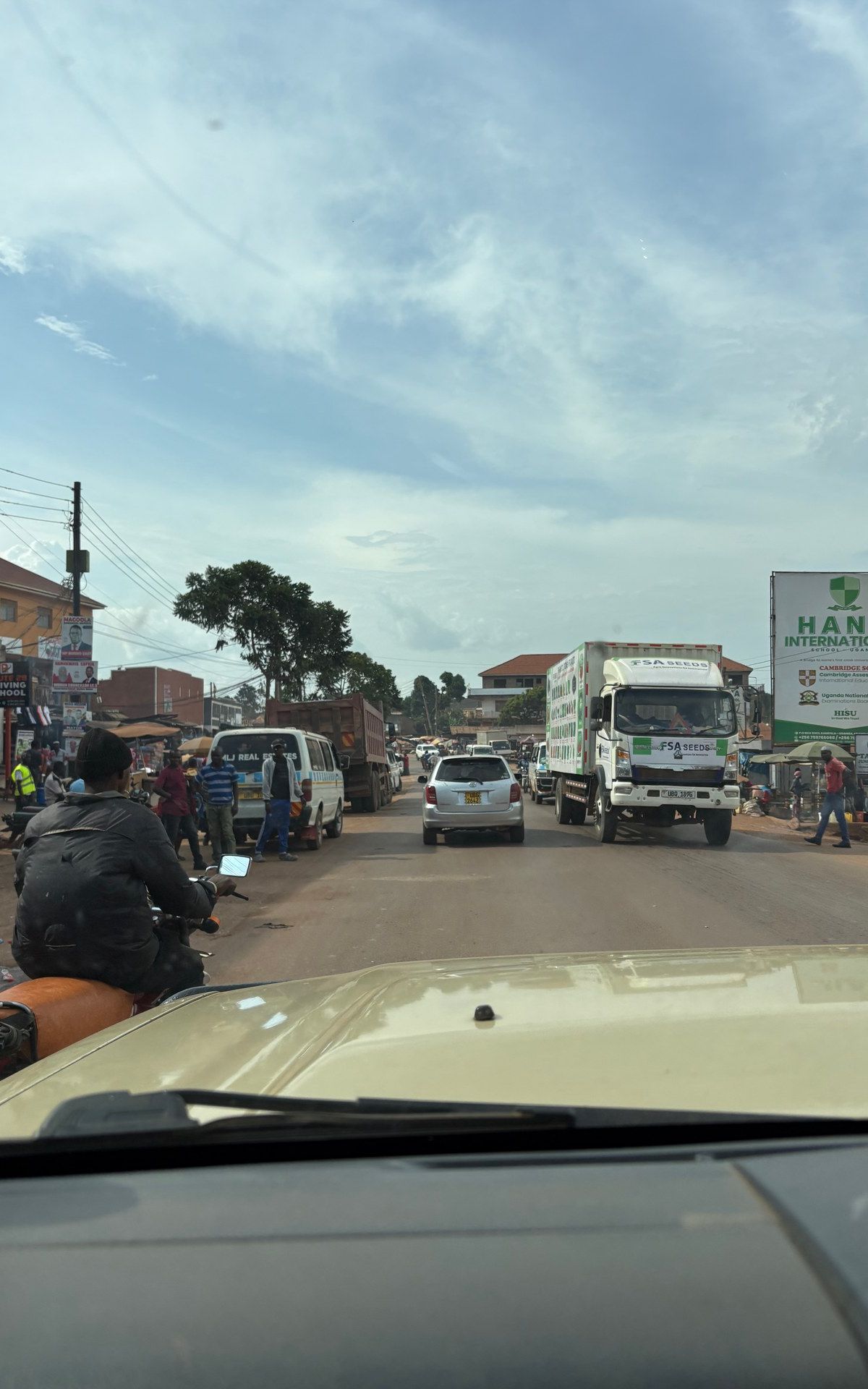
The first impression of Kampala comes from inside a vehicle. After being collected from Entebbe Airport in January 2026, we drove directly through the capital — and within minutes the city had made its character clear. Cars, boda-bodas, and cyclists threaded across lanes without obvious hierarchy. The roadsides held continuous lines of small stands and shops: hardware, phone credit, vegetables, charcoal, tailoring. Every pavement was occupied. The density was not chaotic in the way European cities use that word; it was purposeful, commercial, alive. Kampala moves, and it does not stop.
That energy is inseparable from the structural challenges the Kampala Capital City Authority (KCCA) is now systematically trying to address. The city's Strategic Plan for financial years 2025/26 through 2029/30 covers five years of infrastructure investment, climate adaptation, health improvement, and economic development. It is a planning document — but it is grounded in the recognisable problems of a rapidly expanding East African capital: flooding, informal settlements, an overloaded transport network, and a population that has outgrown the infrastructure laid for it.
This article covers what the plan contains, what it means for the city's residents and for the nearly two million people in the Kampala metropolitan area, and how it fits into the broader picture of Uganda's fastest-growing urban environment.
Kampala Today: Scale, Population, and Economic Weight
Kampala Capital City covers 194.3 square kilometres across five administrative divisions: Central, Kawempe, Makindye, Nakawa, and Rubaga. The city proper holds approximately 1.65 million residents — the urban population concentrated in one of the smallest capital-city footprints in East Africa. The broader Kampala Metropolitan Area, which includes Kampala, Wakiso, and Mukono districts, concentrates over 32 per cent of Uganda's manufacturing activity. This makes the metropolitan area not just the seat of government but the industrial engine of the national economy.
The five-division structure is relevant to understanding the Strategic Plan because most targets are tracked at divisional level. The Nakawa Division contains the Industrial Area, a concentration of slaughterhouses, warehouses, and processing facilities. The Central Division contains the Central Business District — a dense, high-footfall zone subject to its own traffic management framework. Kawempe and Makindye include significant residential zones with informal settlement characteristics. Each division presents different planning challenges.
KCCA is governed by the KCCA Council, which has oversight and governance functions over the authority's operations. The relationship between central government (through the Ministry of Kampala), the Lord Mayor's office, and the KCCA executive has historically been complex — a reflection of the tension between elected and appointed authority in the city's management. The Strategic Plan 2025/26–2029/30 represents the most recent consensus on development priorities across these competing accountabilities.
The Strategic Plan 2025/26–2029/30: Vision and Framework
The KCCA Strategic Plan FY2025/26–FY2029/30 is organised around four strategic themes: economic growth and productivity, governance and accountability, service delivery, and climate resilience. The five-year planning horizon was chosen to align with Uganda's National Development Plan cycle, which provides the national framework within which KCCA operates.
The previous strategic plan (2020/21–2024/25) was launched officially in September 2020 and based in part on the Kampala Climate Change Strategy — the city's framework for addressing the combined challenges of urban flooding, heat stress, and climate variability. The 2025 plan builds on that foundation and extends climate adaptation from a strategic objective into specific, costed infrastructure targets.
KCCA monitors progress through a structured M&E (monitoring and evaluation) system that tracks performance indicators at divisional and departmental levels. Targets are reviewed quarterly and annually, with formal mid-term evaluations at the two-year mark of each planning cycle. The M&E framework covers both output indicators (kilometres of drainage constructed, number of facilities upgraded) and outcome indicators (reduction in flood incidents, citizen satisfaction scores). KCCA Health Centres, for example, are assessed through citizen satisfaction measurements alongside standard health system outputs.
[QUOTE: KCCA official or local resident on what improved infrastructure means for daily life in the city]
Climate Resilience: Drainage, Flooding, and the Wetland Problem
Kampala's most visible recurring crisis is flooding. The city was built on seven hills, and the valleys between them hold wetlands and small streams that historically absorbed rainfall. Rapid urbanisation has seen those wetlands built over, the streams culverted, and the drainage capacity of the original landscape eliminated. When the rains come — particularly the intense, short storms of the April–May and October–November wet seasons — water accumulates in the valleys, in informal settlements built in flood-prone areas, and on roads that lack adequate stormwater infrastructure.
The Bwaise III area of Kampala, a low-lying informal settlement in Kawempe Division, is the most frequently cited example of this problem. The settlement floods regularly during heavy rains, with the depth sometimes sufficient to displace residents for days. It has been the subject of urban risk assessments using GIS and spatial analysis tools, and it appears in both flood hazard mapping and soil erosion studies as a high-priority intervention zone.
The KCCA Strategic Plan FY2025/26–FY2029/30 commits to the construction of 80.24 kilometres of primary and secondary drainage canals across the city (source: KCCA Strategic Plan 2025, Infrastructure Chapter). This is a substantial programme by any standard for a city of Kampala's size. The construction targets are distributed across divisions, prioritising the most flood-affected areas. Box culverts — enclosed drainage structures that allow roads to cross drainage channels — are planned across 103 sites across the urban network (source: KCCA Strategic Plan 2025).
The Strategic Plan also addresses the upstream cause of some flooding: informal settlement in natural drainage corridors. Wetlands within the Kampala boundary have legal protection, but enforcement has been inconsistent. A key target in the 2025 plan is increasing the coverage of slum-upgrading policies that include integrated zoning provisions — moving from 55 per cent coverage in FY2025/26 to 80 per cent by 2029/30 (source: KCCA Strategic Plan 2025). This policy integration is explicitly designed to support mixed-income neighbourhoods where formal and informal settlement can coexist with adequate infrastructure, rather than forcing settlement into the drainage-critical lowlands.
Waste Management: The 2.5 Million Dollar Masterplan
Urban waste is the second major environmental challenge in Kampala. The city generates significant volumes of domestic, commercial, and industrial waste, and collection coverage has historically been uneven — concentrated in the formal commercial zones and inadequate in informal settlements and outer divisions. Illegally dumped waste clogs the drainage channels that the infrastructure investment is supposed to improve: the two problems compound each other.
In FY2025/26, KCCA plans to spend US$2.5 million on the development and implementation of a city-wide waste management masterplan (source: KCCA Strategic Plan 2025). This masterplan is intended to set out a comprehensive framework covering collection, transport, treatment, and disposal of all waste categories — domestic, commercial, and hazardous — across all five divisions.
The masterplan investment is relevant to the broader environmental regulatory context. Uganda's National Environment (Waste Management) Regulations, Statutory Instrument No. 49 of 2020, impose legal requirements on commercial operators across the country for waste categorisation, storage, and disposal. For Kampala's businesses, compliance with these regulations is enforced through KCCA's inspection programme and the National Environment Management Authority. The masterplan will align Kampala's city-level waste framework with the national regulatory requirements and close gaps in enforcement capacity.
The Uganda Police Fire Brigade plays a role in waste management compliance, specifically for waste storage sites that present fire risk — a category that includes large informal waste dumps and certain categories of commercial waste storage. The Uganda National Bureau of Standards contributes to developing and updating standards relevant to waste handling and environmental quality across Uganda.
Roads and Urban Infrastructure
Road infrastructure is central to the Strategic Plan. Kampala's road network carries enormous traffic loads for a city its size — the boda-boda economy alone places millions of small motorcycle trips on urban roads each day, with formal vehicles, commercial trucks, and pedestrians competing for the same space.
The Kampala City Roads Rehabilitation Project, partially externally funded, has been one of the major infrastructure programmes running through the period of the current plan. In FY2025/26, the project was updated to include the Sentema 2 Road (6.1 km) under Lot 5, while the Kibuye–Busega Road (6.5 km) was removed and replaced by Salaama Road (8.1 km) and Queens Way (1.5 km) under Lot 4 (source: KCCA Strategic Plan 2025). These changes reflect the iterative nature of large urban infrastructure projects, where alignment, land acquisition, and engineering constraints require route adjustments.
The City Hall Renovation and Facelift Project (Phase II) has estimated total costs of UGX 5.6 billion (source: KCCA Strategic Plan 2025). City Hall functions as the administrative centre of Kampala and the physical symbol of municipal governance; the renovation investment signals the authority's commitment to maintaining the physical infrastructure of city management alongside operational investment.
The Kampala Road Safety Strategy 2021–2030 provides a ten-year framework for reducing road fatalities and injuries in the capital. Implementation plans under the strategy are published every two years (source: Kampala Road Safety Strategy 2021–2030). Road safety in Kampala is a genuine public health concern: the Kampala Road Safety Report records injury and fatality data at the city level, and the Central Business District operates within a Speed Management Zone designed to limit vehicle speeds in the highest-pedestrian-density area. The City Mortuary in Kampala is documented as a data source for road fatality records alongside crime and violence statistics.
Health Services: The SWAP Project and KCCA Health Centres
KCCA operates a system of six public health centres across Kampala's divisions. These health centres are assessed through regular citizen satisfaction measurements, and their performance contributes to KCCA's overall service delivery indicators. The SWAP Project — Saving Women and Preterm Babies — is a targeted maternal and neonatal health initiative operating across five health facilities in the Kampala Metropolitan Area (source: KCCA Strategic Plan 2025). These include Naguru Hospital and the health centres at Kisenyi and Kawaala.
The SWAP project is geographically focused on three of Kampala's divisions: Rubaga, Central, and Nakawa (source: KCCA Strategic Plan 2025). Its aim is to improve survival rates for preterm infants and reduce maternal mortality. The project is externally supported and represents a type of partnership investment — bilateral or multilateral donor funding channelled through KCCA for defined health outcomes — that will continue under the 2025 strategic plan period.
The KCCA Agricultural Resource Centre provides agricultural services, seed distribution, and training to urban and peri-urban farmers within Kampala. Urban agriculture is not a marginal activity in Kampala — vegetables, poultry, and small livestock are kept in residential areas across all five divisions, and the Agricultural Resource Centre provides technical support for these activities. The connection between urban food production and food security for low-income residents is one of the reasons KCCA has maintained this function despite the pressure of urbanisation on available land.
Employment, Sport, and the Informal Economy
The WE Project — a women's employment promotion initiative — covers all five divisions of Kampala and aims to strengthen economic participation among women in the formal and informal labour markets (source: KCCA Strategic Plan 2025). Employment promotion at city level in Kampala operates against a backdrop in which the informal economy provides the majority of livelihoods.
The boda-boda sector is the most visible expression of this. During every visit to Kampala since October 2024, the motorcycle taxi network has been the defining feature of street life: tens of thousands of riders, operating without fixed routes, connecting passengers and goods across a city where formal public transport is inadequate for the population it serves. The informality of the sector is also its efficiency — the network is self-organising, responsive, and comprehensive in its coverage of areas that buses cannot reach. It also generates the accident and injury data that the Road Safety Strategy is trying to reduce.
KCCA Professional Sports Clubs — six clubs competing in national and international competitions — include the KCCA Volleyball Ladies Club, which won the national league in 2022/23. KCCA's involvement in professional sport is partly a social policy: providing structured competitive activity for urban youth in a city where informal gathering spaces are limited and economic pressure on young people is intense.
Driving Through Kampala: What the City Shows Visitors
For travellers whose Uganda itinerary begins at Entebbe Airport, Kampala is the first impression of the country. The 45-kilometre drive from Entebbe to the city centre, and then northward or westward toward the national parks, passes through the city's commercial and residential fabric. In October 2024 and again in January 2026 and May 2026, I drove this route in different directions and at different times of day — and the city offers a consistent, dense experience of urban East Africa that no other part of Uganda replicates.
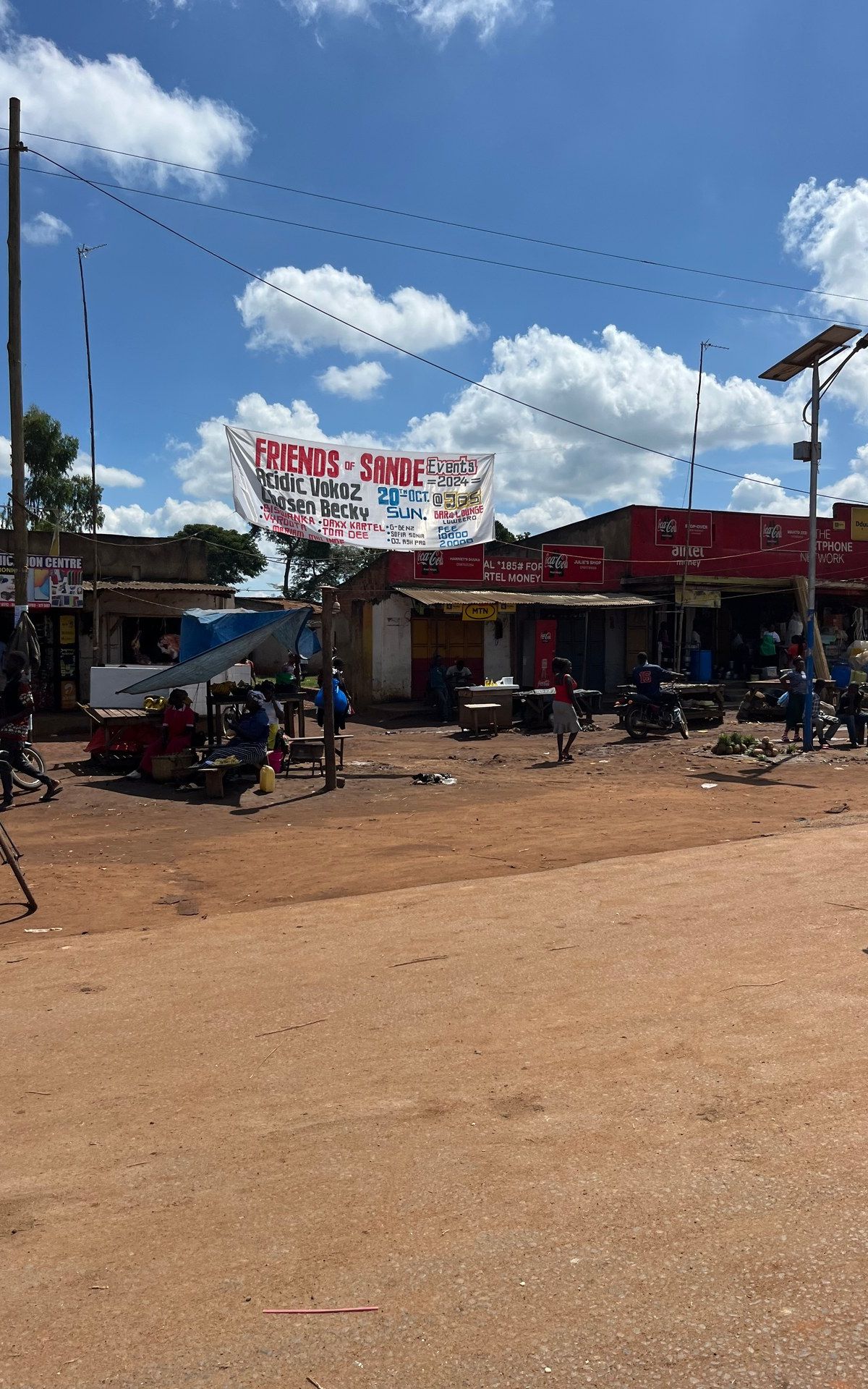
On the road north toward Murchison Falls National Park in October 2024, we passed through Luwero — a small town on the Kampala Road about 75 kilometres from the capital, with a market of red-canopied stalls, handmade signs, and the low permanent hum of commerce that characterises Ugandan market towns. The contrast between Kampala's density and this roadside town, an hour's drive away, is part of what the KCCA Strategic Plan implicitly tries to manage: economic activity is concentrated in Kampala and its immediate hinterland, and the plan's success will partly determine how that concentration evolves over the next five years.
The Electricity Regulatory Authority (ERA) regulates Uganda's power sector — and electricity access in Kampala, while significantly better than in rural Uganda, remains uneven across income levels and divisions. The Strategic Plan addresses this indirectly through infrastructure investment that creates the conditions for expanded service delivery; energy policy itself sits above KCCA's remit.
For investors and researchers, the Strategic Plan 2025/26–2029/30 is the primary public reference document for understanding where Kampala's capital expenditure will be directed over the next five years. For travellers, it is context for understanding the city they pass through: a capital that is actively investing in its own legibility, flood resilience, and economic infrastructure — even if the pace of that investment is matched by the pace of the growth it is trying to manage.
Related reading: Kampala to Western Uganda: Road Route Guide — Kampala Natural Hazards and Flood Risk — Waste and Recycling Regulations in Uganda
Frequently asked questions
What is the KCCA Strategic Plan 2025–2030?
The KCCA Strategic Plan FY2025/26–FY2029/30 is the Kampala Capital City Authority's five-year planning document covering infrastructure investment, climate resilience, service delivery, and governance for the period ending in 2030. It sets costed targets across drainage construction, road rehabilitation, waste management, health services, and slum upgrading, with performance tracked through a structured monitoring and evaluation framework. The plan was developed under the guidance of the KCCA Council and aligns with Uganda's National Development Plan III.
How is Kampala addressing its flooding problem?
The primary instrument is drainage infrastructure: KCCA's Strategic Plan commits to constructing 80.24 kilometres of primary and secondary drainage canals across the city by 2029/30, alongside 103 box culverts at road crossings (source: KCCA Strategic Plan 2025). The plan also targets increased coverage of slum-upgrading policies with integrated zoning rules, from 55 per cent to 80 per cent of relevant settlements, to reduce informal development in natural drainage corridors that intensifies flooding.
How much is Kampala spending on waste management?
In FY2025/26, KCCA has budgeted US$2.5 million for the development and implementation of a city-wide waste management masterplan (source: KCCA Strategic Plan 2025). This masterplan will cover collection, transport, treatment, and disposal of all waste categories across Kampala's five divisions, and is designed to align with Uganda's National Environment (Waste Management) Regulations S.I. 49/2020.
What is the Kampala Metropolitan Area?
The Kampala Metropolitan Area encompasses Kampala Capital City (194.3 km², five divisions, approximately 1.65 million residents) together with the adjacent Wakiso and Mukono districts. The combined metropolitan area concentrates over 32 per cent of Uganda's manufacturing activity. Planning and development programmes — including the SWAP maternal health project and the WE employment initiative — target the metropolitan area as a geographic unit rather than the administrative city boundaries alone.
How does KCCA monitor the implementation of its strategic plan?
KCCA uses a monitoring and evaluation framework that tracks performance indicators at divisional and departmental levels, reviewed quarterly. Formal mid-term evaluations occur at the two-year point of each planning cycle. Service delivery outputs — such as KCCA Health Centre performance — are measured through citizen satisfaction surveys alongside clinical output indicators. Annual reports and mid-term reviews are published by the authority and submitted to the KCCA Council for oversight. Related reading: Kampala's Climate Resilience Plan 2025–2030 · Uganda's Tourism Economy