Overview
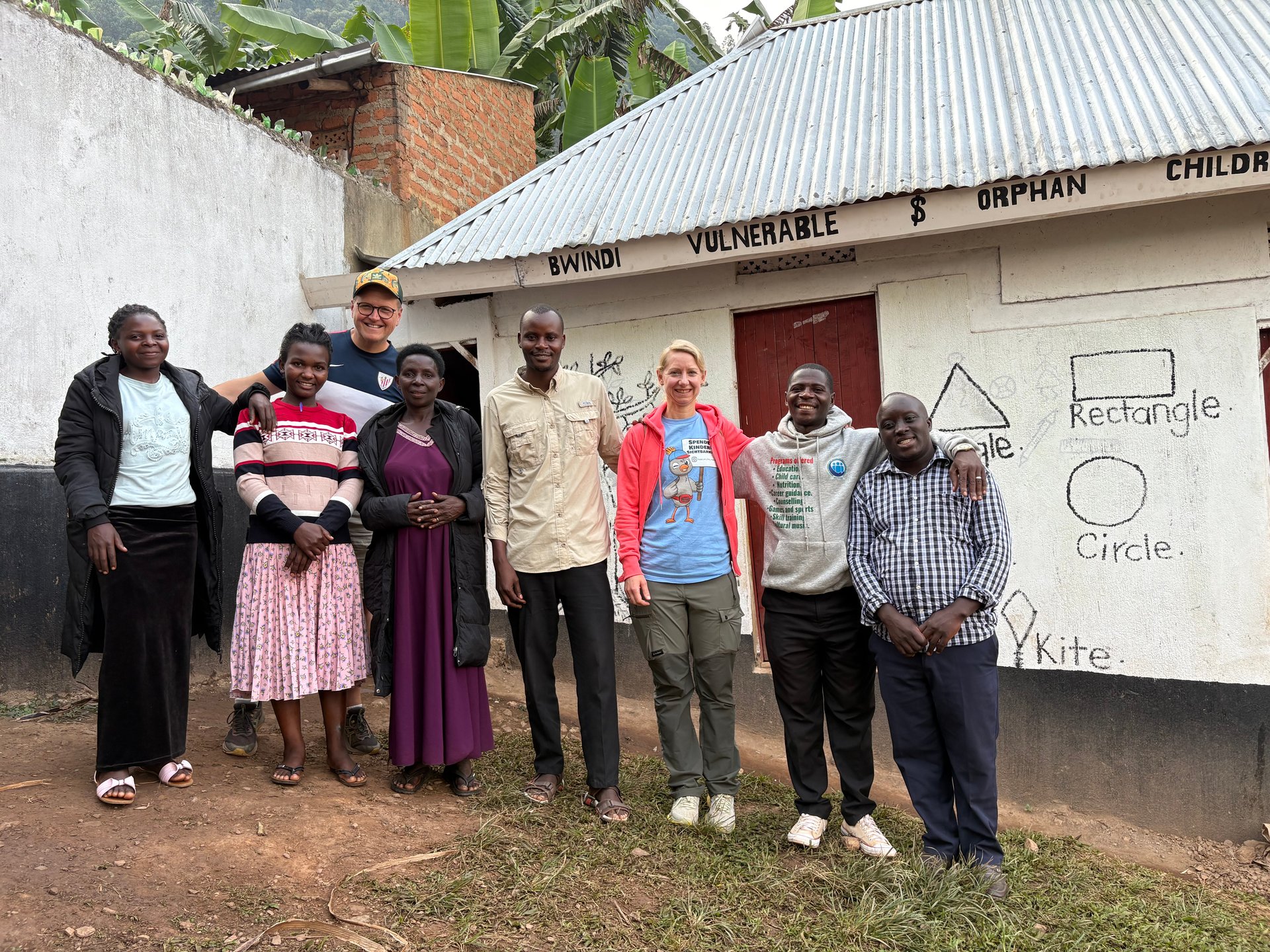
NatureUganda is the organization working hardest to close the gap between Uganda's extraordinary natural wealth and the public understanding needed to protect it. Through bird monitoring, school outreach, community engagement and national advocacy, NatureUganda has spent decades converting indifference into informed care — turning ordinary Ugandans into active participants in the conservation of the country's wildlife and habitats.
Uganda holds more bird species than any other country of comparable size, hosts a quarter of the world's mountain gorillas, and protects globally significant ecosystems from Lake Victoria's islands to the montane forests of the Rwenzori. Yet the pressures on these systems — poaching, encroachment, pollution, unsustainable extraction — remain severe. NatureUganda's central argument is that legislation and enforcement, however necessary, cannot succeed without a population that genuinely values nature. The organization's programs are built around that conviction.
During visits to Uganda in October 2024 and again across multiple stays in January and subsequent months of 2026, the depth of grassroots conservation work becomes apparent in ways that no report fully captures. Guides who have learned to identify 40 wetland bird species from NatureUganda field training. Schoolchildren carrying bird identification sheets into community forests. Local fishermen on Lake Victoria who know by name which nesting islands deserve protection. This is what a nature-friendly public looks like in practice.
The Organization and Its Origins
A Long History in Uganda's Conservation Landscape
NatureUganda is the Uganda chapter of the East Africa Natural History Society, one of the oldest scientific societies in East Africa. Its roots in Uganda stretch back well over a century, giving the organization a legitimacy and an institutional memory that newer bodies lack. It has accumulated records of species distribution, population trends and habitat change that constitute an irreplaceable scientific archive.
The modern NatureUganda operates as a membership organization, a research body, and an advocacy platform simultaneously. Members range from professional ornithologists and ecologists to amateur birdwatchers and schoolchildren participating in nature clubs. This breadth is deliberate. The organization's theory of change holds that conservation is most durable when it draws on the widest possible social base — when a farmer, a teacher, a government official and a scientist all share a language for talking about why a wetland matters.
Institutional Positioning
NatureUganda works alongside, and often in partnership with, the Uganda Wildlife Authority (UWA), which manages the country's protected area network. While UWA carries enforcement authority, NatureUganda provides civil society credibility, scientific data from outside government structures, and the kind of community trust that uniformed rangers sometimes struggle to build. The relationship is complementary rather than duplicative.
The organization also engages with the formal education sector, which in Uganda employs close to 396,960 workers and generates value of over 4.2 trillion Ugandan shillings annually. Schools are the most efficient channel for reaching the next generation before attitudes toward wildlife and forests solidify. NatureUganda's education programs are designed with this leverage in mind.
Bird Monitoring as a Foundation for Public Engagement
The Ssele Islands Program
One of NatureUganda's most significant long-running monitoring commitments is in the Ssele Islands on Lake Victoria, where systematic bird surveys have continued since 2006. Two decades of consistent data collection from the same sites creates population trend information that no short-term study can generate. Waterbird colonies on Lake Victoria's islands face pressures from fishing activity, nest disturbance and invasive vegetation — and only longitudinal monitoring reveals whether interventions are working.
The Ssele monitoring program is not simply a scientific exercise. It trains local bird guides, creates employment linked to conservation outcomes, and gives island communities a concrete reason to protect nesting habitat. When a fisherman understands that the cormorant colony on a particular rock shelf attracts visiting ornithologists who stay in local accommodation and eat at local stalls, the economic logic of conservation becomes personal rather than abstract.
Citizen Science and the IBA Network
NatureUganda coordinates Uganda's participation in the global Important Bird and Biodiversity Areas (IBA) program, identifying, monitoring and advocating for the protection of sites that support internationally significant bird populations. Uganda hosts numerous IBAs covering lakes, wetlands, forest blocks and montane grasslands. Monitoring these sites requires more observers than NatureUganda's professional staff can provide — which is where citizen science becomes essential.
Trained volunteers conduct regular counts at their local IBA sites, submitting data that feeds into national and continental assessments. This model converts recreational birdwatchers into scientific contributors, giving them a direct connection to conservation outcomes. For many participants, the IBA monitoring program is the first time they have experienced environmental work as something they personally do, rather than something that happens in a distant national park.
Monitoring as Advocacy Evidence
The data collected through NatureUganda's monitoring programs serves a second function beyond science: it provides evidence for advocacy. When the organization argues before parliament or a local government committee that a particular wetland must be protected, it can cite 15 years of species counts showing a declining trajectory. Numbers rooted in consistent methodology are far harder to dismiss than general appeals to nature's value. This is a deliberate design choice — monitoring and advocacy are integrated, not parallel.
Environmental Education: Schools, Communities and Beyond
Nature Clubs and School Programs
NatureUganda supports a network of nature clubs in Ugandan schools, providing materials, training for teachers and periodic field excursions to local natural areas. For most urban schoolchildren in Kampala or Jinja, a guided walk through a papyrus swamp or a lakeside forest fragment is a genuinely novel experience. NatureUganda staff treat these encounters as the foundation for lasting attitude change — the point at which a child moves from ignorance about local ecology to curiosity.
The school programs are designed around Uganda's national curriculum where possible, reducing the burden on already-stretched teachers. Environmental content woven into standard geography, biology and social studies classes reaches students who might never join an elective nature club. NatureUganda has worked with curriculum developers to ensure that Uganda's remarkable biodiversity appears as specific, local and named — not as a generic African backdrop.
Community Education in Forest and Wetland Buffer Zones
Some of NatureUganda's most intensive community education work happens in the buffer zones around Uganda's protected areas, where the line between conservation and livelihoods is most contested. In the vicinity of Kibale Protected Area, for instance, communities living alongside the forest face real conflicts over crop raiding by chimpanzees and other wildlife. NatureUganda's community programs do not pretend these conflicts do not exist. Instead, they work to ensure that communities have accurate information about wildlife behavior, legal protections and the economic benefits — including tourism revenue — that flow from intact forest.
Near Maramagambo Central Forest Reserve, with its Python Cave and enormous bat colony, NatureUganda has helped communicate the ecological significance of species that many local residents find alarming rather than valuable. The bat colony alone plays a critical role in insect control across the surrounding agricultural land — a fact that is both true and persuasive once explained. Translating ecological function into locally meaningful terms is one of NatureUganda's core communication skills.
Mount Elgon and the Challenge of Illegal Resource Use
Around Mount Elgon Protected Area, NatureUganda has engaged with communities affected by enforcement actions against illegal bamboo extraction and other forms of encroachment. These are difficult conversations. Families who rely on forest resources for fuel, building materials and food do not stop doing so simply because an NGO explains biodiversity loss. NatureUganda's approach in these contexts combines honest acknowledgment of economic hardship with information about legal livelihood alternatives, revenue-sharing mechanisms and the long-term risks of habitat destruction to farming productivity itself.
The Mount Elgon context illustrates a broader truth about environmental education in Uganda: it only works when it is grounded in economic reality. Conservation messaging that ignores poverty fails. NatureUganda's most effective programs are those that connect ecological health to food security, water supply and income — values that are universally shared regardless of formal education level.
Advocacy, Policy Influence and National Awareness Campaigns
Engaging Government and Parliament
NatureUganda maintains active engagement with Uganda's legislative process on environmental matters. When new infrastructure projects, mining permits or wetland drainage proposals enter the regulatory pipeline, the organization mobilizes its membership to submit comments, request environmental impact assessments and appear before relevant committees. This advocacy work depends on public credibility — which in turn depends on the organization's visible community presence and its scientific data record.
The relationship with UWA provides another avenue of policy influence. NatureUganda contributes to species assessments, protected area management planning and the development of monitoring protocols that UWA uses across its protected area system. Data from programs like the Ssele Islands monitoring informs national reporting obligations under international conservation conventions.
National Awareness Events
Every May, NatureUganda organizes Uganda's participation in global birdwatching events, most notably events tied to international bird monitoring calendars. These annual occasions bring birdwatchers from across Uganda together for simultaneous counts, generate media coverage, and — crucially — create visible public celebration of birdlife in a country that is home to over 1,060 recorded bird species. The media visibility of these events serves an awareness function that no classroom program can fully replicate.
NatureUganda also produces field guides, identification sheets and popular publications aimed at non-specialist Ugandan audiences. The goal is to make bird and nature identification feel accessible rather than exclusive — a hobby for any curious person, not only for foreign ornithologists. This matters because much of Uganda's conservation burden currently falls on international advocacy and foreign tourism interest. Building domestic constituencies for nature protection is a longer-term project, but also a more durable one.
The African Elephant and Wildlife Awareness
Uganda's wildlife populations — including African elephants, which are held at the Uganda Wildlife Education Centre (UWEC) and roam protected areas in the north and west — require broad public understanding to survive alongside a growing human population. NatureUganda contributes to public awareness about large mammal conservation through its publications and education programs, even though its primary focus remains birds. The organization recognizes that a public educated about birds develops broader ecological literacy that transfers to attitudes toward all wildlife.
The Evidence Base: Why Public Awareness Matters for Conservation Outcomes
The Gap Between Protection on Paper and Protection in Practice
Uganda has a comparatively robust legal framework for environmental protection. The National Environment Management Authority (NEMA) regulates environmental impact assessment. UWA manages 10 national parks, 12 wildlife reserves and multiple other protected designations. Yet illegal wildlife trade, wire snare poaching and encroachment on forest reserves persist at significant scale. The enforcement system is structurally under-resourced relative to the geography it covers.
This is precisely where public awareness programs pay dividends that no additional ranger post can replicate. A community that values the wildlife in its vicinity reports snares. A teacher who understands watershed ecology discourages students from dumping waste in streams. A local government official who has attended a NatureUganda advocacy event thinks twice before approving wetland drainage. These behavioral shifts are hard to measure but cumulatively decisive.
Tourism as a Motivation for Public Support
Uganda's tourism economy provides a concrete economic argument for conservation that NatureUganda deploys in its public communications. The Uganda tourism economy depends fundamentally on intact ecosystems and healthy wildlife populations. Revenue sharing mechanisms return a portion of national park fees to communities surrounding protected areas — but this only functions if those communities understand the connection between conservation and the income they receive.
When visiting Uganda's western national parks in January 2026, the degree to which community members around Kibale and Queen Elizabeth understood this link varied significantly by location. In areas where NatureUganda or similar organizations had been active, the framing of conservation as economically rational was widely shared. In areas without that educational infrastructure, the framing more often positioned wildlife protection as an external imposition.
Connecting Urban and Rural Awareness
Uganda's urban population is growing rapidly. Kampala now exceeds two million people, and cities like Mbarara, Gulu and Fort Portal are expanding quickly. Urban Ugandans have less daily contact with natural ecosystems than rural communities, but they exercise growing political and economic influence. NatureUganda's urban programs — nature clubs in city schools, birding events in public parks, social media outreach — are designed to build conservation constituencies among people who may never visit a national park but whose votes, purchasing decisions and professional choices shape conservation policy.
This urban-rural dimension of environmental education is underdeveloped across much of East Africa. NatureUganda's recognition that a Kampala teenager who learns to identify the weaverbird nesting in a school hedge is a future conservation advocate represents a genuinely strategic insight about how lasting public attitudes are formed.
First-Hand Observations: What Public Awareness Looks Like on the Ground
Spending time in Uganda across multiple visits — October 2024, January 2026, and subsequent stays into mid-2026 — makes clear that public environmental awareness in Uganda is neither uniformly high nor uniformly low. It is patchy in ways that reflect where education and advocacy programs have reached and where they have not.
In areas around Bwindi Impenetrable Forest, conservation awareness among local communities is comparatively strong. Decades of gorilla tourism, revenue sharing, and sustained NGO engagement have created a population that largely understands the economic logic of protecting the forest. Questions about gorilla behavior, forest ecology and the mechanics of tourism fee distribution are answered fluently by guides, hotel staff and community members alike. This is not accidental — it reflects sustained investment in exactly the kind of public education that NatureUganda advocates for across Uganda.
In other regions, the picture is more mixed. Around Lake Victoria's smaller islands, fishing communities have detailed traditional knowledge of fish behavior and seasonal patterns, but less familiarity with the regulatory frameworks governing wetland protection or the conservation significance of the waterbird colonies that NatureUganda monitors. Here, the potential for programs that connect existing ecological knowledge with formal conservation frameworks seems particularly large.
[QUOTE: local guide on first impressions of NatureUganda's community training sessions]
The most consistent observation across multiple sites is that conservation education works best when it is delivered by people who share the community's language, livelihood context and cultural reference points. NatureUganda's community bird guides — trained locals who conduct monitoring and guide visiting ornithologists — are more effective conservation ambassadors in their own areas than any outside expert could be. This is not merely an observation about cultural sensitivity. It is a structural feature of how lasting attitude change occurs.
Frequently asked questions
What is NatureUganda and what does it do?
NatureUganda is the East Africa Natural History Society's Uganda chapter and the country's oldest conservation membership organization. It runs bird monitoring, environmental education programs, and advocacy campaigns designed to build broad public support for protecting Uganda's natural heritage, working alongside the Uganda Wildlife Authority and community partners across the country.
How does NatureUganda involve local communities in conservation?
NatureUganda works through community bird guides, school outreach programs, and participatory monitoring projects. Local residents are trained to conduct bird counts and report environmental changes, giving communities a direct stake in protecting the habitats on which their livelihoods depend. Programs around Kibale, Maramagambo and Lake Victoria connect ecological value to local economic reality.
What is the Ssele Islands bird monitoring program?
NatureUganda has conducted systematic bird monitoring in the Ssele Islands on Lake Victoria since 2006, building one of Uganda's longest continuous waterbird datasets. The project tracks population trends and informs protection measures for Lake Victoria's island ecosystems, while also training local guides and creating conservation-linked livelihoods for island communities.
Why is public environmental awareness important for Uganda's wildlife?
Uganda's protected areas face persistent pressure from poaching, illegal resource extraction and habitat loss. Without broad public understanding of ecological value, enforcement alone cannot succeed across Uganda's large and diverse protected area network. Education programs create communities that report violations, resist harmful practices and advocate for conservation funding — multiplying the impact of formal enforcement.
How does Uganda's education sector contribute to environmental awareness?
Uganda's formal education sector employs nearly 397,000 workers and generates value worth over 4.2 trillion Ugandan shillings annually, making schools a powerful platform for reaching young people at scale. Environmental content embedded in the national curriculum shapes the conservation attitudes of future generations. NatureUganda works with schools to ensure Uganda's biodiversity is taught as specific, local and relevant rather than abstract.