Overview
Children under 18 account for roughly 40 percent of Uganda's entire refugee population — a proportion so large that any serious discussion of the country's humanitarian situation must begin with them. With Uganda hosting more than 1.9 million refugees and asylum seekers as of mid-2026, that single statistic translates to well over 750,000 children living inside formal settlements, transit centres, and urban areas like Kampala. Understanding their daily reality — schooling interrupted, nutrition uncertain, health services stretched — is essential for anyone who wants to engage honestly with Uganda's role as Africa's largest refugee host.
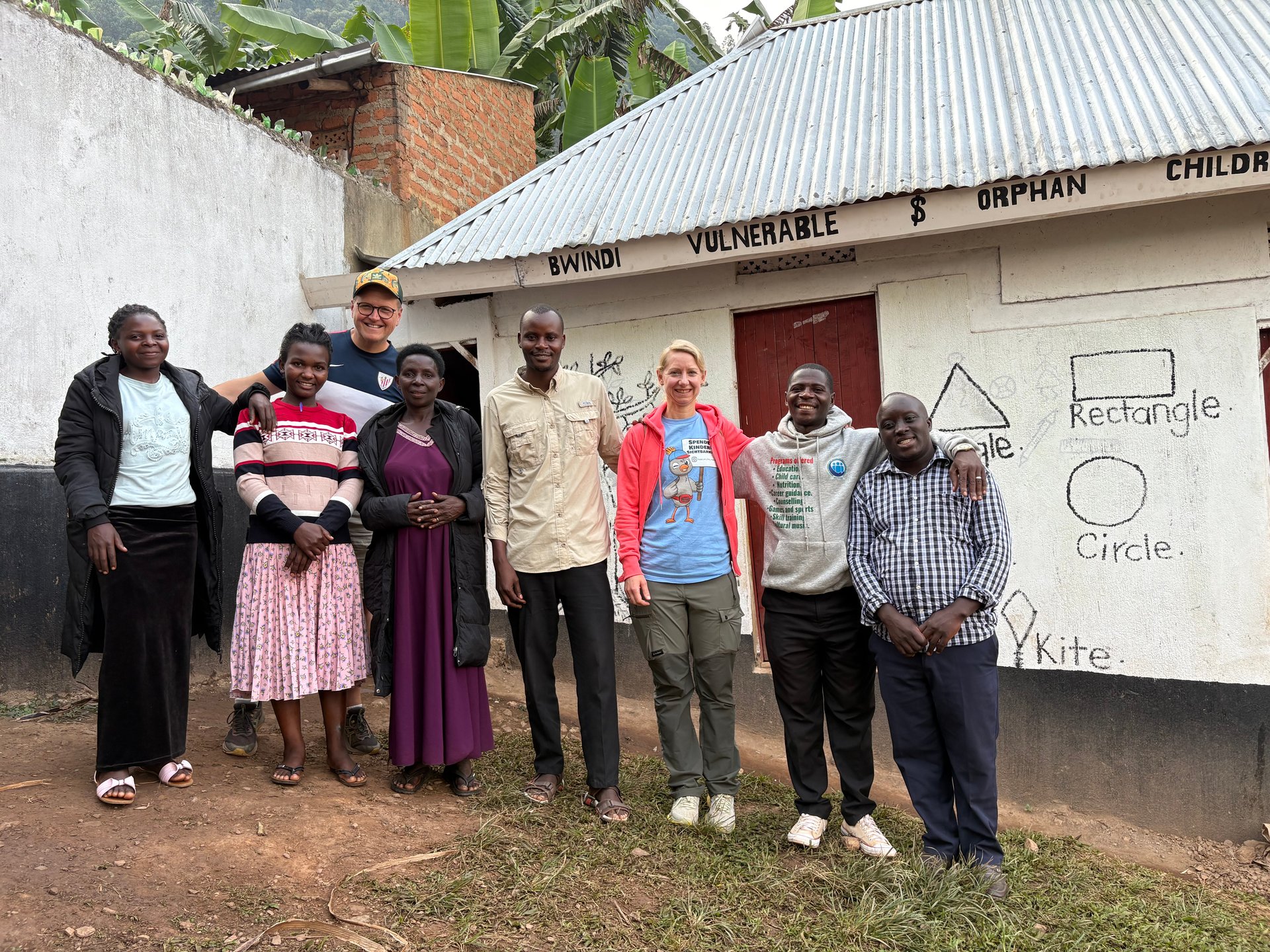
During multiple visits to southwestern and northern Uganda between October 2024 and June 2026, including a three-day stay in January 2026, the patterns visible on the ground matched closely what the data describes: settlements functioning under pressure, communities showing genuine resilience, and systems chronically short of the resources they need.
Who Are the Children in Uganda's Settlements?
Origins and Arrival Patterns
The Uganda Comprehensive Refugee Response Plan (UCRRP) data from June 2026 places the total refugee and asylum-seeker population at 1,796,609 people across the country's formally recognised settlements. South Sudan remains the single largest source country, accounting for 53 percent of arrivals, followed by the Democratic Republic of Congo at 33 percent. The remaining 14 percent originate from Sudan, Eritrea, Somalia, Burundi, Rwanda, and Ethiopia.
Since January 2025 alone, Uganda registered 110,849 new asylum applicants — 60 percent from DRC, 26 percent from South Sudan, and 13 percent from Sudan. The conflicts driving these movements show no sign of resolution, which means the child population in Uganda's settlements is not a static figure but one that grows month by month. In the first half of 2026, the Obongi transit centre was receiving a daily average of 35 new arrivals, with a single-day peak of 140 — most of them families with children.
Where Children Are Settled
Uganda operates a network of large, formally gazetted settlements spread across the country. The northern belt — Bidibidi, Palorinya, Adjumani, Rhino, and Imvepi — concentrates primarily South Sudanese refugees. The southwestern settlements — Nakivale, Kyangwali, Kyaka II, Rwamwanja, and Oruchinga — hold large Congolese communities alongside refugees from the Great Lakes region. Bidibidi alone hosts 212,517 people; Nakivale 228,295; Adjumani 144,730.
Kampala also hosts a significant urban refugee population — 70,330 people registered in the capital — including many unaccompanied minors and child-headed households whose situation is markedly harder to monitor than in formal settlements.
Education: The Right on Paper, the Gap in Practice
Uganda's Open-Door Education Policy
Uganda's open-door refugee policy is one of the most progressive in the world. Refugees are entitled to settle, move freely, work, and access public services — including primary and secondary education — on the same basis as Ugandan nationals. In principle, a child living in Nakivale or Bidibidi can enrol in the nearest government primary school without documentation barriers.
The education sector employs 396,960 workers across the country and contributes 4.225 trillion Ugandan shillings in annual value added to the national economy, according to official Uganda Bureau of Statistics figures. That is a substantial institutional base. The problem is one of distribution and capacity: settlements are often located far from the nearest school, classrooms are overcrowded, and teachers — already stretched in host communities — carry additional burdens when refugee enrolments surge.
Barriers Children Face
Language is a persistent obstacle. South Sudanese children often speak Arabic, Dinka, or Nuer; Congolese children may speak Lingala or Swahili. Uganda's school system operates in English from primary level, with Luganda or other local languages in lower primary. Children who arrive mid-year or mid-term face a double adjustment: a new language and a curriculum already in progress.
Economic necessity compounds the problem. In refugee settlements across the northern region, the employment-to-population ratio among refugees is 23 percent, compared to 34 percent in neighbouring host communities; in southwestern settlements it is 31 percent versus 42 percent for hosts. When household income is that constrained, older children are frequently kept home to care for younger siblings — effectively making unpaid childcare an invisible barrier to school attendance. This form of domestic labour, while not counted in employment statistics, shapes the daily lives of hundreds of thousands of children in the settlements.
On-site observations during visits in January and May 2026 consistently showed children engaged in water collection, food preparation, and sibling care during school hours — patterns that statistical surveys confirm are widespread across both northern and southwestern settlement clusters. [QUOTE: local guide on first impressions of settlement school attendance]
Nutrition and Health: Numbers Behind the Headlines
Food Security in the Settlements
The 2025 Food Security and Nutrition Assessment (FSNA) for Uganda's refugee settlements documents conditions that affect children disproportionately. Young children and pregnant or breastfeeding women are the populations most vulnerable to acute malnutrition, and they are the groups whose needs are most exposed when rations are cut or delayed.
Uganda continues to receive new arrivals driven by conflicts in DRC, Sudan, and South Sudan — populations that often arrive already food-insecure. The FSNA 2025 found that food access within settlements was being strained by funding shortfalls, logistical bottlenecks, and market disruptions. Children in these households bear the nutritional cost first.
For a deeper look at what food insecurity means at household level across Uganda — including comparisons between refugee and non-refugee communities — see our analysis of food security in Uganda 2026.
Under-Five Mortality: Progress and Persistent Gaps
Child mortality data from the Uganda Refugee Response tracking system shows a broadly positive trend. Under-five mortality rates in the settlements have remained below the emergency threshold of 1.5 deaths per 1,000 population at the national level throughout 2023, 2024, and 2025. In Q4 2025, the national rate across settlements stood at 0.08 — well within acceptable limits.
The settlement-level picture is more uneven. Bidibidi, Kyangwali, Rhino, and Rwamwanja each recorded mortality bubbles above the national average in specific quarters of 2025, signalling localised crises in health infrastructure rather than a systemic collapse. These are precisely the moments when underfunding has the most direct human consequence.
Health Services: Waiting Times and Drug Shortages
Uganda's health response within the refugee sector is coordinated by eight partners under the UCRRP: CARE, DCA, HI, IRC, MTI, UNFPA, UNHCR, and UNICEF. Their collective work holds the system together — but the 2025 FSNA data reveals deepening operational stress. Long waiting times at health facilities affected 45 percent of patients seeking services in 2025, up sharply from 30.4 percent the previous year. Drug shortages persisted at 73.1 percent of facilities — meaning nearly three in four clinics serving refugee children regularly ran out of essential medicines.
For children, these shortages translate into untreated respiratory infections, malaria episodes that progress to severe illness, and vaccination schedules that fall behind. Health workers operating under these conditions face burnout — a feedback loop that further reduces the capacity to serve the population.
The Funding Gap and What It Means for Children
A Structural Shortfall
The trajectory of Uganda's refugee response funding is stark. The UCRRP total requirement grew from 83 million dollars in 2021 to 140 million dollars in 2024, then dropped slightly to 134 million dollars in 2025 — reflecting both growing need and a partial scaling-back of ambition in light of persistent underfunding. Funding actually received moved in the opposite direction: from 50 million dollars in 2021 to a low of 29.4 million dollars in 2025.
That 2025 figure — $29.4 million against a $134 million requirement — represents a funding rate of roughly 22 percent. In practical terms, it means that for every five planned health or nutrition activities involving children in Uganda's settlements, four cannot be delivered as planned.
Transit Centres: First Contact for Arriving Children
Children arriving in Uganda first pass through reception and transit centres before being registered and assigned to a settlement. The Obongi transit centre, operating in June 2026, illustrates both the system's capacity and its limits. The centre has a holding capacity of 500 individuals; it was accommodating 298 at the time of reporting, operating within capacity for the moment. Since January 2025, 5,327 arrivals passed through the centre — a daily average of 35, with single-day peaks reaching 140.
For children arriving at Obongi, basic services were largely in place: water coverage at 85 litres per person per day (well above the 15-litre minimum standard), latrine coverage of one stance per 15 persons (standard: 1 per 20), and health promoter coverage of one per 298 people (standard: 1 per 500). Shelter, however, was recording a gap: available accommodation space ran below the standard of 3.5 square metres per person.
Employment and Economic Inclusion
One of the longer-term determinants of child welfare in Uganda's settlements is whether adult refugees can earn income. Employment-to-population ratios in refugee communities — 23 percent in the north, 31 percent in the southwest, 23 percent in Kampala — stand well below host community levels of 34, 42, and 57 percent respectively. These gaps mean that refugee households, including those with children, remain more dependent on humanitarian assistance and less able to absorb economic shocks.
Uganda's broader approach to refugee self-reliance — including land allocation in settlements and the right to work — is explored in more detail in our piece on refugee livelihoods in Uganda. The connection between adult employment and child nutrition, school attendance, and health outcomes is direct: when households earn more, children eat better and attend school more regularly.
Orphans, Separated Children, and Protection Gaps
The Scale of Child Vulnerability
Uganda's 2024 Orphan and Vulnerable Children Monograph Census documents a sobering statistic: among children aged 0–17 years across the country, 8.7 per 1,000 did not know the survival status of one or both parents. Many of these children were under one year old at the time — an age group with no capacity to self-advocate, entirely dependent on caregivers and institutional protection systems.
In the context of refugee settlements, this vulnerability is compounded by displacement itself. Children separated from parents during flight — at river crossings, border points, or during conflict — may arrive in Uganda as unaccompanied minors with no documentation and no clear family link. The UN Convention on the Rights of the Child, specifically Article 7, asserts that children should know their parents and remain in their care unless proper care cannot be provided. For many children in Uganda's settlements, that right exists only on paper.
The Role of Child Protection Partners
Within the UCRRP framework, child protection is addressed through dedicated programming by UNHCR, UNICEF, and NGO partners. Activities include family tracing and reunification, case management for unaccompanied and separated children, psychosocial support, and community-based child protection networks. The funding shortfalls described above affect these programmes as directly as they affect health services.
The Ministry of Gender, Labour and Social Development has formal responsibility for orphans and vulnerable children under Ugandan law, and its mandate extends to refugee children. Coordination between the ministry, UNHCR, and settlement-based partners is a structural feature of Uganda's response — though the adequacy of resources allocated to that coordination remains a persistent concern.
Uganda's position as the continent's largest host of displaced people is examined in our dedicated overview of Uganda as Africa's largest refugee host, which provides context on the policy framework within which these child-level realities play out.
What Needs to Change
Funding Must Match the Scale
The most direct lever available to the international community is funding. A response plan meeting 22 percent of its requirement cannot deliver adequate nutrition, health, or protection services to 750,000 children. The gap between the $134 million required and the $29.4 million received in 2025 is not a technical problem — it is a political choice made by donor governments that has concrete consequences for children's lives inside Uganda's settlements.
UNHCR's Representative in Uganda has consistently argued for a shift from emergency assistance toward long-term self-reliance strategies — an approach that would ultimately reduce the per-child cost of the response by enabling refugee households to generate their own income. The employment-to-population data suggests that gap remains wide.
Education Investment at Settlement Level
Increasing the number of qualified teachers in settlement schools, providing mother-tongue transitional language programmes, and reducing the distance children must travel to reach school are interventions with well-documented returns. Uganda's education sector, employing nearly 400,000 workers nationwide, has the institutional structure to absorb these investments — what it lacks is the dedicated funding to extend that structure into the most remote settlement areas.
Health System Strengthening
Drug shortages at 73 percent of facilities serving refugee children are not inevitable — they reflect procurement failures and funding gaps that are solvable with adequate resources. Reducing the 45 percent rate of long waiting times requires more health workers and more functional facilities, both of which require sustained, predictable funding rather than the year-to-year fluctuations that have characterised the UCRRP to date.
For readers interested in the broader picture of poverty and child welfare across Uganda — beyond the refugee context — our analysis of poverty in Uganda provides a useful complement to the settlement-specific data presented here.
Frequently asked questions
How many children live in refugee settlements in Uganda?
Children under 18 make up roughly 40 percent of Uganda's total refugee population. With over 1.9 million refugees and asylum seekers recorded as of mid-2026, that translates to well over 750,000 children living across Uganda's settlements, transit centres, and urban areas.
Which countries do child refugees in Uganda come from?
The majority originate from South Sudan (53 percent of the total refugee population) and the Democratic Republic of Congo (33 percent). Smaller numbers come from Sudan, Eritrea, Somalia, Burundi, Rwanda, and Ethiopia. Since January 2025, DRC nationals have made up 60 percent of new asylum applicants.
Do refugee children in Uganda go to school?
Uganda's open-door policy allows refugee children to attend government schools alongside Ugandan pupils. In practice, enrolment is constrained by distance to schools, language barriers, and the economic pressure on families that leads older children to stay home as unpaid caregivers. Dedicated language transition programmes and additional teachers at settlement schools are among the most effective interventions.
What is the child mortality rate in Uganda's refugee settlements?
Under-five mortality across Uganda's settlements has remained below the emergency threshold of 1.5 deaths per 1,000 population at national level throughout 2023 to 2025, reaching 0.08 in Q4 2025. However, rates differ significantly between individual settlements, with Bidibidi, Kyangwali, and Rhino recording above-average figures in certain quarters of 2025.
Is Uganda's refugee response adequately funded?
No. In 2025 the Uganda Comprehensive Refugee Response Plan received only $29.4 million against a total requirement of $134 million — a funding rate of roughly 22 percent. Health and nutrition services, which are critical for children, are among the most severely underfunded areas, contributing to drug shortages at 73 percent of settlement health facilities.