Overview
Uganda's headline Gross Domestic Product (GDP) has grown consistently over the past two decades, yet that single number conceals a critical question: how much of that growth rests on spending down natural wealth that cannot easily be replaced? The answer lies in a less familiar but more honest measure — the Net Domestic Product (NDP) — which subtracts the depletion of natural resources from total economic output. For a country where forests, fisheries, wildlife, and freshwater systems underpin both livelihoods and international tourism revenue, the gap between GDP and NDP is not a statistical technicality. It is a signal about long-term prosperity.
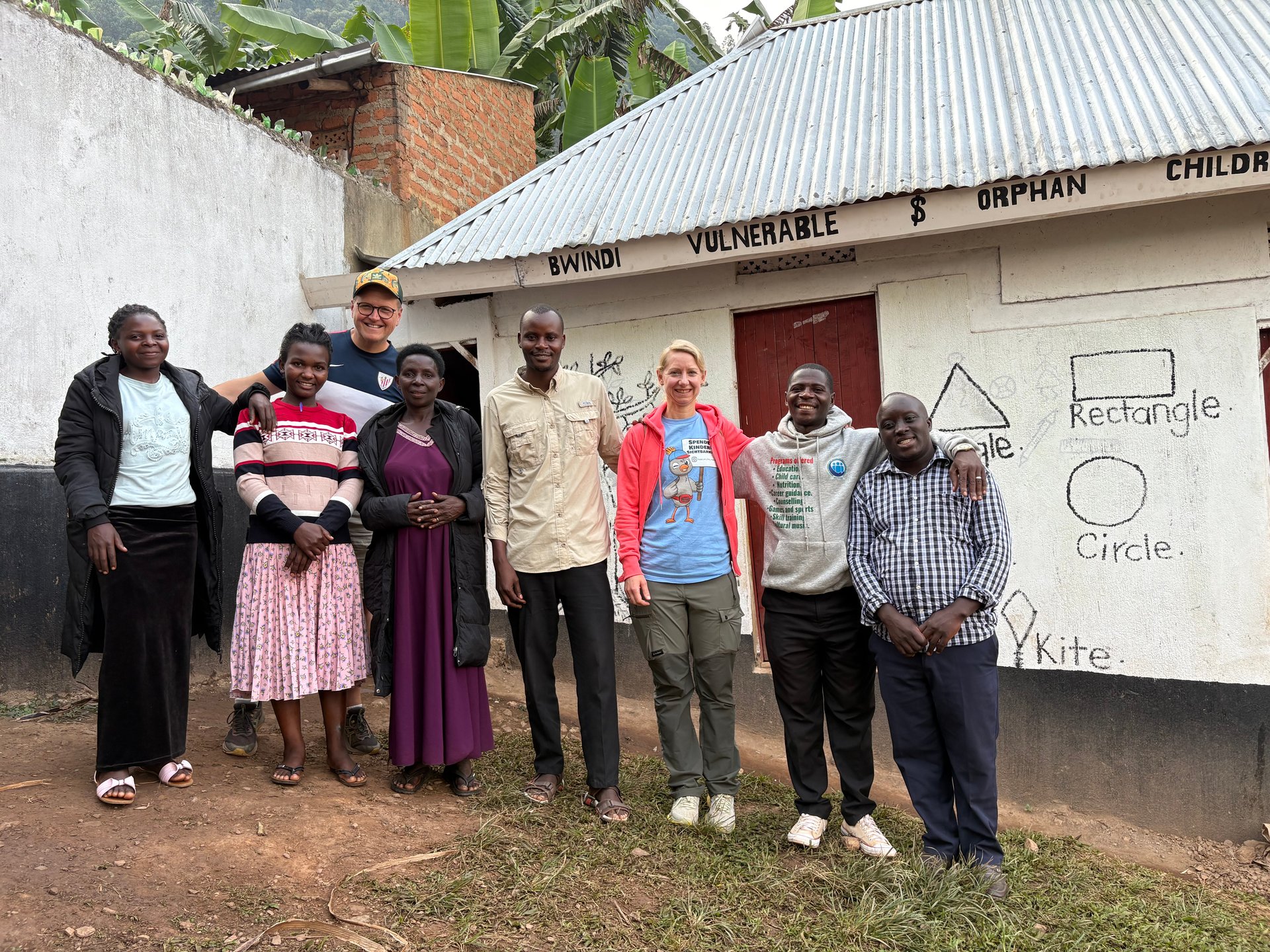
During multiple field visits across Uganda — including time on the ground in October 2024, January 2026, and June 2026 — it becomes clear that the tension between extraction and regeneration plays out visibly across landscapes: in forest edges receding from farmland, in fish catches that fluctuate with lake health, and in the direct link between intact ecosystems and the tourism dollars that flow into communities near national parks. What national accounting frameworks say about resource depletion matters here in ways that feel concrete, not abstract.
What GDP Measures — and What It Misses
Gross Domestic Product captures the market value of all finished goods and services produced within a country's borders over a given period. It is the most widely cited measure of economic size and the benchmark against which growth rates, debt ratios, and aid flows are calculated. Yet GDP was designed as a flow measure, not a stock measure. It counts income but not asset depletion. A country can log its forests, sell the timber, book that revenue as GDP growth, and simultaneously reduce its natural capital base — without any of that loss appearing in the headline figure.
This is not a minor oversight for Uganda. The country holds some of Central and East Africa's most significant remaining tropical forest cover, supports globally important biodiversity in parks like Bwindi Impenetrable National Park, and relies on fisheries — particularly in Lake Victoria — that feed millions and generate export earnings. When those resources are drawn down faster than they regenerate, GDP can still rise while the underlying wealth base shrinks.
The Concept of Natural Capital Depletion
Natural capital depletion refers to the reduction in the stock of a non-produced natural resource during a reporting period, to the extent that extraction by economic actors exceeds the resource's own renewal rate. In monetary terms, this equals the decline in the future economic benefits that can be derived from that resource — calculated by multiplying physical depletion volumes by the in-situ price of the resource. Only the net difference between extraction and regeneration counts: overfishing, for instance, generates depletion only to the degree that harvesting exceeds sustainable yield.
This precision matters. A country that harvests timber within the annual growth increment of its managed forests does not reduce its forest stock; it draws on a renewable flow. A country that clears primary forest for agricultural conversion, however, eliminates stock that took centuries to accumulate — and that loss, properly measured, should reduce national income accounts accordingly.
Net Domestic Product: The Sustainability-Corrected Measure
The Net Domestic Product starts from GDP and subtracts two categories of depreciation: the wear and tear of produced capital (machinery, buildings, infrastructure) and the depletion of non-produced natural assets. The resulting figure represents what an economy could consume in a given period while leaving its total capital stock — both manufactured and natural — intact for future generations.
In economies where produced capital dominates national wealth, the gap between GDP and NDP is relatively modest and mainly reflects standard depreciation of equipment and structures. In economies where natural capital forms a large share of the wealth base, however, the sustainability correction can be substantial. Uganda's economy, heavily dependent on agriculture, forestry, fisheries, and nature-based tourism, sits firmly in the second category.
How the Correction Is Calculated
The methodology follows the System of Environmental-Economic Accounting developed under the United Nations framework and adopted across national statistics offices worldwide. For each natural resource category — forests, subsoil assets, fish stocks, water — statisticians estimate the physical quantity extracted during the year, compare it to natural growth or replenishment, and value the net depletion at resource-specific prices. The resulting monetary figure is subtracted from GDP alongside standard capital consumption allowances to arrive at NDP.
Where regeneration actively counteracts depletion — as in sustainably managed fisheries or certified forests — only the net extraction beyond growth enters the calculation. This prevents double-counting and ensures that responsible resource management is rewarded in the numbers. It also means that a country genuinely investing in conservation can see its NDP hold steady or improve even as individual resource pressures fluctuate.
International Experience: Lessons from Germany
The discussion of sustainability-corrected national accounts is not hypothetical in high-income economies. Germany, whose statistical tradition is among the most rigorous in Europe, publishes adjusted national accounting figures that incorporate natural capital considerations alongside conventional GDP and NDP data. The Federal Statistical Office tracks these adjustments as part of broader environmental-economic accounting, and the methodology is grounded in European Union standards that require member states to maintain consistent accounts.
North Rhine-Westphalia, Germany's most populous federal state with 18.139 million inhabitants as of 2022, offers a historically instructive case. The Ruhr region within it — anchored by cities including Essen — built one of Europe's largest industrial economies on coal extraction through the twentieth century. The Zollverein colliery complex in Essen, now a UNESCO World Heritage Site for its Bauhaus-style architecture, stands as a permanent reminder of what peak extraction looks like: extraordinary economic output followed by exhaustion of the resource base and the long process of structural reinvention. Had NDP-style accounting been applied systematically throughout the coal era, the figures would have shown a sustained drawdown of natural capital running in parallel with rising GDP — a warning signal that came too late in practice.
Germany's post-industrial transformation — from coal dependency toward services, manufacturing, and renewable energy — required decades and enormous investment. The lesson for resource-dependent economies elsewhere is not that extraction is wrong but that tracking it honestly, through metrics like NDP, allows policymakers to see the trajectory in time to act. Uganda, which is beginning its own phase of oil extraction as the Lake Albert basin moves toward production, has a chance to embed this kind of accounting before the extraction volumes become large enough to obscure the underlying asset change.
Uganda's Natural Capital: The Assets at Stake
To understand why the GDP-NDP gap matters specifically for Uganda, it helps to map the country's main natural capital categories and the pressures each faces.
Forests and Land Cover
Uganda's forest cover has been under sustained pressure for decades, driven by charcoal production, subsistence agriculture, and commercial timber. The national parks and forest reserves that remain — including the montane forests of southwestern Uganda — represent irreplaceable carbon sinks and biodiversity reservoirs. In NDP terms, any net reduction in standing forest stock (beyond sustainable harvest) reduces national wealth, even if the agricultural land that replaces it generates GDP growth. The two processes can look like a net gain in conventional accounts while representing a net loss in sustainability-adjusted ones.
During visits to southwestern Uganda in October 2024 and January 2026, the forest boundary around protected areas was visibly contested in places — a physical expression of the accounting tension between short-term land productivity and long-term natural capital preservation. [QUOTE: local guide on first impressions of forest edge pressure]
Fisheries and Lake Victoria
Lake Victoria supports one of the world's largest freshwater fisheries. The Nile perch and tilapia industries generate significant export earnings and feed millions of Ugandans. Yet fish stock assessments have repeatedly flagged that harvesting pressure — particularly on Nile perch — has at times exceeded sustainable yield levels. Every year in which the catch removes more fish biomass than the lake regenerates is a year in which the fishery's capital value declines, and that decline belongs in NDP calculations whether or not it appears in GDP figures.
When stocks recover — as they have in periods of tighter regulation — NDP benefits too: regeneration exceeding extraction means no depletion charge, and the rebuilding of fish biomass represents natural capital accumulation. This responsiveness to management decisions is one of NDP's strengths as a policy signal.
Wildlife and Nature-Based Tourism
Uganda's wildlife — mountain gorillas in Bwindi, tree-climbing lions in Queen Elizabeth, shoebill storks in Murchison — has direct economic value through tourism. The connection between intact wildlife populations and tourism revenue is well established and well documented. What is less commonly framed in economic terms is that wildlife represents non-produced natural capital: it accumulates through reproduction and ecosystem health, and it depreciates through poaching, habitat loss, and human-wildlife conflict.
The tourism economy that depends on this wildlife is also the sector most directly exposed to natural capital depletion. If gorilla populations decline, permit revenues decline. If elephant corridors are severed, wildlife-based attractions in western Uganda diminish. GDP records the tourism revenue in the years it flows; NDP would deduct the natural capital loss that threatens those future revenue streams. For international visitors — including the significant contingent from Germany who travel specifically for wildlife encounters — the health of Uganda's natural capital is the product they are purchasing.
Measurement in Practice: What Uganda's Statistics Show
The Uganda Bureau of Statistics (UBOS) has been developing natural capital accounts as part of a broader effort to align national reporting with international frameworks. The National Statistical System Newsletter (Issue 1, 2026) reflects continued progress on this agenda, though full integration of natural capital depletion into headline national income figures remains a work in progress rather than a completed system.
This is not unusual. Many countries — including high-income ones — still report GDP as their primary measure while maintaining natural capital accounts as satellite systems. The political and methodological challenge is significant: agreeing on asset prices for non-traded resources, handling uncertainty in stock estimates, and managing the public communication of figures that may show "lower" income than the GDP headline. Germany's experience suggests that the transition is achievable and that, once embedded, sustainability-corrected accounts become a routine and trusted part of the statistical landscape.
The Role of Environmental Regulation
Uganda's environmental regulatory framework — including the National Environment (Waste Management) Regulations and the National Environment (Audit) Regulations — creates legal obligations that interact with natural capital accounting. Environmental audits of projects with significant resource implications generate data on extraction volumes and environmental change that, in principle, feed into the asset accounts. The Uganda Wildlife Regulations similarly set parameters around species that carry measurable natural capital value.
The practical challenge is connecting these regulatory data streams to the statistical system in a form that allows consistent NDP calculations. When regulations are enforced and data are collected rigorously, the accounting becomes more accurate. When enforcement gaps exist — as they do in any country with limited monitoring resources — the natural capital accounts may understate depletion, and NDP may look more favorable than the physical situation warrants.
Why the Gap Matters for Uganda's Future
Uganda's development ambitions include expanding infrastructure, improving education and health outcomes, and lifting incomes across a population projected to grow substantially over the coming decades. All of those ambitions depend on sustaining a productive economy over time. GDP growth that systematically reduces the natural capital base — forests, soils, fish stocks, water — is growth that mortgages future income against present consumption. NDP makes that mortgage visible.
For a country that attracts international visitors specifically because of its natural wealth, the stakes of this calculation are unusually direct. Western Uganda's national parks and the gorilla trekking experience in Bwindi generate premium tourism revenues precisely because those ecosystems remain intact. The moment natural capital depletion becomes severe enough to measurably affect wildlife populations or ecosystem quality, the revenue model changes. GDP would not warn of that in advance; NDP would.
The comparison with Germany's industrial history is instructive without being deterministic. The Ruhr's coal economy was built before sustainability accounting frameworks existed and before the long-term costs of resource exhaustion were well understood. Uganda is developing its resource extraction economy in an era when the tools, the frameworks, and the international precedents all exist. Embedding NDP-style thinking into planning, budgeting, and regulatory practice while the natural capital base remains large is a fundamentally different starting position than trying to rebuild after it has been substantially depleted.
The economic value of Uganda's tourism sector and the poverty reduction ambitions that underpin national development plans both point in the same direction: long-term economic wellbeing requires maintaining the natural systems on which both livelihoods and high-value exports depend. Net Domestic Product is the metric that keeps that requirement visible in the national accounts, quarter by quarter and year by year. Getting it right — in both methodology and political commitment — is one of the more consequential statistical choices Uganda faces in the decade ahead.
Frequently asked questions
What is the difference between GDP and Net Domestic Product in Uganda?
Gross Domestic Product measures the total market value of goods and services produced within Uganda's borders. Net Domestic Product subtracts the depletion of natural resources and capital depreciation, giving a more accurate picture of sustainable economic output. For Uganda, with its significant forests, fisheries, and wildlife, this distinction is economically meaningful.
Why does natural resource depletion reduce Uganda's NDP?
Uganda's forests, fisheries, minerals, and wildlife represent natural capital. When extraction exceeds regeneration — as with overfishing on Lake Victoria or net deforestation — that difference reduces the stock of future economic value. NDP accounts for this loss; GDP does not. Only net depletion counts: sustainable harvesting within regeneration rates carries no NDP penalty.
How does Germany measure sustainability in its national accounts?
Germany uses adjusted national accounts that subtract resource depletion from GDP to arrive at net figures. The Federal Statistical Office publishes these alongside conventional GDP data, grounded in European Union accounting standards. The Ruhr region's coal history — including the now-UNESCO-listed Zollverein colliery in Essen — illustrates why tracking resource drawdown in real time matters more than accounting for it retrospectively.
Does Uganda include natural capital in its official economic statistics?
Uganda Bureau of Statistics has been developing natural capital accounts alongside its standard national accounts, with progress documented in the National Statistical System Newsletter. Full integration into headline reporting is ongoing. The direction aligns with global moves toward sustainability-adjusted economic measures, supported by international frameworks from the United Nations statistical division.
Why do German tourists care about Uganda's environmental economy?
Germany sends a significant share of Uganda's high-value international visitors, many drawn specifically to wildlife and forest ecosystems such as Bwindi Impenetrable National Park and the western Uganda park circuit. The long-term viability of those attractions depends on Uganda maintaining its natural capital — which NDP-style accounting makes visible in ways raw GDP cannot. The health of the destination is inseparable from the economics of the visit.