Overview
Whether a renewable resource is being used sustainably or destroyed depends on a single calculation: the difference between how much is taken and how much grows back. Net depletion — not gross extraction — is the meaningful number. A forest that loses ten thousand trees but regrows eight thousand in the same season has a net depletion of two thousand trees, not ten thousand. That distinction shapes every serious conversation about Uganda's forests, fisheries, and farmland.
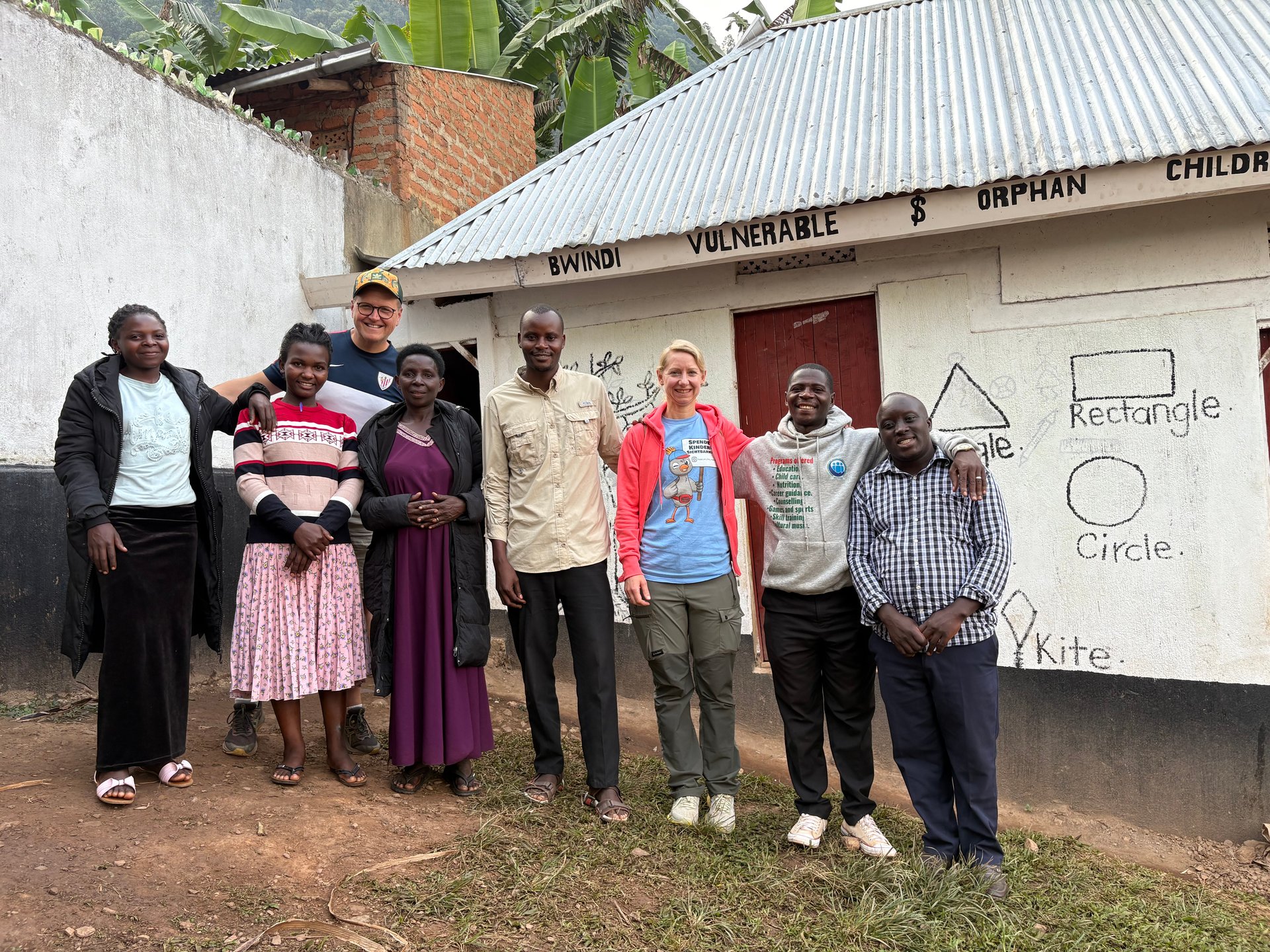
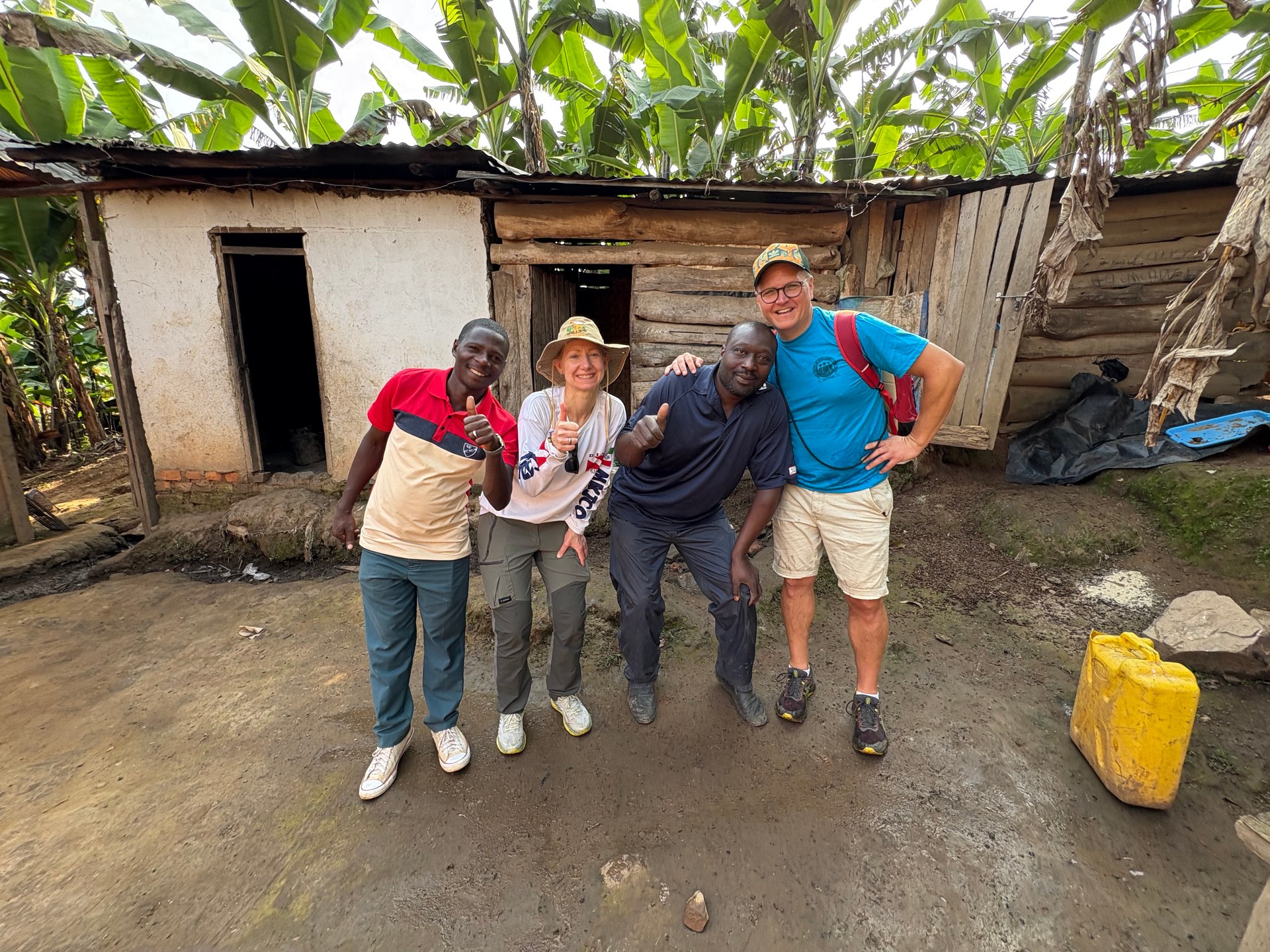
During my visit to the Buhoma area in June 2026, that principle came alive in an unexpected place: a small poultry yard at the edge of the village. I had come with a team from Hope on the Road to observe how a local chicken farmer raised his birds and to purchase chicks for a nearby orphanage. What we found was a quiet, working demonstration of resource regeneration at its most practical scale.
The farmer treated his flock with evident care. Each batch of chicks was raised to either laying age — providing eggs for the orphanage's daily meals — or to slaughter weight, supplying protein at a cost that a small community could actually sustain. The key insight was embedded in the cycle itself: take only what regenerates, return what you can, and the resource endures. That logic, operating across a single chicken yard in Buhoma (GPS-verified coordinates: -0.9713°N, 29.6142°E), mirrors the policy frameworks that Uganda applies at a national scale to its most critical natural assets.
The Core Principle: Gross Extraction Is Not the Same as Depletion
In everyday language, "using up" a resource and "depleting" it are treated as synonyms. In resource management, they are not. A renewable resource — by definition — has a natural rate of regeneration. Forests grow. Fish reproduce. Soil microbiota rebuild themselves. The only figure that matters for long-term viability is whether the rate of extraction exceeds that rate of natural growth.
When extraction stays below the regeneration rate, the resource is not shrinking even though it is being harvested. When extraction matches regeneration exactly, the stock remains stable. Only when extraction persistently exceeds regeneration does true depletion occur — and it is this net figure that resource economists, conservationists, and Uganda's own National Environment Management Authority track when assessing the health of natural systems.
This sounds abstract until you stand next to a poultry pen and watch it in action. The farmer in Buhoma does not slaughter every chicken he raises. He keeps a breeding stock, allows hens to produce clutches, and harvests only the surplus generation. The flock regenerates. The orphanage eats. The system is self-sustaining precisely because extraction never exceeds regrowth.
Why Gross Numbers Mislead
Reporting gross extraction figures without subtracting regrowth is one of the most common ways that resource debates go wrong. Headlines announcing that "Uganda removed X cubic meters of timber last year" or "fishermen landed Y tonnes of Nile perch" do not, by themselves, tell you whether those resources are being depleted. They tell you how active the extraction sector is — nothing more.
For meaningful assessment, you need to compare the gross figure against what the resource produced in the same period. If Uganda's remaining gazetted forests grew at a rate that offset all legal timber harvest, the net change in forest stock could theoretically be zero. In practice, the picture is more complicated — illegal charcoal production and encroachment push gross extraction well above what official figures show — but the principle remains: net depletion is the only number that measures whether the resource base is shrinking.
Uganda's Forests: Where Regrowth Meets Pressure
Uganda's forest cover has been under sustained pressure for decades. The country holds some of Central Africa's most biologically significant forest ecosystems, including the montane forests of Bwindi Impenetrable National Park and Mgahinga Gorilla National Park in the southwest. These parks are not simply scenic attractions — they are functioning resource systems that store carbon, regulate water flows for millions of people, and harbor species found nowhere else on earth.
Inside protected areas, Uganda Wildlife Authority policies are explicitly designed to keep net depletion at zero. Controlled resource use zones allow limited collection of specific materials — honey, medicinal plants, firewood in quantities that field rangers assess against the regeneration capacity of each forest block. The logic is the same as the chicken farmer's: take what the system can replace, and the system survives.
The Charcoal Problem and Net Accounting
Outside park boundaries, the picture is considerably more difficult. Uganda's domestic energy sector depends overwhelmingly on biomass — wood and charcoal supply the cooking fuel for the vast majority of households, particularly in rural areas. That demand is not inherently destructive if met from woodlots and fast-growing plantation species that are managed with regeneration in mind. The problem arises when charcoal producers harvest from natural forest rather than managed stands, and when they extract at rates that dwarf what the affected woodland can regrow.
In those zones, gross extraction and net depletion converge: regrowth is so slow relative to harvest pressure that almost every tree removed represents permanent stock loss. The forest transitions from renewable to functionally non-renewable — not because of its inherent biology, but because of the human decisions made about how quickly to extract it.
Regions like Buhoma, positioned at the edge of a protected forest, live with this tension daily. Community members have strong economic incentives to exploit forest resources. Simultaneously, their livelihoods depend on the ecosystem services — clean water, stable soils, climate regulation — that only a functioning forest can provide. Local conservation programs therefore focus less on halting all resource use and more on keeping extraction within the net-regeneration boundary.
Forest Landscape Restoration Targets
Uganda has committed to restoring degraded forest land under regional and global frameworks. The goal is not simply to plant trees but to rebuild the biological systems that make forests genuinely renewable — canopy diversity, soil fauna, seed banks, and water retention capacity. Restoration works on the same arithmetic as sustainable harvest: net depletion must turn negative (meaning regrowth exceeds removal) until the stock recovers to a target level, after which extraction can resume within a sustainable band.
For communities near Bwindi, restoration programs have created paid work in tree nurseries and planting brigades — converting the forest from a resource that local people have an incentive to extract, into one from which they earn by helping it grow. That realignment of incentives is the social engineering counterpart to the ecological arithmetic of net depletion.
Fisheries: The Classic Renewable Resource Under Pressure
Lake Victoria, which Uganda shares with Kenya and Tanzania, provides one of the most-studied examples of what happens when gross extraction outpaces regeneration. The lake's Nile perch fishery grew rapidly from the 1980s into an export industry supplying European supermarkets. For years, the gross tonnage landed was celebrated as economic success. The net depletion figure told a different story: stocks were declining because catches consistently exceeded the biological capacity of the population to replenish itself.
Uganda's fisheries management framework now attempts to apply net-regeneration principles through seasonal closures, mesh-size regulations (preventing the harvest of juvenile fish before they breed), and licensing limits on fishing vessels. Each measure targets the same variable: keeping gross extraction below the level at which the fish population adds new individuals each year.
The Sustainable Yield Concept in Practice
The term maximum sustainable yield describes the largest harvest that a fish population can sustain indefinitely — the point at which annual removal equals annual reproduction, leaving the stock size unchanged. It is the fisheries equivalent of the chicken farmer's breeding-stock logic: harvest the surplus, not the base.
Reaching and holding that equilibrium is genuinely difficult. Fish populations fluctuate with water temperature, food availability, and disease. The regeneration rate that applied last year may not apply this year. Responsible fisheries management therefore sets target catches somewhat below the theoretical maximum, building in a margin that absorbs natural variability without tipping the resource into net depletion.
When those margins are violated — through illegal fishing, underreported catches, or the use of fine-mesh nets that scoop juvenile fish — the cumulative net depletion can destabilize a stock within a few seasons. The recovery trajectory is then steep: the regeneration rate from a depleted stock is much lower than from a healthy one, because fewer breeding adults are available to produce the next generation.
Soils and Agricultural Land: The Invisible Renewable
Soil is the most underappreciated renewable resource in Uganda's agricultural economy. A living soil — populated with bacteria, fungi, earthworms, and organic matter — regenerates its fertility through biological activity. Crop residues decompose. Nitrogen-fixing legumes restore what previous crops removed. Manure from livestock closes the nutrient loop. These processes mean that farmland, managed well, is genuinely renewable: it can yield food season after season without diminishing its productive capacity.
The failure mode is identical to the forest and fisheries cases: when extraction of nutrients exceeds natural regeneration, the resource depletes. Continuous cropping of the same staple — cassava or maize year after year without rotation or amendment — mines the soil's organic matter and mineral content faster than biological processes can restore them. The gross tonnage harvested may look impressive in the short term. The net change in soil fertility is negative, and the land becomes progressively less productive.
Livestock Integration as Regeneration Tool
The chicken farmer in Buhoma illustrates the regeneration principle in its most direct agricultural form. Poultry manure is rich in nitrogen and phosphorus — the same nutrients that crops remove from soil with each harvest. Farmers who return manure to their fields are effectively recycling the nutrient capital that food production extracts. The gross depletion of soil fertility from cropping is offset by the gross addition of nutrients from manure application. Net depletion can approach zero.
This integration is not simply good environmental practice — it is economic resilience. A farmer who depends on external fertiliser inputs has a supply chain that can break. A farmer whose fertility comes from animals on the farm has an internal loop that is insulated from market disruptions. The self-sufficiency is itself a form of resource security.
In the Buhoma context, that logic extends to the orphanage. Children receive eggs and protein from a locally managed, regenerating system rather than from purchased imports. The community's food security rests on a resource that — as long as the breeding stock is maintained and the land is not overworked — will keep producing indefinitely.
[QUOTE: local guide on the relationship between poultry farming and soil health in Buhoma]
Policy Implications: Managing for Net Figures, Not Gross Ones
The practical implication of the regeneration framework is straightforward but often politically difficult: resource governance should be designed around net depletion targets, not gross extraction limits. A regulation that caps timber removal at a fixed volume ignores the fact that the same volume extracted from a fast-growing plantation is sustainable while the same volume extracted from old-growth montane forest may be catastrophic.
Uganda's National Environment Management Authority and the Uganda Wildlife Authority have both moved toward this more nuanced framing in recent years. Environmental impact assessments for extractive activities are now expected to model not just what will be removed, but what natural regeneration will occur, and what the net change in resource stock will be over the project lifetime. For tourism-adjacent ecosystems — where the stock of forest, wildlife, and landscape quality is itself the economic asset — net depletion is not an abstract accounting concept but a direct threat to revenue.
Community Resource Management Agreements
One of the most effective institutional responses to the net-depletion challenge is the community resource management agreement, in which local groups are granted formal use rights over a defined resource area in exchange for accepting responsibility for keeping extraction within regeneration limits. These agreements work because they align the economic interest of the community with the ecological imperative of sustainable yield. When the community owns the regenerating resource, they have a direct stake in preventing net depletion.
Around Bwindi, such arrangements govern the collection of specific forest products — papyrus, medicinal plants, and honey — from buffer zones. Families who participate have legal access to resources they would otherwise be forced to collect illegally. The agreement's harvest caps ensure that regeneration keeps pace with extraction. The forest stays healthy. The community earns a legal income. Net depletion remains at or near zero.
For visitors to the area — whether they come for gorilla trekking or to understand how communities live alongside one of Africa's great forests — these arrangements are a working demonstration that renewable resource management is not simply an environmental ideal. It is an economic system that functions when the accounting is done correctly.
The Role of Tourism Revenue in Sustaining Regeneration
Uganda's tourism economy is itself dependent on regenerating natural systems. The mountain gorilla population — the primary draw to western Uganda's national parks — has grown from a low of around 620 individuals in the mid-2000s to over 1,000 today across the Virunga-Bwindi range. That recovery was possible precisely because the gross threats to gorilla survival (habitat loss, poaching, disease) were reduced below the rate at which the population could reproduce. Net depletion turned positive: the population began growing.
Tourism revenue provides the funding for that management — ranger patrols, veterinary support, community benefit programs that reduce incentives for encroachment. The connection is direct: paying visitors sustain the management capacity that keeps gross threats below the regeneration rate, which keeps the gorilla population growing, which keeps the tourism product viable. The resource and the economy regenerate together.
That circularity — extraction funding regeneration, regeneration sustaining extraction — is the ideal end-state for any renewable resource system. The chicken farmer in Buhoma runs it at household scale. Uganda's protected area network attempts it at national scale. The arithmetic is identical. Net depletion must stay at or below zero for the resource to endure.
From the field
Frequently asked questions
What is the difference between renewable and non-renewable resources in Uganda?
Renewable resources like forests and fish stocks regenerate naturally over time. The critical distinction is that only the net difference — how much is extracted minus how much grows back — counts as true depletion. Non-renewable resources such as minerals offer no such offset; every tonne removed is a tonne permanently lost from the stock.
How does deforestation affect Uganda's ecosystems?
When tree removal outpaces natural regrowth, the net result is deforestation: soil erodes, catchment areas lose water retention, and biodiversity declines. Uganda has lost significant forest cover since the 1990s outside protected areas, but zones like Bwindi show that regeneration is possible when extraction stays within the regrowth rate and park boundaries are enforced.
What is net depletion and why does it matter for resource management?
Net depletion is the gross amount extracted from a renewable resource minus the amount that regenerates naturally within the same period. It matters because a resource that looks heavily harvested may still be sustainable if regrowth compensates — and conversely, modest harvesting can be destructive if the resource grows very slowly or is already stressed.
How is Uganda managing its fish stocks on Lake Victoria?
Uganda's fisheries authority sets seasonal closures and gear restrictions designed to keep annual catches within the productive capacity of the lake — meaning fish are taken only up to the rate at which populations replace themselves. When those limits are breached through illegal fishing or undersized gear, net depletion climbs and stocks collapse, requiring lengthy and costly recovery periods.
Can small-scale farming in Uganda be sustainable?
Yes, when farmers rotate crops and integrate livestock into their system — as smallholders around Buhoma do — soil nutrients regenerate naturally. Poultry manure returned to garden beds replaces the nitrogen and phosphorus that crops remove, keeping net depletion of soil fertility near zero and maintaining yields over multiple seasons without purchased inputs.