Overview
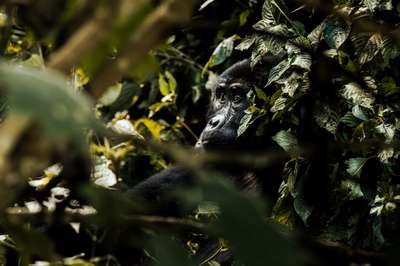
Uganda holds one of the largest concentrations of wild mountain gorillas on Earth. Both habitats — Bwindi Impenetrable National Park and Mgahinga Gorilla National Park — sit in the country's far southwest, where the terrain rises steeply from rolling farmland into ancient highland forest. Gorilla trekking in Uganda means tracking habituated families through that forest on foot, spending one hour in direct observation, then walking back out.
After three hours moving through dense vegetation in Bwindi, we reached a gorilla family resting in a shallow ravine. They were completely at ease. We were close enough to hear individual animals breathing, to watch a juvenile drag a branch twice its size up a moss-covered slope, to make eye contact with a silverback who showed no interest whatsoever in our presence. That hour passes faster than almost anything else I have experienced in Uganda.
What follows is a detailed account of both parks, the population numbers behind them, and what trekking actually involves — drawn from 14 documented visits across multiple years.
Mountain Gorilla Population in Uganda
According to UWA data, Uganda is home to 459 mountain gorillas. That number comes from a census conducted between 2018 and 2020 and represents a significant share of the total global population, which itself is confined to a transboundary range covering Uganda, Rwanda, and the Democratic Republic of the Congo.
Mountain gorillas are the only great ape population that has grown over the past three decades. This is largely the result of intensive conservation work — anti-poaching patrols, community benefit-sharing programs, veterinary monitoring, and tightly regulated tourism that generates direct revenue for the national parks. The population trend is positive, but the species remains classified as endangered. The habitat is fragmented, the range is small, and the gorillas are vulnerable to human-transmitted diseases.
UWA manages tourism access through a strict permit system. Each habituated gorilla family may receive one group of eight visitors per day. The one-hour observation limit and mandatory seven-metre minimum distance exist to reduce disease transmission risk — a concern that has grown more urgent as zoonotic illnesses including scabies and respiratory infections have been documented in wild gorilla populations. Visitors with colds or flu are turned away at the trailhead.
Bwindi Impenetrable National Park
Bwindi Impenetrable National Park covers roughly 331 square kilometres in the Kigezi Highlands of southwest Uganda. It is a UNESCO World Heritage Site and one of the continent's most biodiverse patches of forest. Bwindi is considered a Pleistocene refugium — a pocket of habitat that remained forested through the ice ages when much of central Africa dried out — and the result is exceptionally high endemism. Species found here are found almost nowhere else.
The forest itself is not easy terrain. The name "impenetrable" describes the dense understorey accurately. Slopes are steep, roots cross every trail, and the vegetation closes in on both sides. Altitude ranges from around 1,160 metres in the north to over 2,600 metres in the south, which means that conditions and vegetation types vary considerably across the park.
The Four Trekking Sectors
Bwindi is divided into four gorilla trekking sectors, each with its own trailheads, ranger stations, and habituated gorilla families. Choosing a sector affects logistics, trek difficulty, and accommodation options. A more detailed breakdown of each sector is available in our guide to Bwindi's gorilla trekking sectors.
Buhoma sits at the park's northern edge and is the oldest and most established trekking sector. The infrastructure here is well-developed, and Buhoma is the most accessible sector from Kampala, though the drive still takes the better part of a day. Treks from Buhoma tend to be moderate in difficulty, and the sector is a good starting point for first-time visitors.
Ruhija is the highest sector, sitting above 2,300 metres. The altitude makes it cooler and often cloudier than the other sectors, and the terrain is demanding. Ruhija is less visited, which suits those looking for a quieter experience. The birding here is outstanding even by Bwindi's standards.
Rushaga in the south hosts the greatest number of habituated gorilla families in Bwindi, which translates directly into permit availability. It is a reasonable choice when permits are tight elsewhere and offers access to both standard trekking and gorilla habituation experience permits, which allow longer contact with partially habituated families.
Nkuringo also lies in the southern sector and is known for physically demanding treks — the terrain drops sharply into the park, which means the return climb can be strenuous. The scenery is dramatic and the families here are well-habituated.
For a comprehensive first-time visit, we recommend reading our full Bwindi gorilla trekking guide before booking.
Mgahinga Gorilla National Park
Mgahinga Gorilla National Park is smaller and less visited than Bwindi, covering around 34 square kilometres along Uganda's southern border with Rwanda and the DRC. It forms part of the larger Virunga Massif — a chain of dormant and active volcanoes — and the landscape is entirely different from Bwindi's ancient rainforest. Here, the slopes of Mount Gahinga rise to 3,474 metres through thick bamboo groves before giving way to open heath and alpine moorland near the summit.
The gorilla family based in Mgahinga is the Nyakagezi group. It is the only habituated family in the park, which means permit availability is limited and the family's location on any given day is less predictable than in Bwindi. Nyakagezi is a cross-border family with a range that extends into Rwanda and the DRC. On days when the family has moved across the border, permits are refunded.
UWA manages a 16-kilometre stone wall along Mgahinga's boundary specifically to discourage gorillas from raiding the cropland immediately outside the park. The wall is a practical response to the reality that gorilla home ranges do not align with park boundaries, and that crop raiding creates conflict between local farming communities and conservation efforts.
For visitors who want to combine gorilla trekking with a volcano hike, Mgahinga is the better option. The park also offers golden monkey tracking, which follows a habituated troop of the endemic Cercopithecus kandti through the bamboo zone — an underrated experience that deserves more attention.
What the Trek Actually Involves
Gorilla trekking begins at the sector headquarters with a morning briefing. Groups are assigned based on permit allocation and fitness level. Rangers and trackers have been out since first light following the gorillas from the nest sites they used the night before. By the time visitors begin walking, the trackers usually know roughly where the family is.
The walk can take anywhere from forty minutes to six or seven hours. There is no way to know in advance. Gorillas move according to their own logic — following fruiting trees, reacting to other groups, spreading out to feed. Most treks I have done have lasted between two and four hours of walking each way, but the range is real. Fitness matters, and poles help considerably on wet slopes.
When you reach the family, the guide signals the group to slow down and approach quietly. Then the hour begins. What happens during that hour depends entirely on the gorillas. Some days a silverback is feeding in open ground ten metres away. Other days the family is moving through thick understorey and you are following at pace, catching glimpses. Both are extraordinary in different ways. A first-time visitor often struggles to describe the experience coherently afterwards. The scale of the animals, the proximity, and the complete calm of a well-habituated family produce something that photographs do not fully communicate.
The guide I trekked with in Buhoma put it this way: the first time he brought a group to a gorilla family, he stood between the visitors and the silverback and thought about how to protect everyone. After a few months, he understood there was nothing to protect anyone from. The gorillas are not interested in the humans. They are just living their lives. That shift in understanding, he said, is what makes the work worthwhile.
A detailed first-person account of what to expect is available in our piece on the gorilla trekking experience at Bwindi.
Gorilla Behavior and What You Observe
Mountain gorillas live in family groups led by a dominant silverback male. Groups typically include several adult females, juveniles, and infants. In some families, multiple silverbacks are present. The silverback's role is primarily protective — he monitors the group's movements, manages conflict, and responds to threats from outside the family.
During observation time, the most common behavior is feeding. Gorillas spend a large portion of their waking hours consuming leaves, stems, bark, and fruit, depending on the season. Juveniles are frequently the most active, playing, climbing, and occasionally investigating the human observers with what appears to be genuine curiosity. Infants, carried by their mothers, are rarely still.
Chest-beating, which is widely associated with aggression in popular depictions, is mostly a display behavior used in communication between rival males or in response to perceived threats. It is rarely directed at trekking groups. When a silverback does move toward a group, guides instruct visitors to crouch, avoid direct eye contact, and remain still. In most cases, the animal walks past within a few metres and continues about its business.
For a deeper look at how mountain gorillas behave and what research tells us about their social structure, see our piece on mountain gorilla behavior in Uganda.
Conservation Context
The mountain gorilla's recovery is one of the more encouraging stories in African conservation, but it is not a straightforward success. Habitat pressure remains acute. Uganda's forest cover stood at 12 percent of total land area in 2021, and the national target is to increase that figure to 21 percent by 2030. The gap between those numbers reflects decades of deforestation driven by agricultural expansion, charcoal production, and population growth in areas bordering the national parks.
Inside the parks, UWA contends with shifting gorilla home ranges as families expand into new areas, increasing the complexity of disease surveillance and habituation management. Zoonotic disease transmission — scabies and respiratory infections being the most documented — represents a growing management challenge as gorilla tourism volumes increase. Every protocol around visitor health, group size, and minimum distance exists to manage this risk.
Tourism revenue is central to the conservation model. UWA has indicated plans to introduce tourism levies that would direct additional funding toward conservation activities, acknowledging that park management at the scale required cannot rely on permit fees alone. A portion of existing permit revenue is already shared with communities living adjacent to the parks, a mechanism designed to reduce conflict and give local populations a direct stake in gorilla survival.
The broader context matters too. Uganda sits across seven of Africa's unique biogeographic regions — an unusual position that gives the country exceptional biodiversity across a relatively compact area. Bwindi's gorillas exist within a broader ecosystem of high conservation value. What happens to forest cover and habitat connectivity well beyond the park boundaries directly affects the long-term viability of the population.
For current population data and trend analysis, see our piece on the Bwindi gorilla population.
Practical Planning Information
Getting There
Bwindi is located approximately 500 kilometres from Kampala by road, typically reached via Mbarara and Kabale. The drive takes eight to ten hours depending on road conditions. Scheduled flights operate from Entebbe to Kihihi (for Buhoma and Ruhija) and to Kisoro (for Rushaga, Nkuringo, and Mgahinga). Flight times are approximately one hour, and charter options are available.
Permits and Booking
Gorilla trekking permits in Uganda are issued by UWA and priced at USD 800 per person as of 2026. Permits must be booked in advance — availability fills months ahead during peak season (June to August and December to February). It is possible to book directly through UWA or through a licensed operator. Operators often bundle the permit with transport, accommodation, and guide services.
For families with children, note that trekking permits are issued only to visitors aged 15 and above.
What to Bring
- Sturdy, waterproof hiking boots with ankle support
- Long-sleeved shirt and long trousers (vegetation scratches))
- Rain jacket — Bwindi receives rain year-round
- Gardening gloves for grabbing vegetation on steep slopes
- Enough water for a full day
- Camera with no flash — flash photography is not permitted
- A porter can be hired at the trailhead and is strongly recommended on longer treks
Health Requirements
Visitors must not trek if they are showing symptoms of a cold, flu, or any respiratory illness. This rule is strictly enforced and is a genuine conservation requirement, not a formality. Gorillas have no immunity to many common human pathogens. Masks are required within seven metres of the gorillas. All standard Uganda entry health requirements apply.
A complete travel planning guide is available at gorilla trekking in Uganda. For an overview of the park beyond the trek itself, see our main Bwindi Impenetrable National Park guide.
Frequently asked questions
How long does gorilla trekking in Bwindi take?
The trek can last anywhere from one hour to a full day, depending on where the gorilla family has moved overnight. Most treks last between two and five hours of walking, followed by one hour of observation time with the gorillas. The return journey is generally faster since you are retracing a known path. Hiring a porter makes the day significantly more manageable.
How many mountain gorillas live in Uganda?
According to UWA data, Uganda is home to 459 mountain gorillas. They live in two national parks: Bwindi Impenetrable National Park and Mgahinga Gorilla National Park, both in southwest Uganda. These gorillas are part of a transboundary population that also includes individuals in Rwanda and the Democratic Republic of the Congo.
Is gorilla trekking in Bwindi safe?
Yes. All trekking groups are accompanied by Uganda Wildlife Authority rangers and experienced guides throughout the trek. The gorilla families visited are habituated, meaning they have been gradually accustomed to human presence over several years and do not respond to visitors with fear or aggression. Strict protocols around group size, minimum distance, and visitor health exist to protect both visitors and gorillas.
What is the best sector in Bwindi for gorilla trekking?
Bwindi has four trekking sectors: Buhoma, Ruhija, Rushaga, and Nkuringo. Each hosts different habituated gorilla families. Buhoma is the most established and best-connected sector for first-time visitors. Rushaga has the highest number of habituated families and therefore the most permit availability. Ruhija offers a quieter, higher-altitude experience. The best choice depends on fitness level, travel itinerary, and permit availability at the time of booking.
What is the difference between Bwindi and Mgahinga for gorilla trekking?
Bwindi offers multiple habituated gorilla families across four sectors and has significantly more permit availability throughout the year. Mgahinga hosts a single habituated family — the Nyakagezi group — and sits in a high-altitude volcanic landscape dominated by bamboo forest. Mgahinga permits are occasionally affected by the family crossing into Rwanda or the DRC, in which case permits are refunded. Mgahinga is a good choice for visitors who want to combine gorilla trekking with a volcano hike or golden monkey tracking.