Overview
South Sudan is by far the single largest source of refugees in Uganda, with more than 268,000 registered refugees and asylum seekers recorded in the active population data for June 2026. The Democratic Republic of Congo follows as the second-largest origin country, with several hundred thousand Congolese refugees distributed across western and southwestern Uganda. Rwanda, Sudan, and Somalia account for a meaningful share of the remainder, together forming one of the most diverse refugee populations found anywhere in sub-Saharan Africa.
Uganda holds a unique position in global humanitarian affairs. It hosts more refugees than any other country on the African continent, and it does so under a legal framework that grants displaced people rights — to work, to move, and to farm — that most other host countries deny. Understanding where these refugees come from is inseparable from understanding the political geography of Uganda's neighbourhood and the decades of conflict, governance failure, and displacement that have reshaped the entire Great Lakes and Horn of Africa region.
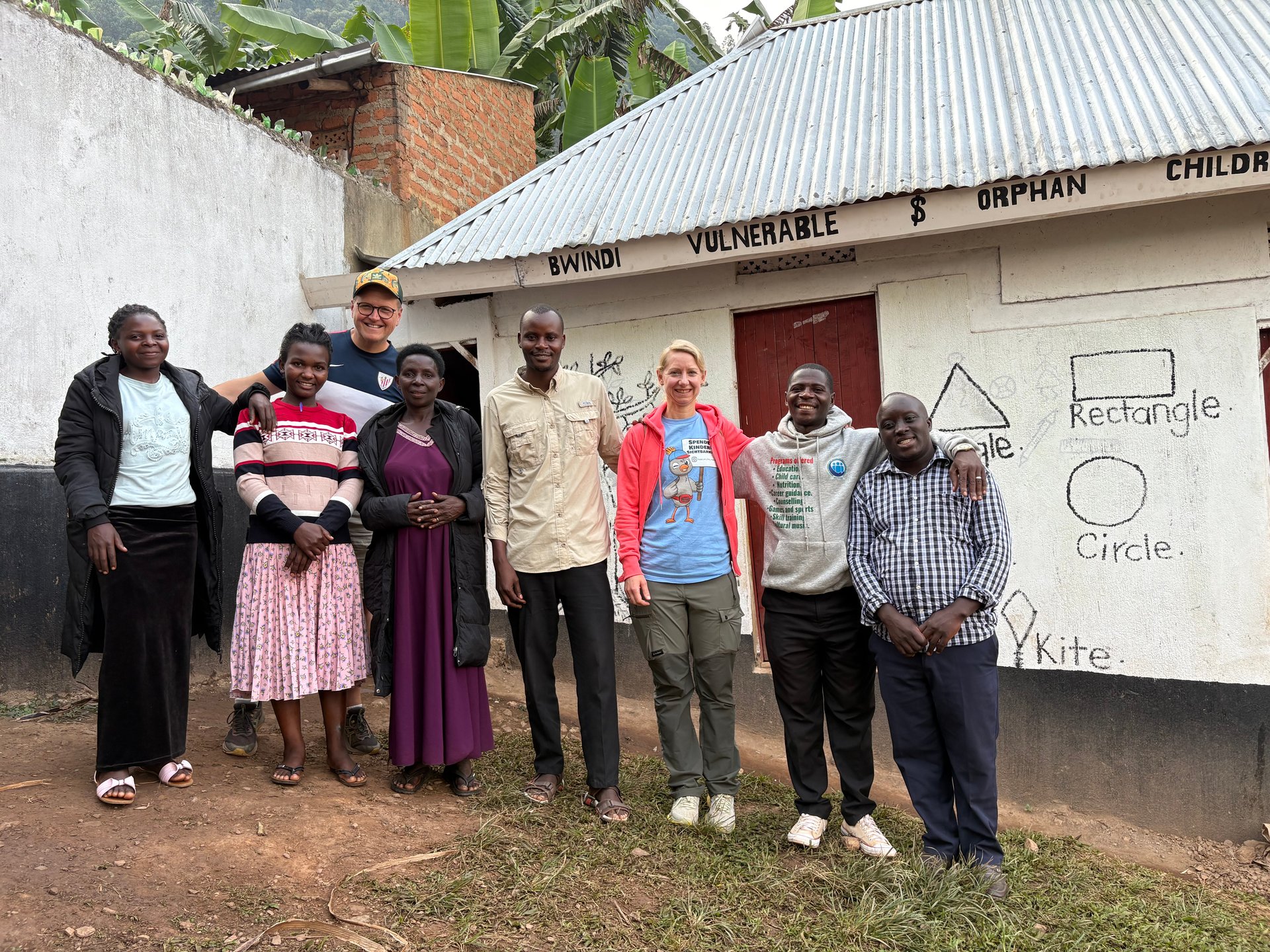
During multiple research visits to Uganda between October 2024 and June 2026 — totalling well over 50 days on the ground — the authors visited settlements, spoke with community workers, and travelled extensively through the districts most affected by refugee arrival. What follows draws on those direct observations alongside official data published by Uganda's Office of the Prime Minister (OPM) and UNHCR.
South Sudan: Uganda's Largest Refugee-Sending Country
A Neighbour in Perpetual Crisis
South Sudan shares a border of more than 600 kilometres with Uganda. When the world's newest country gained independence in 2011, hopes were high that a generation of violence would give way to stability. Those hopes were largely dashed within two years. A political rupture between President Salva Kiir and his former deputy Riek Machar in December 2013 escalated rapidly into full-scale civil war. Tens of thousands were killed in the first weeks alone, and the displacement set in motion at that moment has never fully reversed.
A peace agreement signed in 2018 brought a fragile reduction in fighting, but renewed conflict broke out in several states from 2021 onward. Flooding, crop failure, and severe food insecurity added further pressure, pushing civilians toward the border even in periods of reduced armed violence. Uganda's West Nile region — the districts of Adjumani, Arua, Madi-Okollo, Terego, and Yumbe — absorbed the greatest share of new arrivals. Bidi Bidi in Yumbe district became, at its peak, the world's largest refugee settlement by population.
Profile of South Sudanese Refugees in Uganda
South Sudanese refugees in Uganda are disproportionately women and children; in many settlements, children under 18 make up more than 60 percent of the registered population. This demographic profile reflects both the targeting of adult men in conflict zones and the deliberate strategy of mothers to move children to safety first. Extended family networks across the Uganda-South Sudan border — predating colonial boundary-drawing — mean that newly arrived South Sudanese often have relatives or community ties already present in Ugandan settlements.
The predominant ethnic groups among South Sudanese refugees include the Dinka, Nuer, Madi, Acholi, and various Equatorian communities. These groups bring their own internal social structures, dispute-resolution mechanisms, and — in some cases — inter-community tensions. Settlement management by OPM and UNHCR must navigate this complexity while maintaining equitable access to services and agricultural land.
The Democratic Republic of Congo: Decades of Displacement
Why Congolese Keep Crossing
The Democratic Republic of Congo has generated refugee flows into Uganda since the mid-1990s, when the collapse of Mobutu Sese Seko's regime and two successive Congo Wars produced massive population movements across the entire region. Unlike South Sudanese displacement, which has intensified in relatively discrete crisis waves, Congolese flight into Uganda has been nearly continuous. Each time eastern DRC experiences a surge of armed group activity — whether from the FDLR, M23, ADF, or numerous other militias — new families cross Lake Albert or the Rwenzori foothills into Uganda.
Congolese refugees are concentrated in southwestern and western Uganda, particularly in Nakivale (one of Africa's oldest refugee settlements, established in 1958), Kyangwali in Kikuube district, and Kyaka II in Kyegegwa district. Nakivale alone hosts refugees of more than a dozen nationalities, with Congolese forming the largest single group.
Cultural and Ecological Continuities
The borderlands between eastern DRC and western Uganda share ecological character — the same volcanic soils, papyrus swamps, and banana cultivation that define the landscape on both sides. Many Congolese refugees in Uganda's southwestern settlements cultivate plots in ways almost identical to their home villages. The local Ugandan population in these areas often shares Bantu linguistic roots with Congolese arrivals, which facilitates a degree of social integration that is harder to achieve in the West Nile, where South Sudanese refugees and the Ugandan host community have more culturally distinct backgrounds.
During visits to the southwestern districts in January and May 2026, it was evident that informal markets at settlement boundaries had become genuine points of economic exchange, with Ugandan traders and Congolese smallholders interacting daily. This aligns with the self-reliance philosophy embedded in Uganda's refugee policy — a policy that aims to reduce dependency on humanitarian transfers and build sustainable local economies.
Rwanda and Sudan: Smaller but Significant Origin Countries
Rwandan Refugees: A Long and Layered History
Rwanda, Uganda's neighbour to the southwest, has a complex and often painful relationship with displacement in this part of Africa. The majority of Rwandan refugees currently in Uganda are not products of the 1994 genocide — by now, most survivors who fled at that time have either repatriated or been locally integrated. The Rwandans who remain registered as refugees in Uganda today come predominantly from the post-2000 period and include individuals who fled political repression, journalists, opposition figures, and people who fear persecution under the current government in Kigali.
Rwandan refugees in Uganda occupy a politically sensitive space. The Uganda-Rwanda relationship has experienced significant tension at various points since 2018, including a prolonged border closure and mutual accusations of espionage. This context means that Rwandan refugees in Uganda are acutely aware of their precarious diplomatic situation. Most are concentrated in the Kampala urban refugee population or in settlements in the southwest, particularly Nakivale.
Sudan: Crisis Compounding Crisis
Sudan became a dramatically more significant refugee origin country after April 2023, when armed conflict erupted between the Sudanese Armed Forces and the Rapid Support Forces. The war triggered one of the fastest displacement crises in recent African history. Sudan, which had itself been hosting millions of refugees from South Sudan, Ethiopia, and Eritrea, suddenly became a mass generator of its own displaced populations.
Uganda's registered Sudanese refugee population remained relatively modest compared to the scale of the Sudan crisis as a whole — most Sudanese fled to Chad, Egypt, and South Sudan itself — but the numbers in Uganda grew through 2024 and 2025. Sudanese arrivals in Uganda tend to be routed through South Sudan and then across the border into West Nile, meaning they travel an exceptionally long distance before reaching safety. Their needs upon arrival often reflect this journey: acute medical conditions, severe trauma, and nutritional deficiencies are more common than among refugees from shorter displacement routes.
Somalia, Burundi, and Other Origins
Somali Refugees: Urban and Rural Settlements
Somalia has produced one of the world's most protracted refugee situations. Somali refugees began arriving in Uganda in significant numbers during the early 1990s and have maintained a consistent presence since then. Unlike South Sudanese or Congolese refugees, Somalis in Uganda are notably split between rural settlement life and urban self-settlement in Kampala. The Kisenyi and Old Kampala neighbourhoods of the capital host a well-established Somali business community that includes both recognised refugees and economic migrants who arrived through the same networks.
Somali refugees in Uganda's formal settlements are found primarily in Nakivale, where a dedicated zone within the settlement has developed its own market infrastructure, mosques, and schools. The community has invested substantially in brick construction — a visible signal of the intention to remain for the medium term even when repatriation remains a stated aspiration.
Burundian Refugees and the 2015 Crisis
Burundi generated a sudden and significant refugee flow in 2015 when President Pierre Nkurunziza announced he would seek a constitutionally disputed third term. Protests, a failed coup, and state violence pushed more than 400,000 Burundians into neighbouring countries. Uganda received tens of thousands of Burundians, most of whom were settled in Nakivale and Oruchinga settlements in the southwest. The Burundian situation has stabilised somewhat in the years since, and voluntary repatriation has reduced the registered population, but a meaningful number remain unwilling to return given ongoing political concerns in Bujumbura.
Uganda's Open-Door Policy: Why Refugees Choose Uganda
Legal Framework and Practical Rights
Uganda's reputation as a preferred destination for refugees across the region is not accidental. The country's Refugee Act of 2006 and the subsequent Settlement Approach — administered jointly by the OPM and UNHCR — represent a deliberately progressive model. Refugees are not confined to camps. They receive a plot of land for cultivation, freedom of movement throughout the country, access to national health clinics and schools, and the formal right to seek paid employment or run a business.
This approach differs sharply from the encampment policies used in Kenya, Tanzania, and several other African host countries, where refugees may spend years in geographically isolated camps with no right to work and severe restrictions on movement. Uganda's model is not without its challenges — land pressure, environmental degradation around settlements, and inadequate funding for public services are recurring problems — but the framework itself is recognised internationally as a model worth replicating.
Geography and Accessibility
Uganda's position at the intersection of multiple conflict-affected regions — South Sudan to the north, DRC to the west, Rwanda and Burundi to the southwest, Somalia and Ethiopia reachable through Kenya — makes it a natural transit and destination country. For South Sudanese fleeing westward, Uganda is often the closest safe territory. For eastern Congolese, Uganda is reachable across Lake Albert or through the Rwenzori passes in a matter of hours. The relative stability of Uganda itself since the late 1980s — a stability partly achieved under difficult political conditions — has made it a consistent point of refuge for surrounding countries that have experienced far more severe turbulence.
During the January 2026 visit to the West Nile region, it was striking how quickly newly arrived South Sudanese families — some having crossed the border only days earlier — were being registered, medically screened, and assigned plots. The logistical infrastructure built by OPM and UNHCR over decades of managing high-volume arrivals is genuinely impressive, even if it remains perennially under-resourced relative to the scale of need.
The Challenge of Self-Reliance at Scale
Uganda's self-reliance philosophy assumes that refugees, given land and freedom, will become economically productive and reduce demands on humanitarian budgets over time. The evidence is mixed. In settlements with access to fertile land and proximity to functioning markets — Nakivale and Kyangwali are good examples — agricultural self-reliance has made measurable progress. But in the West Nile, where soil quality is poorer and market connections are thinner, dependency on food assistance has persisted through multiple years of reduced rations as donor funding contracted.
The tension between the ambition of Uganda's policy and the reality of chronic underfunding is one of the defining features of the refugee system. As of mid-2026, funding shortfalls have forced periodic cuts to food ration values, and some settlements have seen reductions in health service provision. These pressures fall disproportionately on the most vulnerable — newly arrived families, unaccompanied minors, and elderly refugees with no productive capacity.
Understanding who Uganda's refugees are and where they come from is the necessary starting point for any serious engagement with these questions. South Sudan, DRC, and Rwanda together account for the largest share of Uganda's registered refugee population, but the full picture spans more than 30 countries of origin. Each group brings distinct needs, cultural assets, and vulnerabilities — and each deserves a response calibrated to those realities rather than a one-size-fits-all humanitarian template.
Frequently asked questions
Where do most refugees in Uganda come from?
South Sudan is by far the largest source of refugees in Uganda, with more than 268,000 registered refugees as of June 2026. The Democratic Republic of Congo is the second-largest origin country, followed by Rwanda, Somalia, and Sudan. In total, Uganda hosts refugees from more than 30 countries of origin.
Why do so many South Sudanese flee to Uganda?
South Sudan has experienced repeated cycles of civil war since its independence in 2011, most severely between 2013 and 2018 and again from 2021 onward. Violence, food insecurity, and the collapse of basic services have pushed millions of civilians across the border into Uganda's northern districts. Uganda shares a long border with South Sudan and is the nearest accessible safe territory for many fleeing communities.
How many refugees does Uganda host in total?
Uganda hosts well over 1.7 million registered refugees and asylum seekers, making it the largest refugee-hosting country in Africa and among the largest in the world. The actual population, including unregistered arrivals and urban self-settlers, is estimated to be higher. The numbers fluctuate with conditions in neighbouring countries.
Where do Congolese refugees settle in Uganda?
Most Congolese refugees are settled in southwestern and western Uganda, particularly in Kyangwali (Kikuube district), Kyaka II (Kyegegwa district), and Nakivale (Isingiro district). These settlements lie close to the DRC border and share ecological and cultural features with the refugees' home regions in eastern Congo.
What is Uganda's policy toward refugees?
Uganda operates one of the most progressive refugee policies in the world. Under the Refugee Act of 2006, refugees are given the right to work, move freely, and access public services including health clinics and schools. Land is allocated for agriculture inside settlements, and refugees are integrated into national service systems rather than confined to isolated camps.